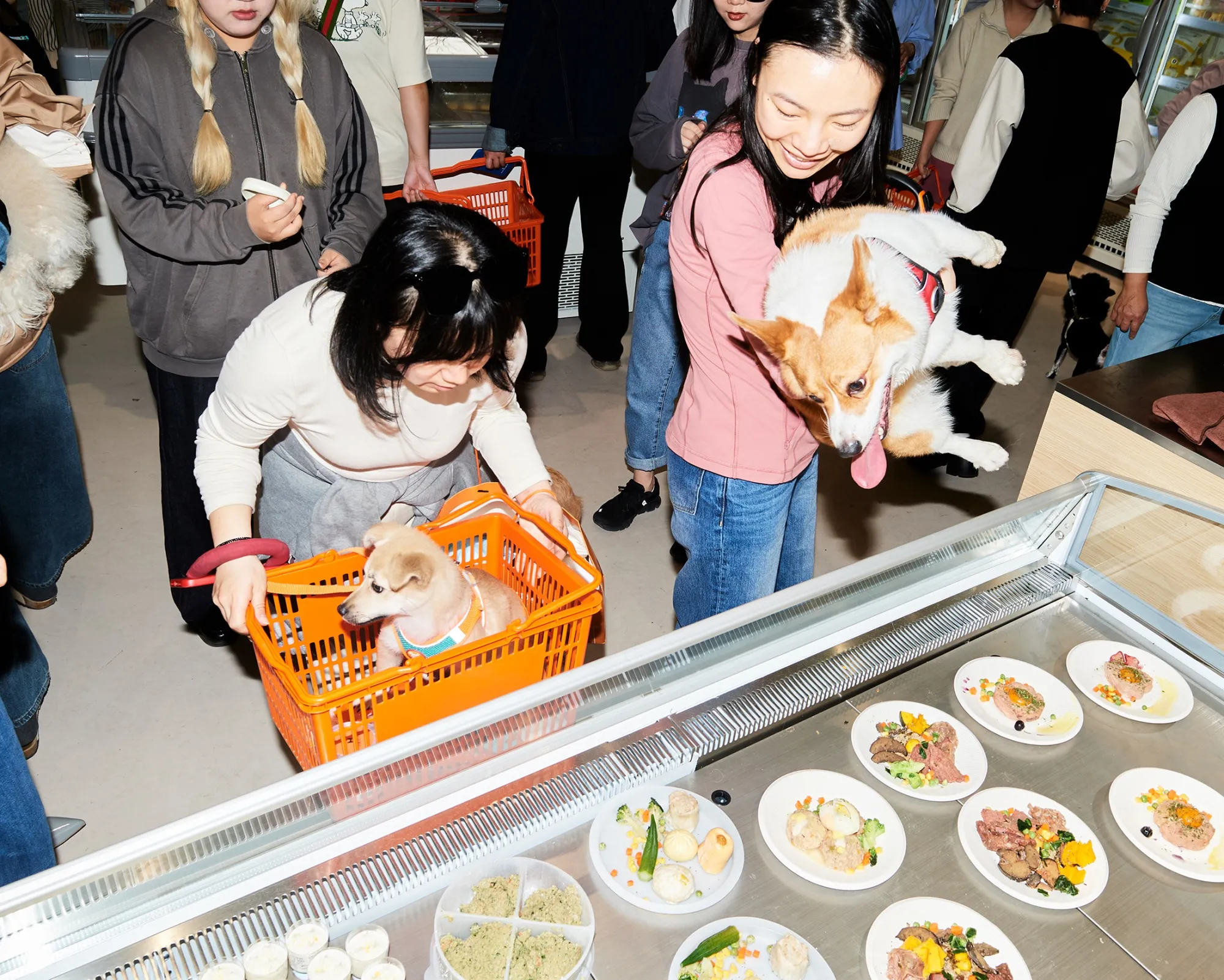
Shoppers at the Pet&Fresh store in Shanghai.
Photographer: Ka Xiaoxi for Bloomberg BusinessweekAs China’s Birth Rate Drops, Pampered Pets Reap the Benefits
With furry friends on track to outnumber toddlers 2 to 1 by 2030, the mainland is developing a $49 billion pet economy.
When China relaxed its one-child policy a decade ago, makers of baby food and infant formula began plowing billions of yuan into new brands, products and factories, with investment in the industry surging by almost a third in 2016. But any hope of a baby boom proved fleeting as young Chinese these days appear to prefer dogs and cats to kids. “Pets can fill emotional needs that people don’t,” says Hu Weihua, owner of an animal hospital in Shenzhen, just north of Hong Kong. “Younger generations see them as family, unlike the traditional notion that dogs and cats are just beasts.”
China’s population has fallen for three straight years, and the marriage rate plunged by a fifth in 2024, reaching its lowest level in almost a half-century. With fewer babies, China’s formula market dropped 21% from 2021 to 2024. Pets, meanwhile, are on track to outnumber toddlers almost 2 to 1 by 2030, Goldman Sachs Group Inc. predicts. Infant formula companies, says Macquarie Group Ltd. analyst Linda Huang, “need a way out.”