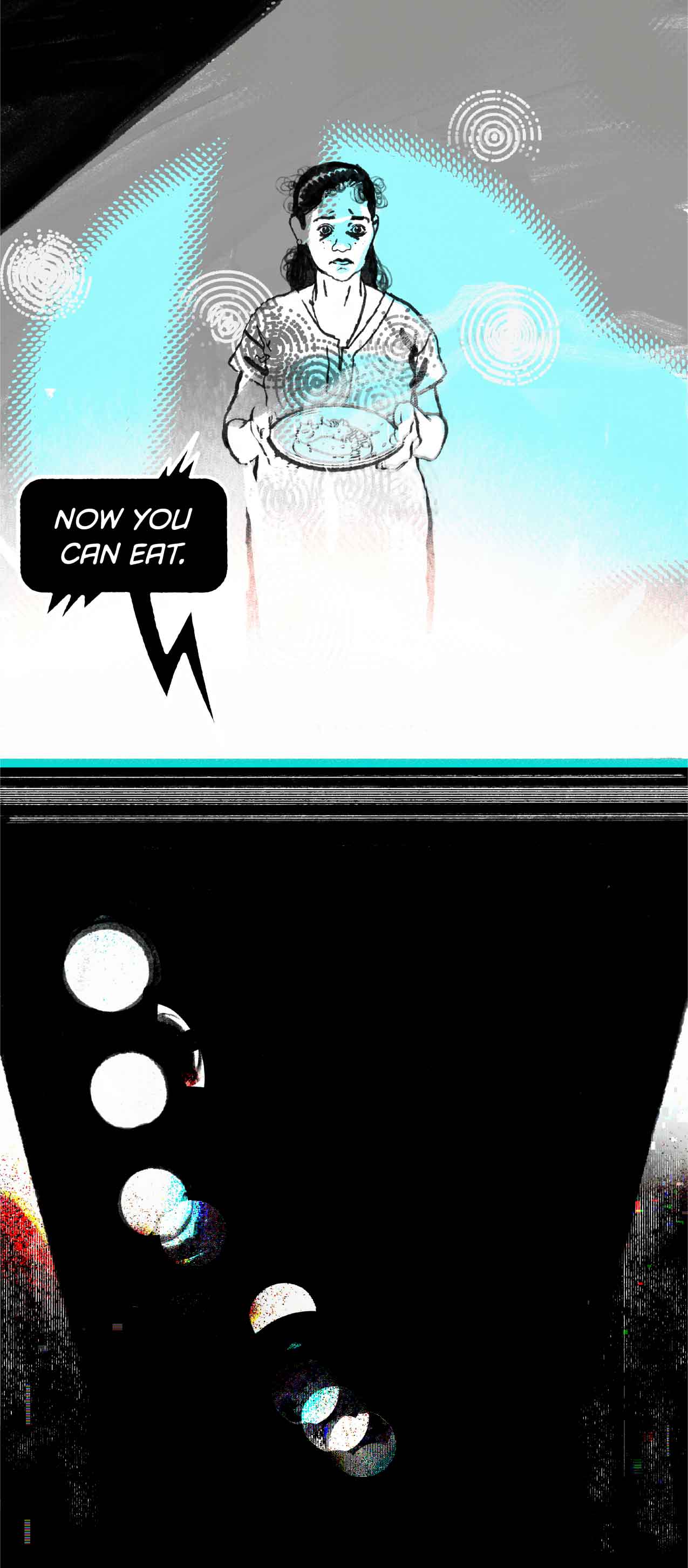
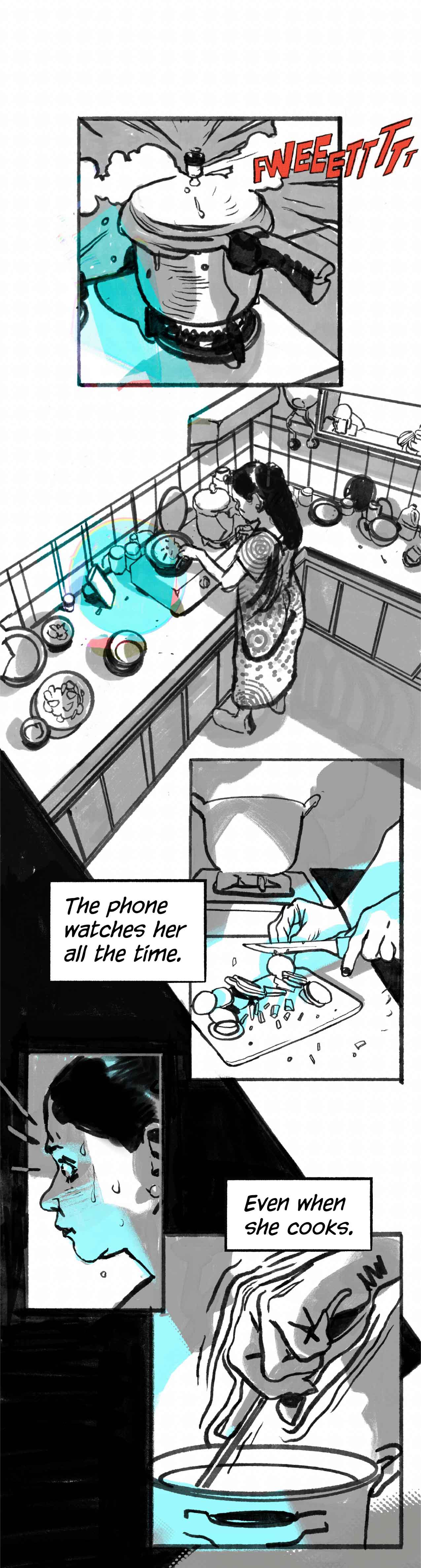
Comic sequence: A pressure cooker sounds. A woman is in her kitchen. A phone glows on the counter. She looks nervous, stirs a pot. Narrator: "The phone watches her. Even when she cooks."
The woman stands in front of the phone, holding her plate of food. The phone looms over her. It says: "Now you can eat."
Graphic novel title: trAPPed. The word is stylized as if it is coming out of the phone.

trAPPed

Arrested by phone — a true story

By Anand RKSuparna SharmaNatalie Obiko Pearson

इस लेख को हिंदी में पढ़ें ›

Read the feature article ›
Skip to full text version.
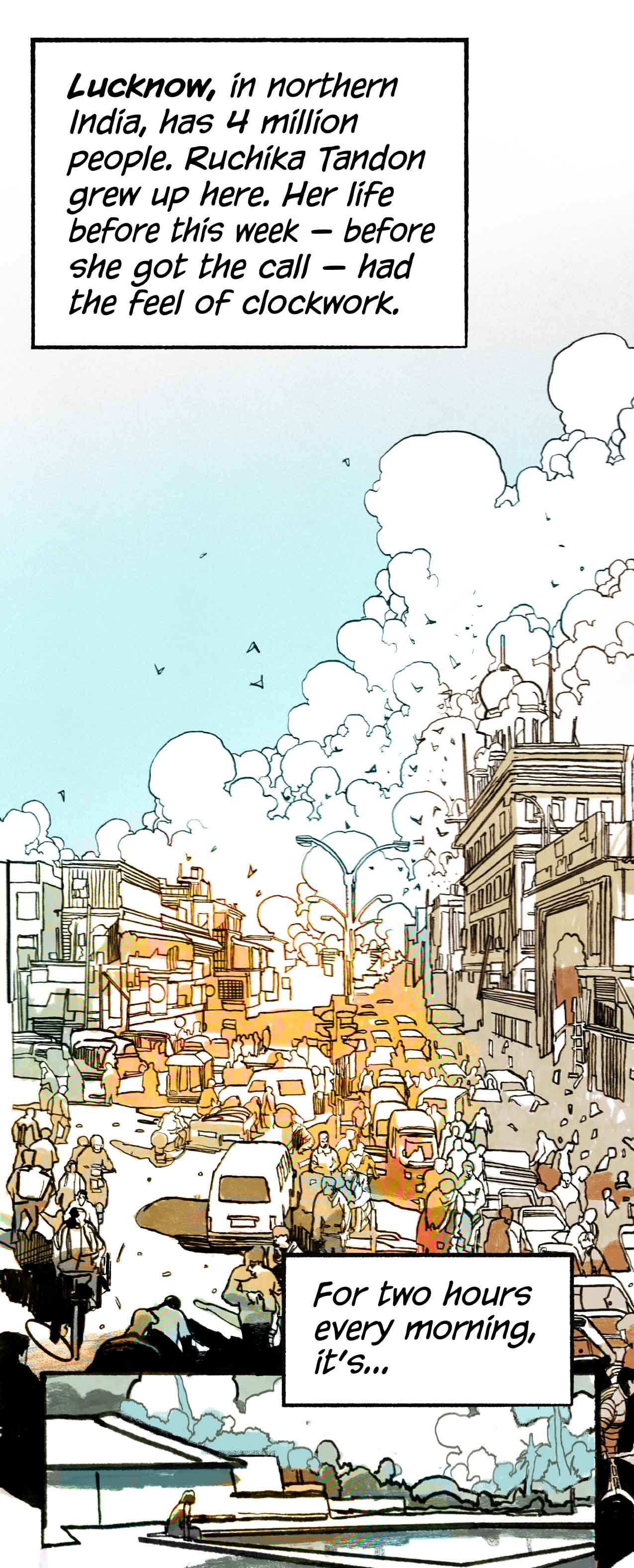
Clouds. Birds in the sky. A city scene: Lucknow, northern India. In the next panel, a woman sits at the edge of a pool.
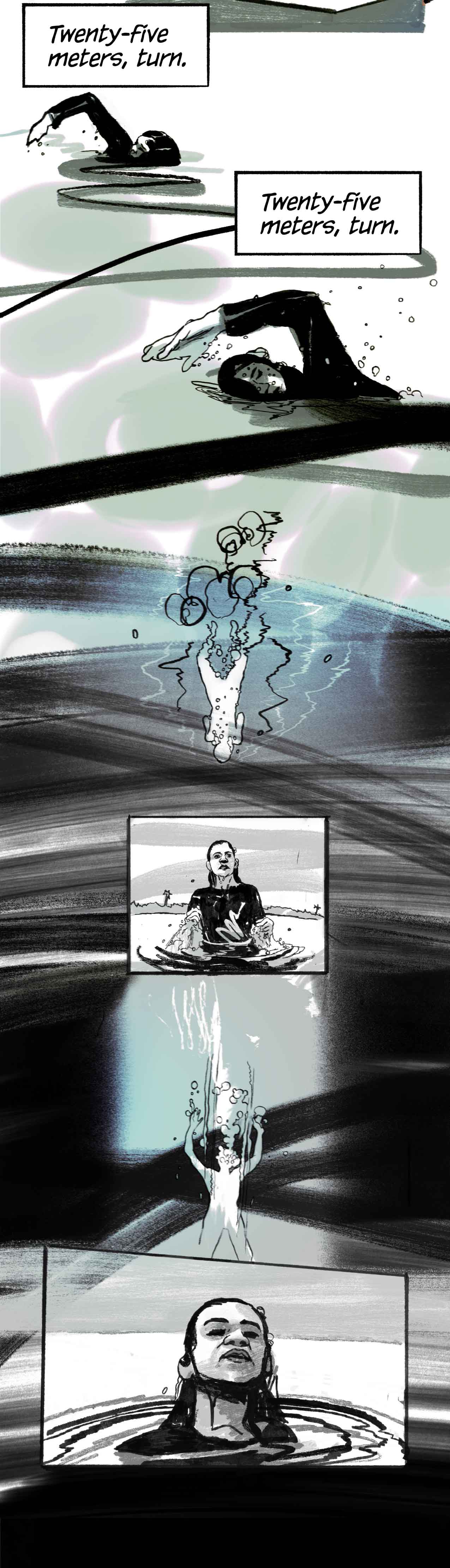
The woman, Ruchika Tandon, grew up here. She swims every day for two hours: twenty-five meters turn… twenty-five meters turn.
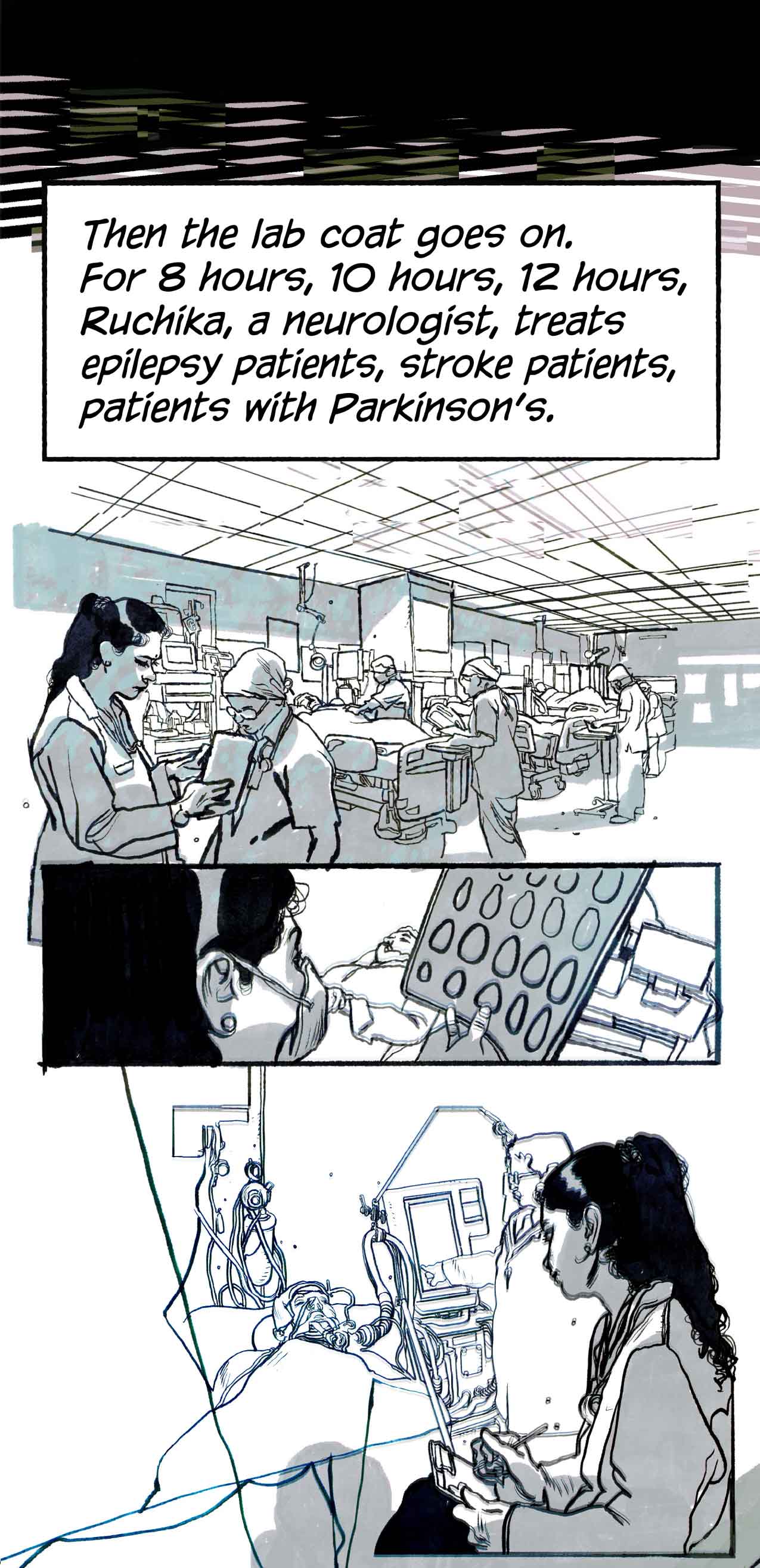
Narration: "Then the lab coat goes on." Ruchika, a neurologist, stands in a hospital, looks at scans, takes notes on a patient's case.
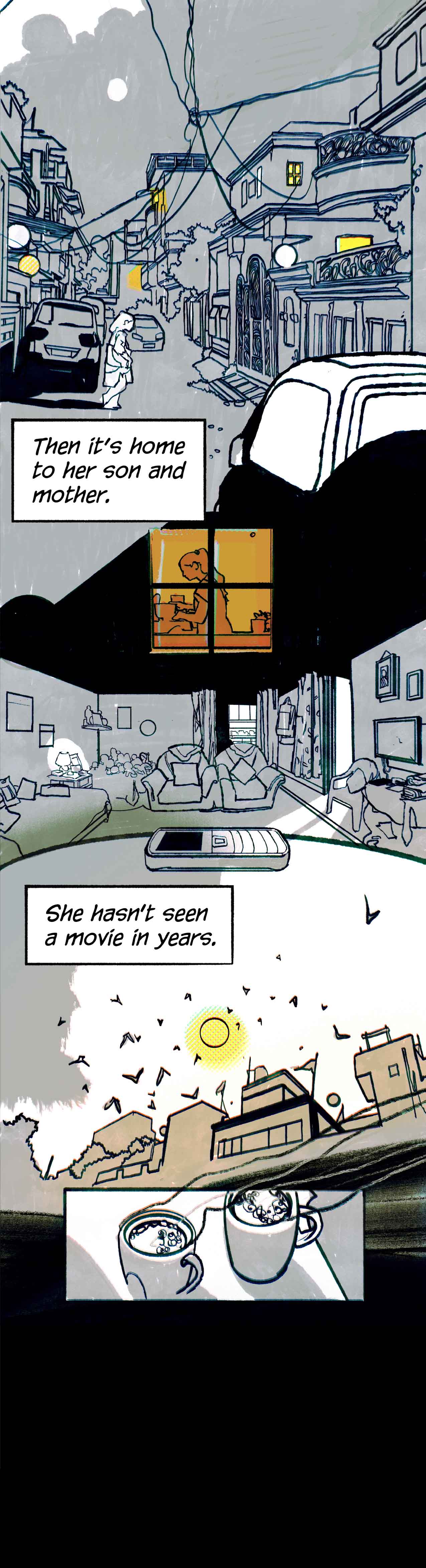
Narration: "Then it’s home to her son and mother." It's evening. Ruchika walks home. Windows glow. Her phone, an old keypad style, sits on the living room table.
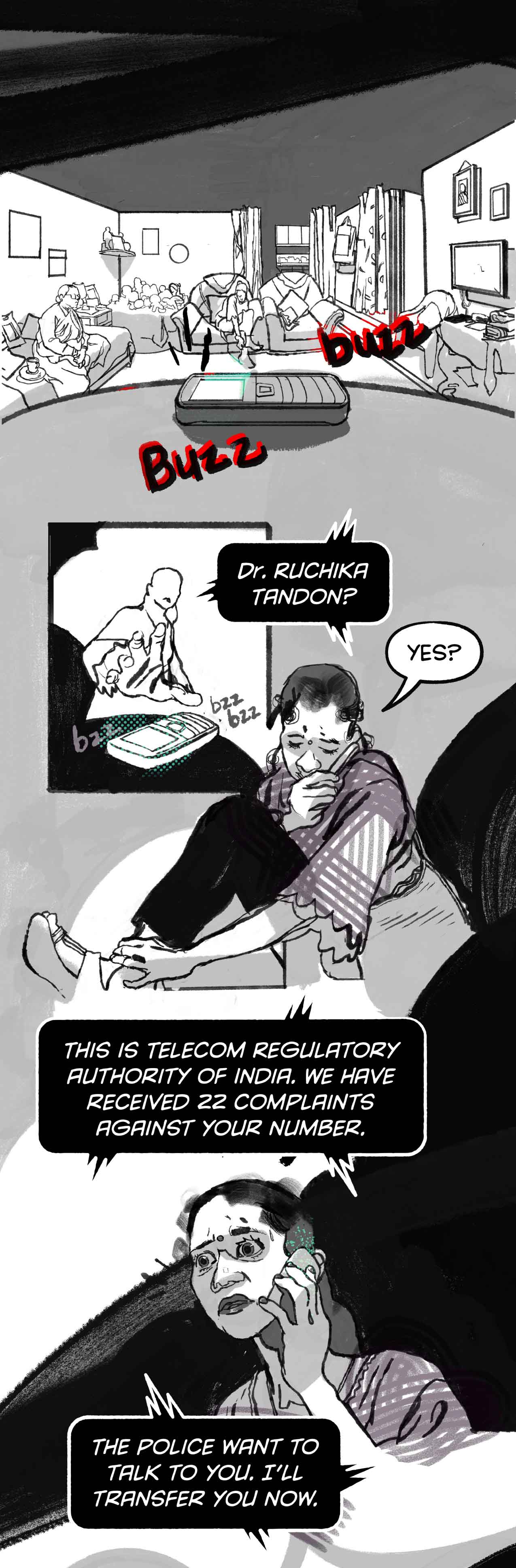
The phone rings. Ruchika picks up. Caller: "It's Telecom Regulatory Authority of India." There are complaints against her number. She is transferred to the police.
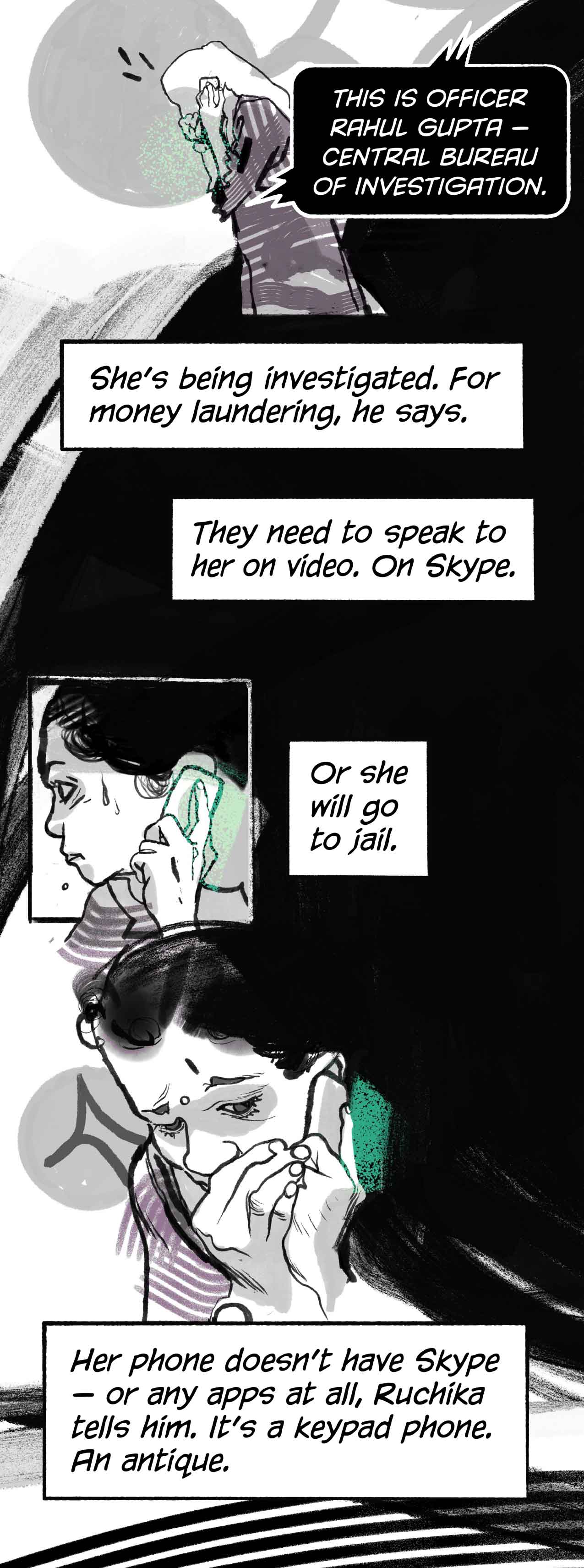
It's officer Rahul Gupta, Central Bureau of Investigation. She's under investigation. Money laundering. The police must speak with her on video, on Skype. Or she will go to jail.
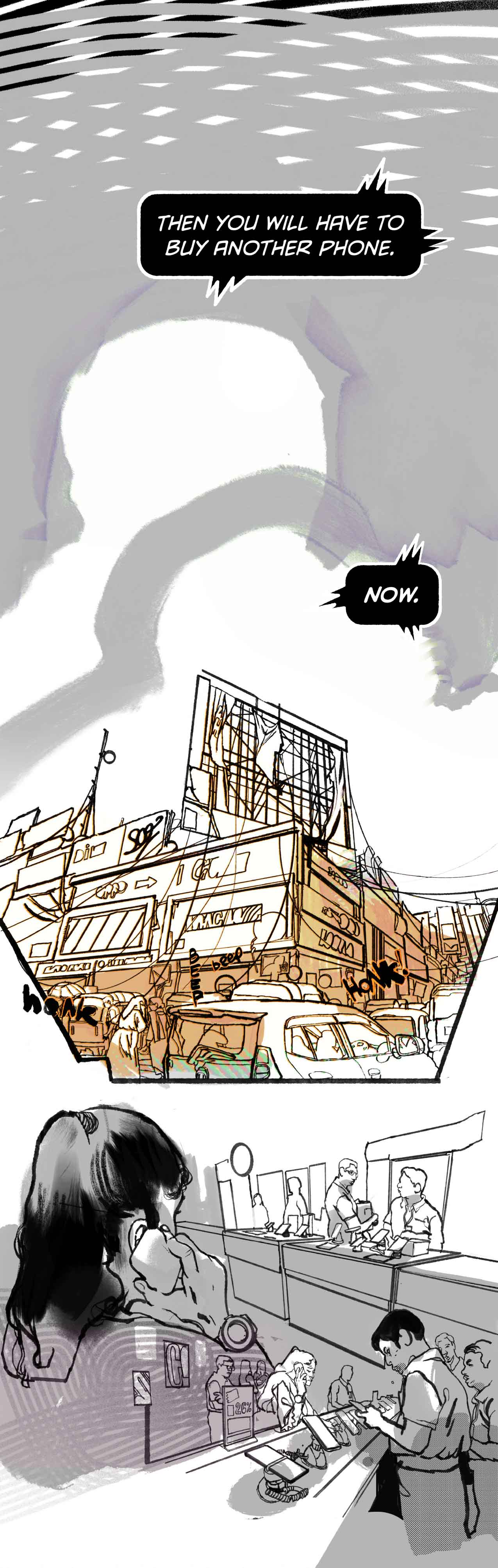
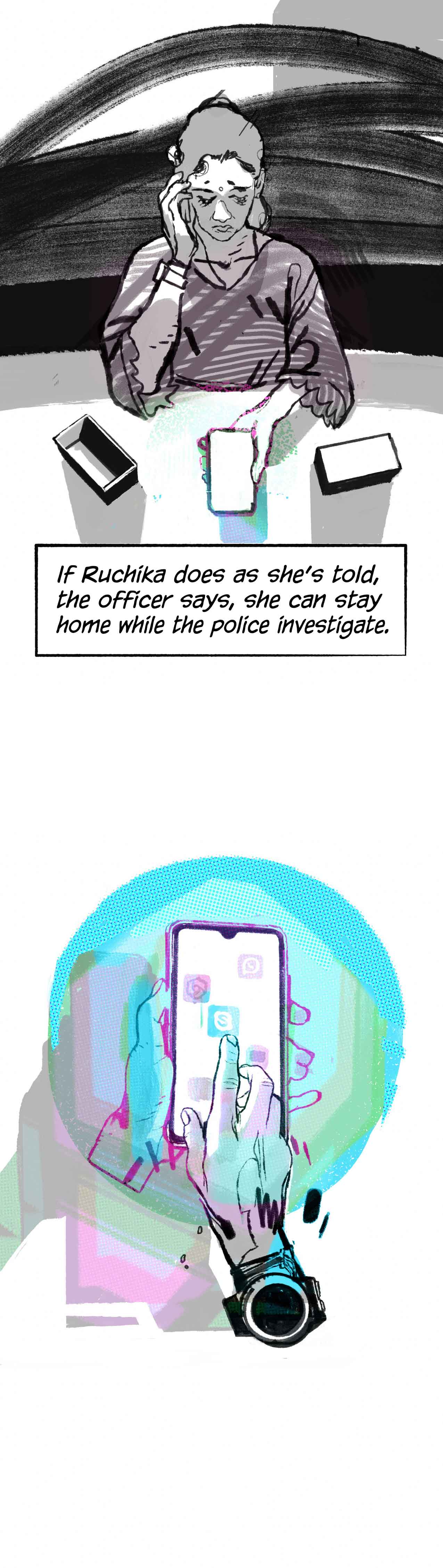
Ruchika explains that she doesn't have any apps, or a smart phone at all. Gupta: "Then you will have to buy another phone." A store fades into view. Ruchika walks in.
Narration: "If Ruchika does as she's told, the officer says, she can stay home while the police investigate." She looks down at her new phone, old phone still to her ear. She clicks on Skype.
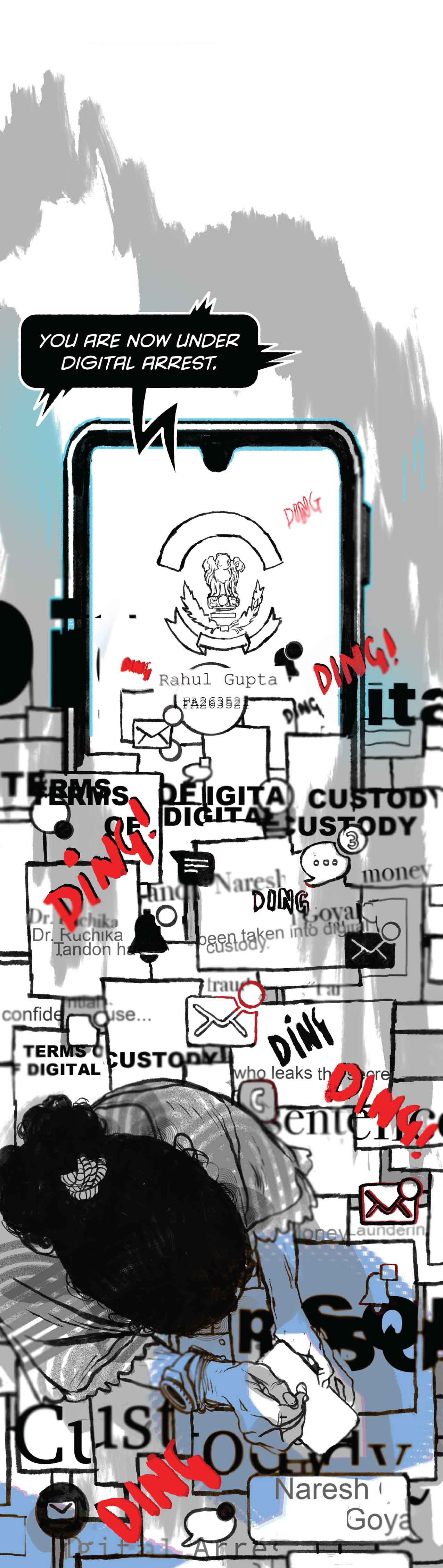
Phone: "You are now under digital arrest." The screen shows the Central Bureau of Investigation logo with Gupta's name below. New messages inundate Ruchika: Ding! Ding! Ding!
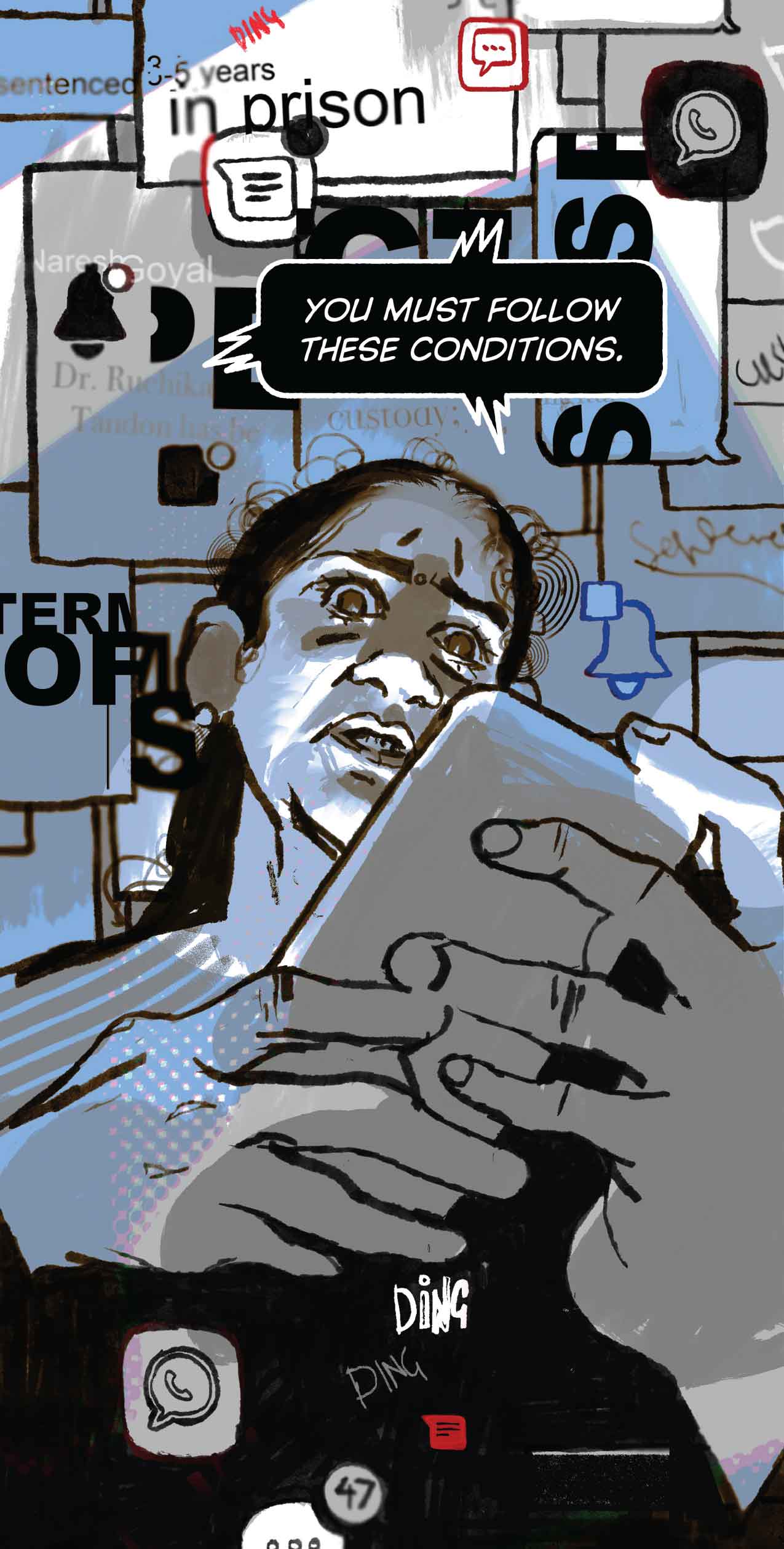
Ruchika stares down at the phone in mild horror. Phone: "You must follow these conditions."
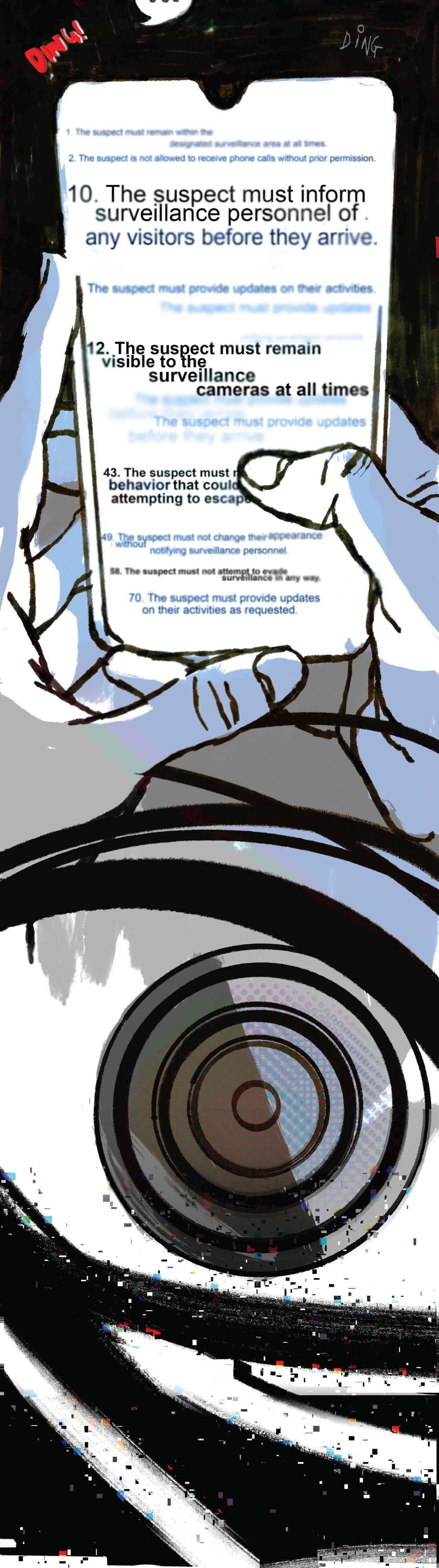
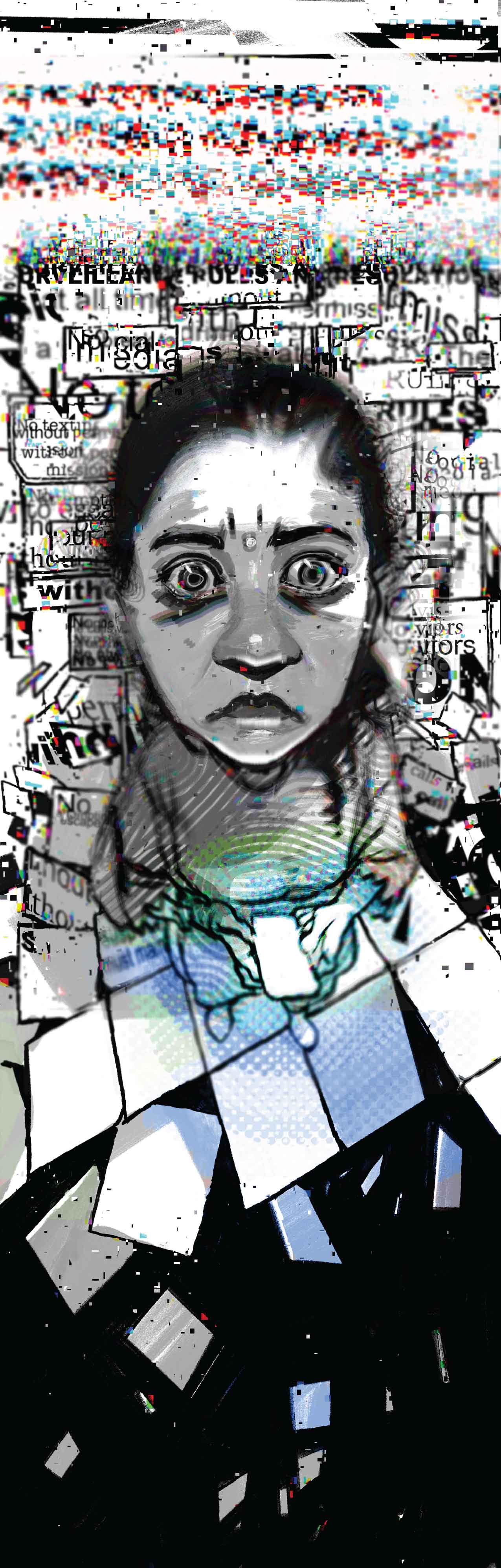
Rules fade into view. #10 says visitors aren't allowed without approval, #12 says she must remain visible to the cameras, #43 says she can't try to escape.
Ruchika is dizzy. The floor feels — and looks — like it's giving out beneath her feet.
A new officer from the Mumbai police asks her to take a psychological questionnaire — with 500 questions. It ends: What is your biggest fear?
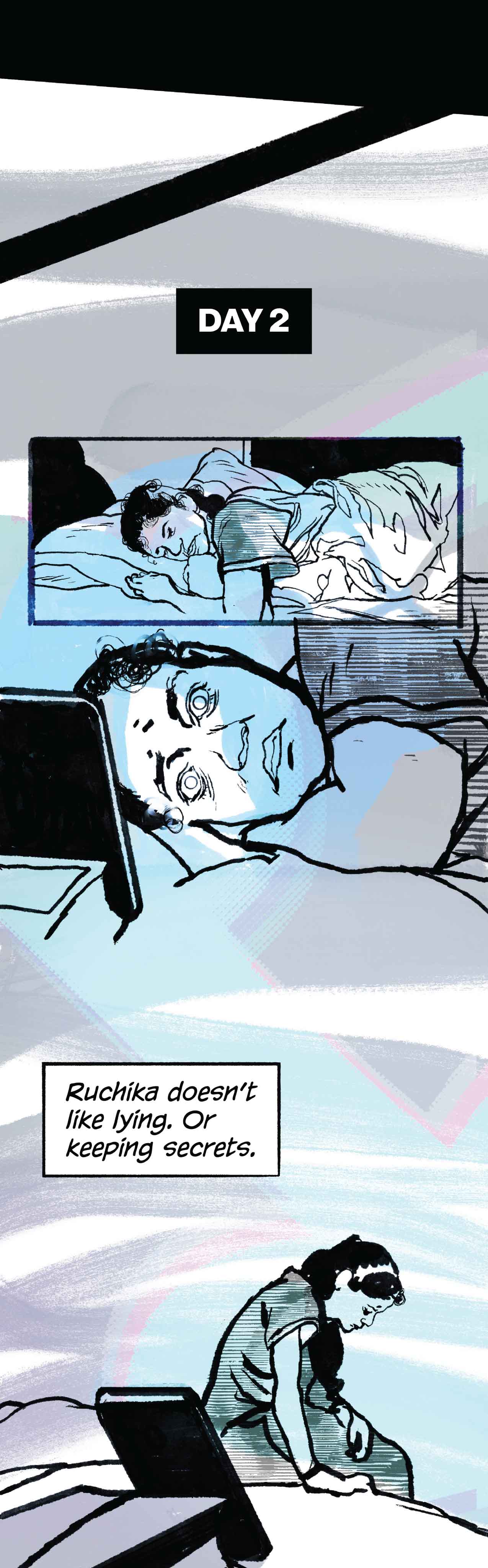
Day 2. Ruchika is sleeping. She opens her eyes. The phone is staring at her. She is bathed in its glow. Narration: "Ruchika doesn't like lying. Or keeping secrets."
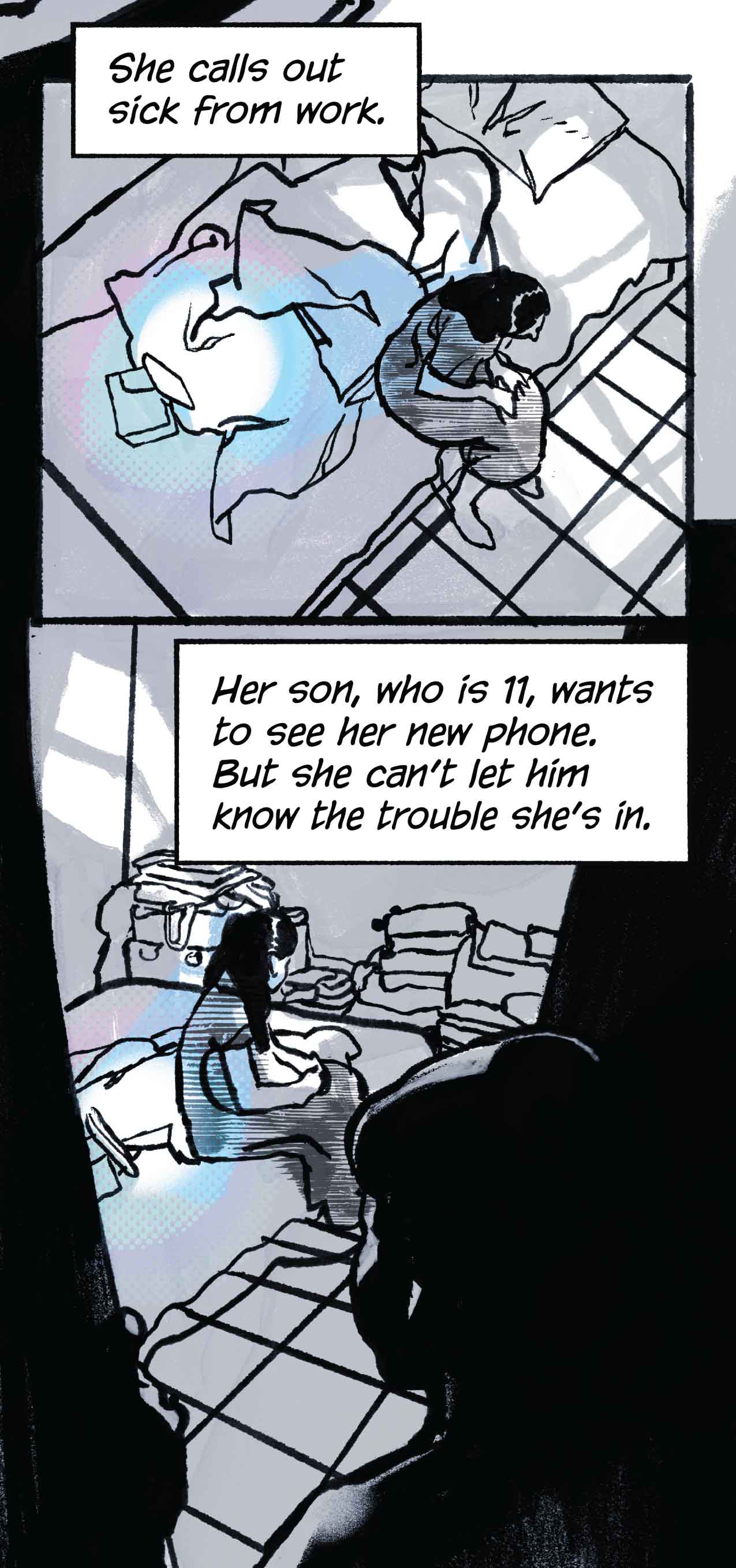
Narration: "Her son, who is 11, wants to see her new phone, but she can't let him know what trouble she's in."
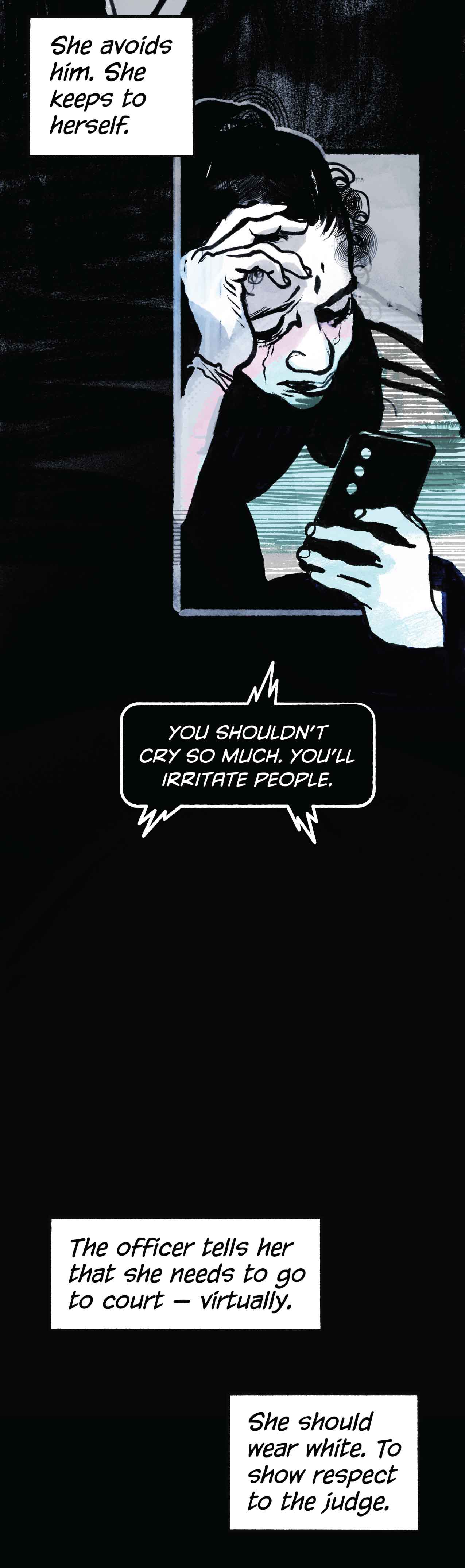
Narration: "She keeps to herself." Ruchika is crying. Phone: "Don't cry so much. You'll irritate people."
Narration: "The officer tells her that she needs to go to court — virtually. She should wear a white dress. To show respect to the judge." She stands in front of her phone in her living room, in a white dress.
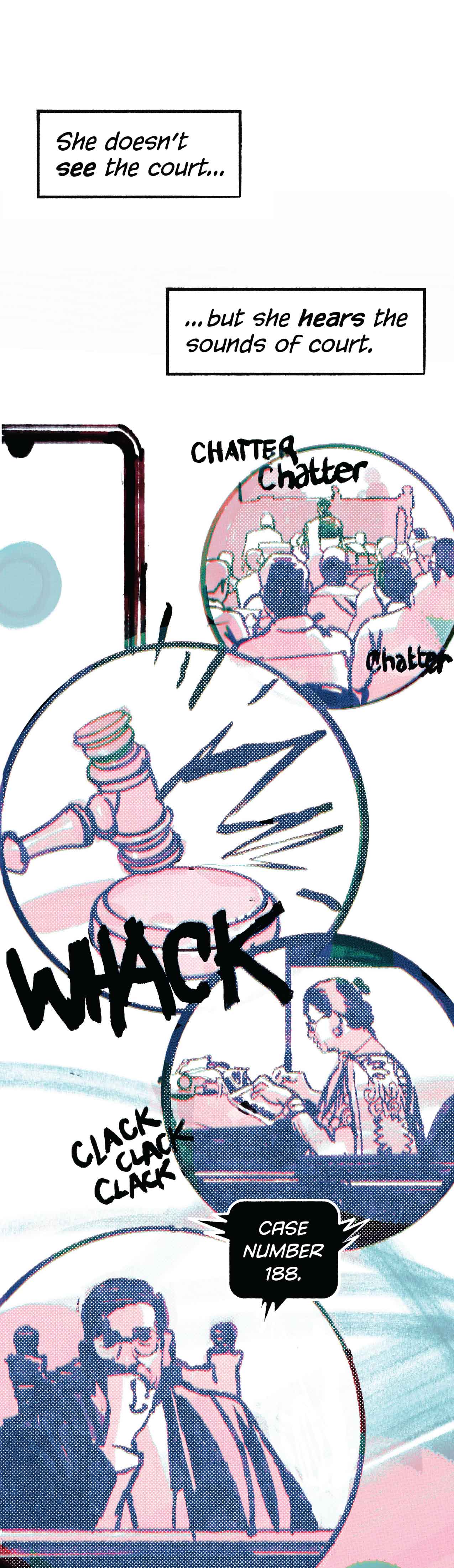
Narration: "She doesn't see the court, but she hears the sounds of court." A gavel whacks. Click clack from typing. Chattering crowds.
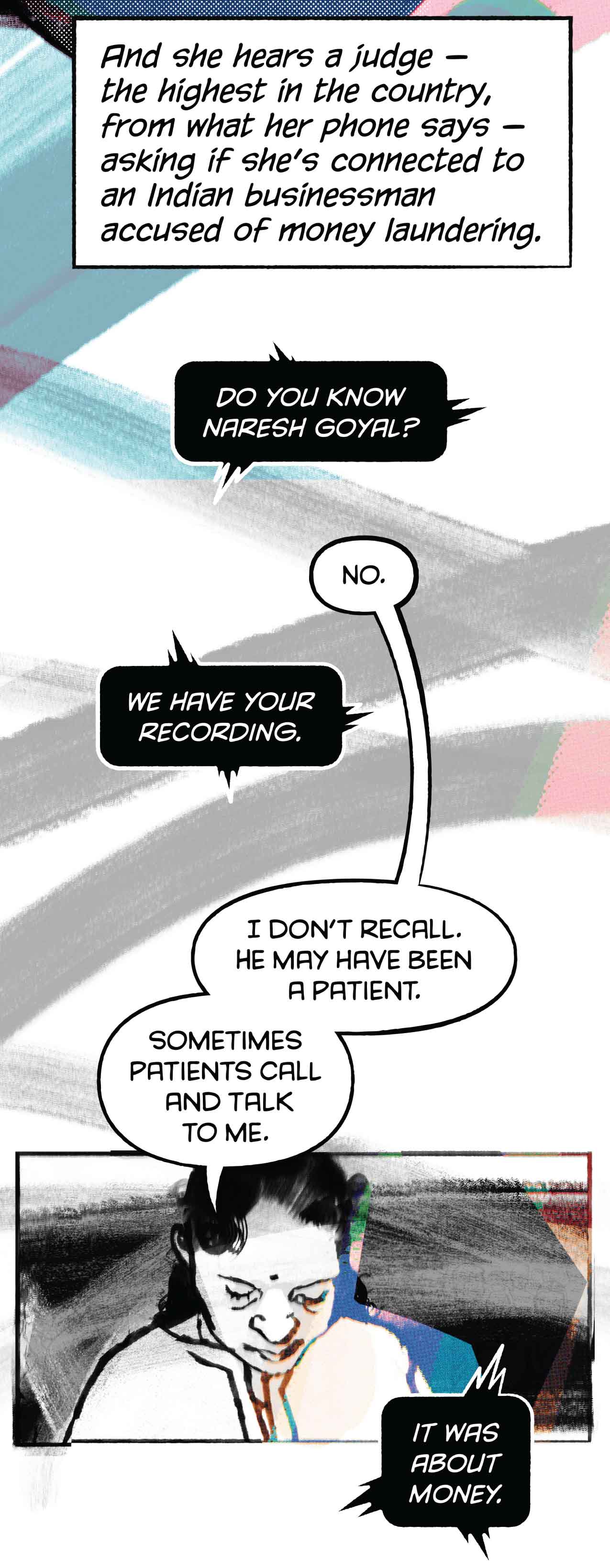
A judge, the highest in the country, from what her phone says, asks Ruchika if she knows a businessman accused of money laundering. "We have your recording," he says. She looks dejected, says: "I don't recall. Sometimes patients call me."
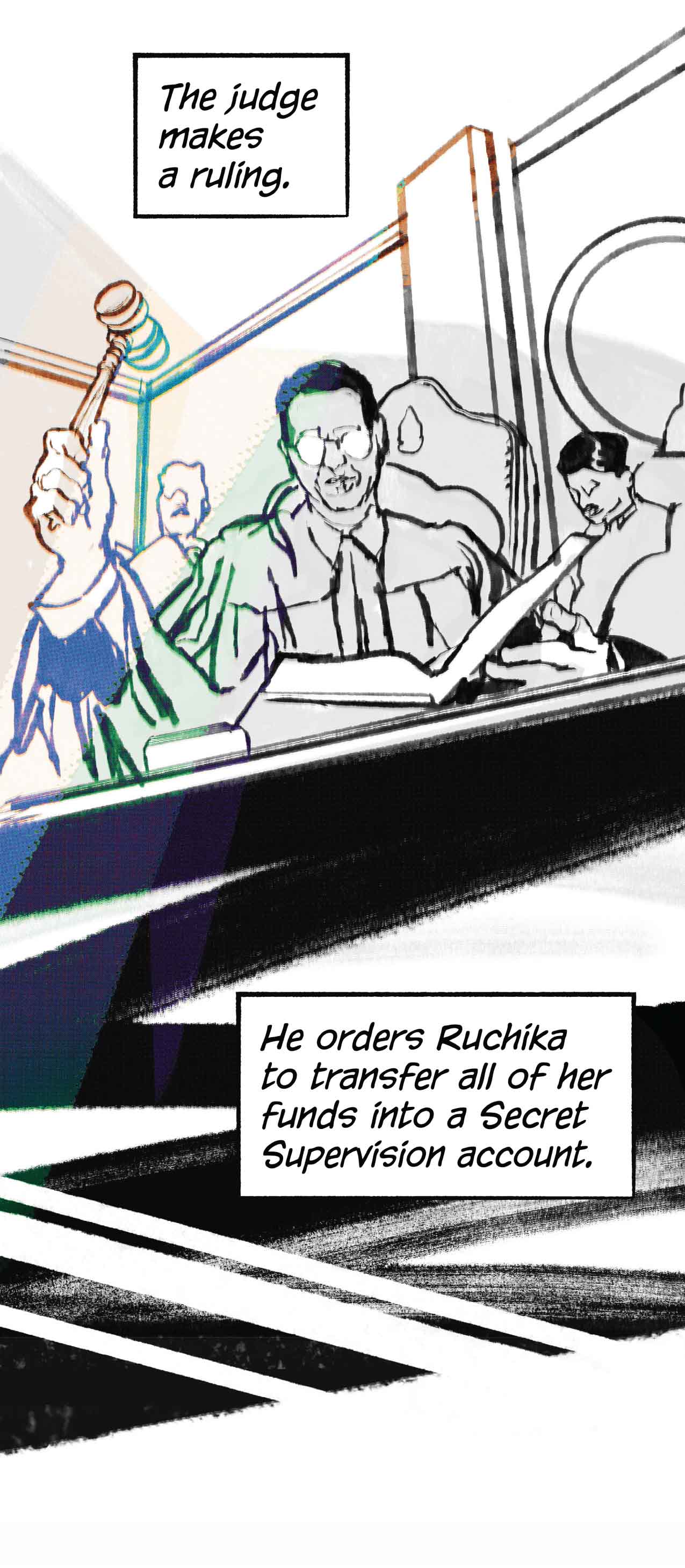
Narration: "The judge makes a ruling. He orders Ruchika to transfer all her funds into a Secret Supervision Account."
Ruchika is in the kithchen again. She hears: DING DONG! Her uncle is at the door. But the phone tells her she can't talk to him.
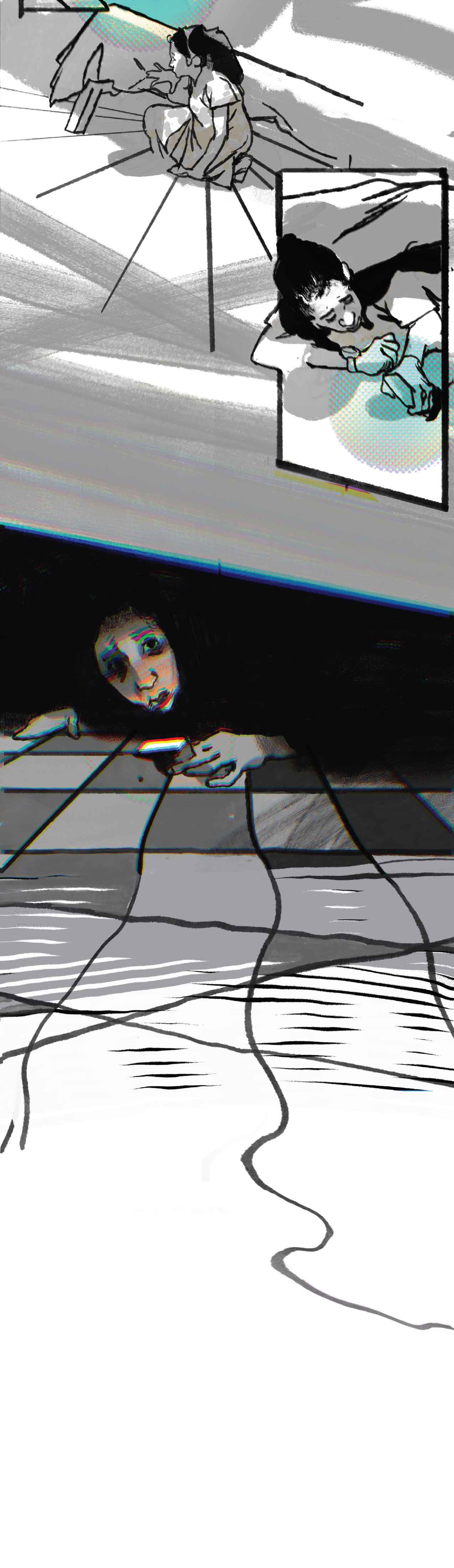
Ruchika begins to run, looking for a place to hide. She peers out from under the bed, phone in hand, casting a glow on her face.
Day 3. Narration: "Ruchika was raised to follows the rules. She has never been to a police station." She is crying as she asks: "Who has accused me?" She wipes away tears. loading: lazy
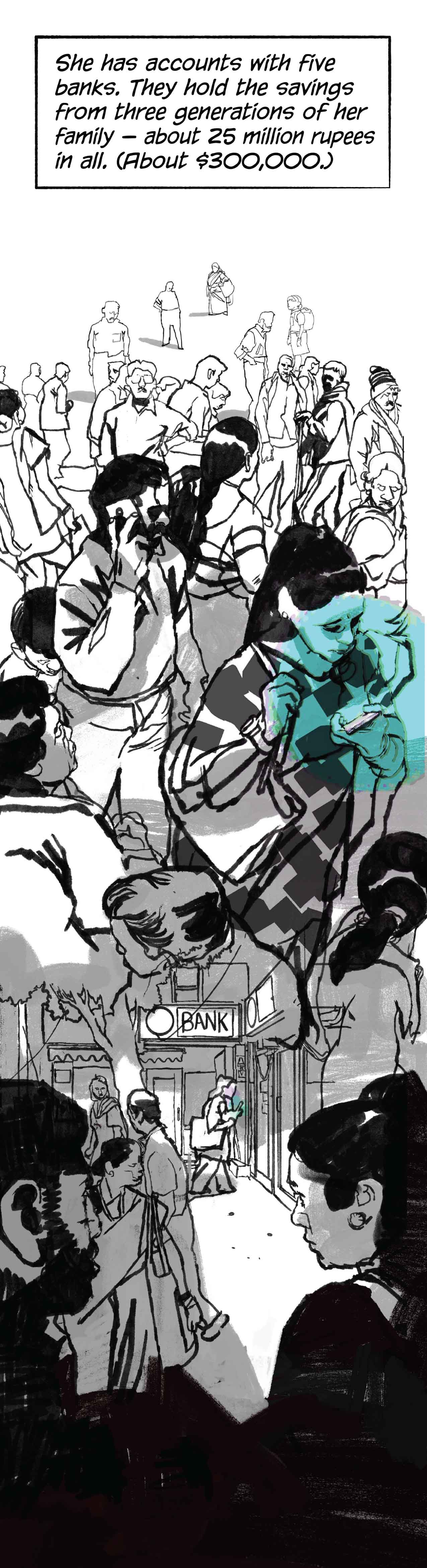
Ruchika is now in a crowd, walking towards a bank. Narration: "She has accounts with five banks. They hold the savings from three generations of her family."
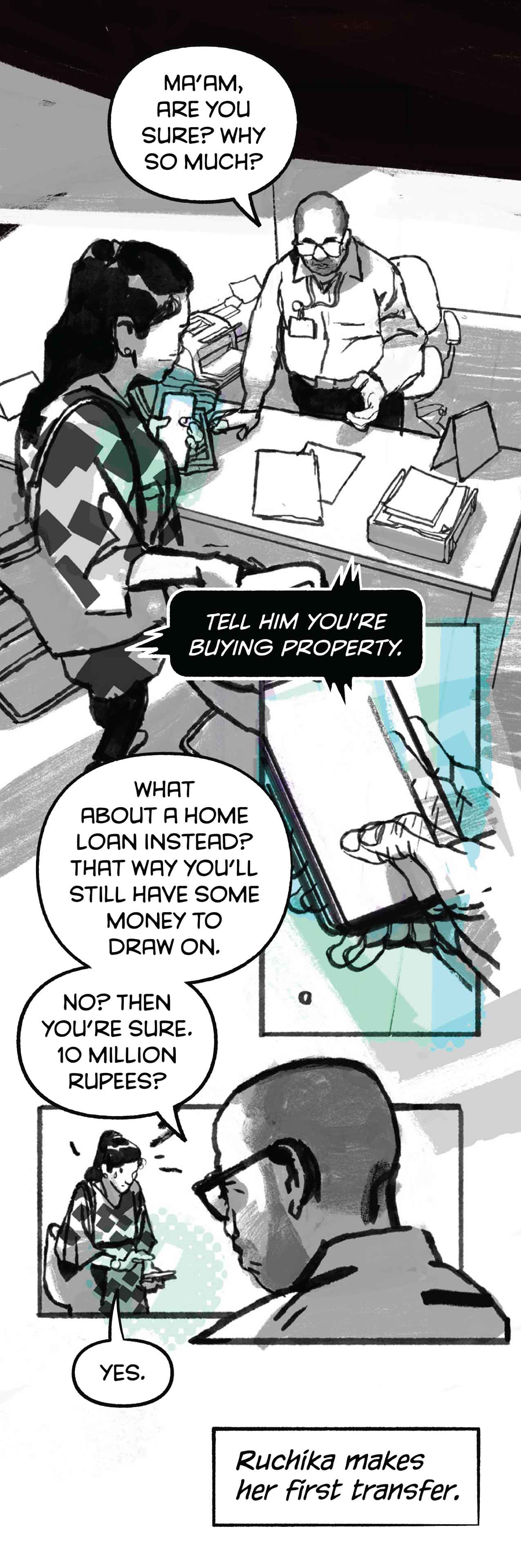
She sits down with a bank manager who asks: "Ma’am, are you sure?" She withdraws 10 million rupees and makes her first transfer.
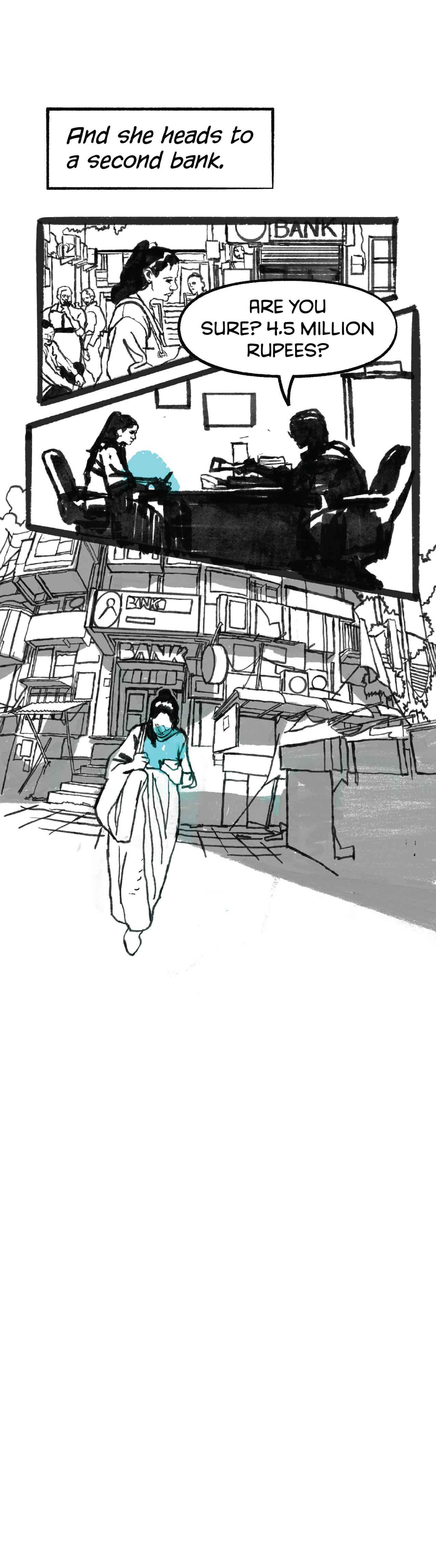
She goes to a second bank. The bank manager there also asks: "Are you sure? 4.5 million rupees?" As Ruchika walks out of the bank, she is looking down at her phone.
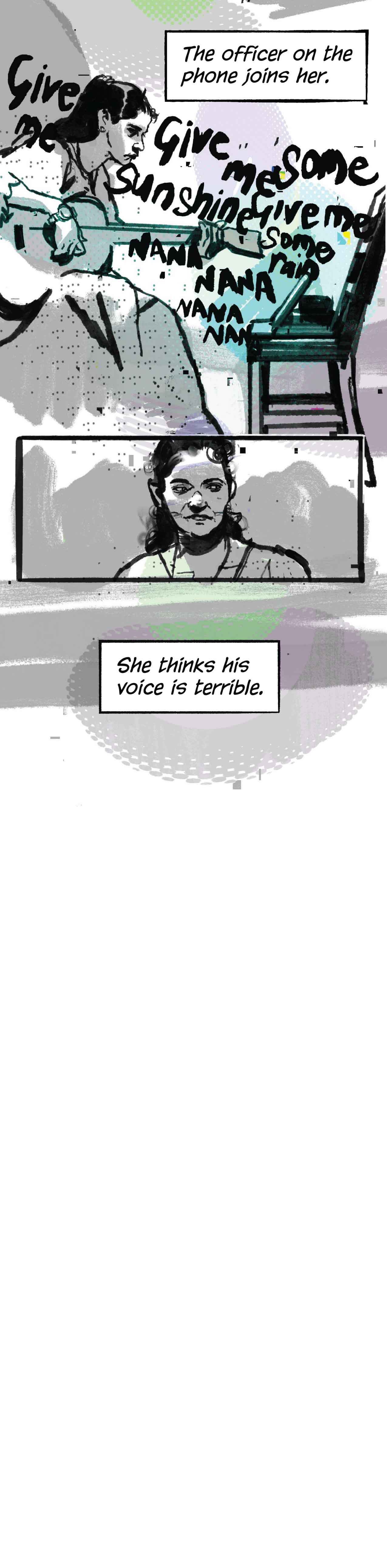
Day 4. Ruchika's son is leaving for a dance recital. She was supposed to play guitar, but she stays home, under surveillance. Phone: "The songs you were going to play? Why don't you play them now?"
Ruchika hesitates for a moment, then picks up her guitar and starts strumming. The officer on the phone joins her singing. She thinks: "His voice is terrible."
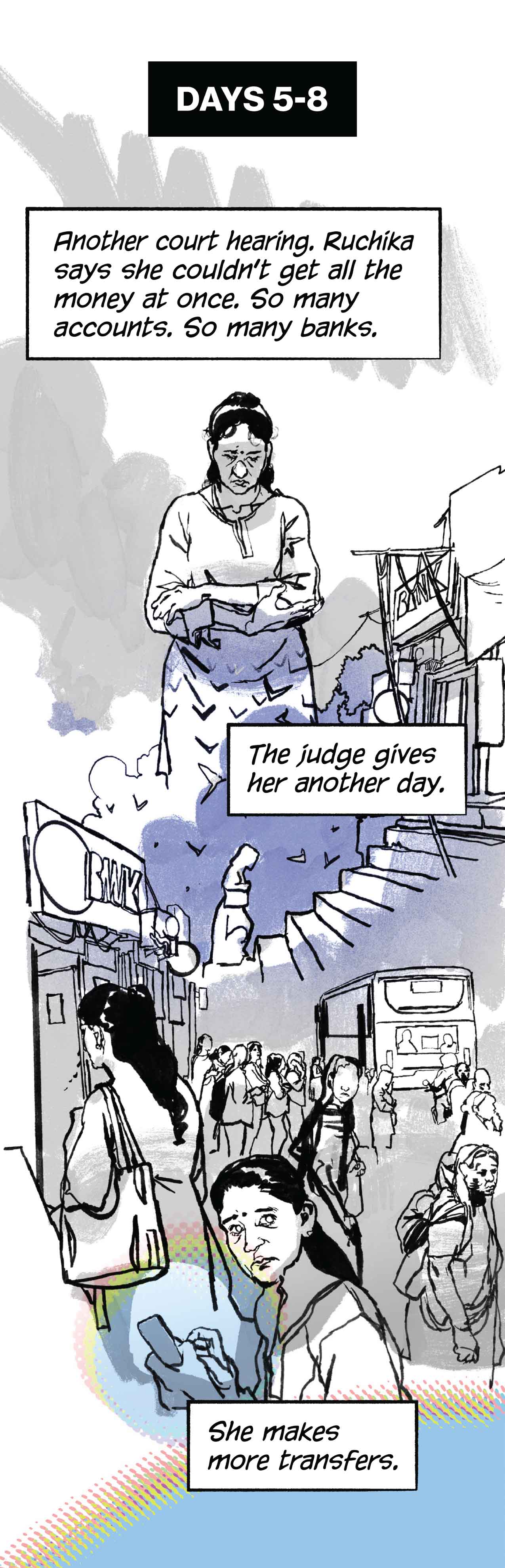
Days 5-8. Narration: Narration: "Another court hearing. Ruchika says she couldn't get all the money at once. The judge gives her another day." She goes to more banks.
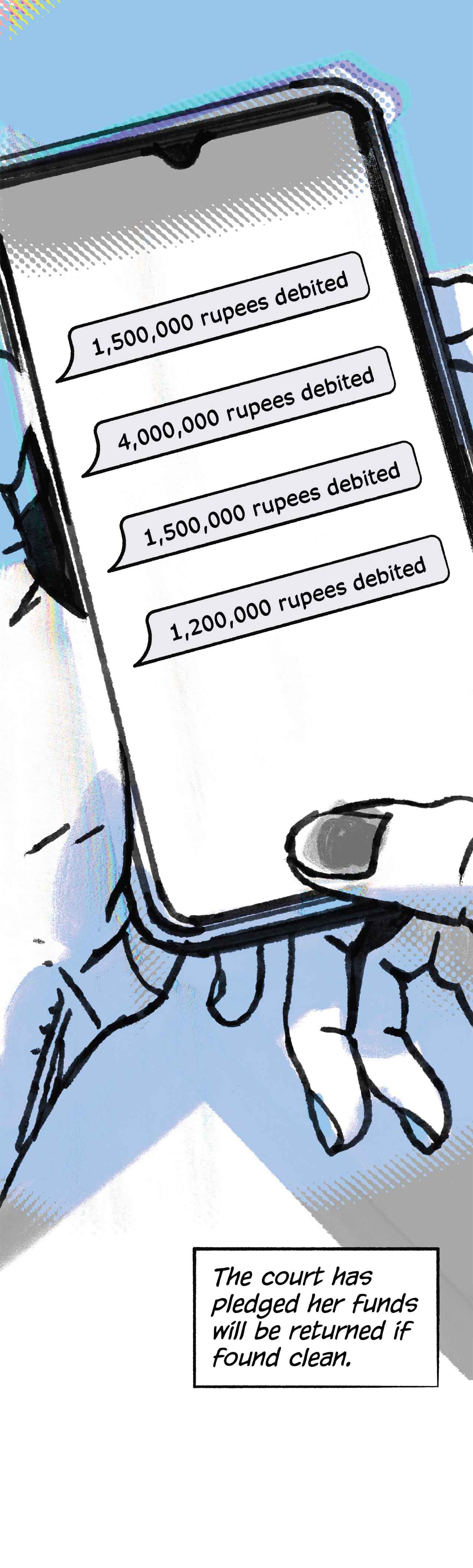
Messages flash across her phone screen confirming her debits: 1.5 million rupees, 4 million rupees, 1.5 million rupees, 1.2 million rupees. Narration: "The court has pledged her funds will be returned if found clean."
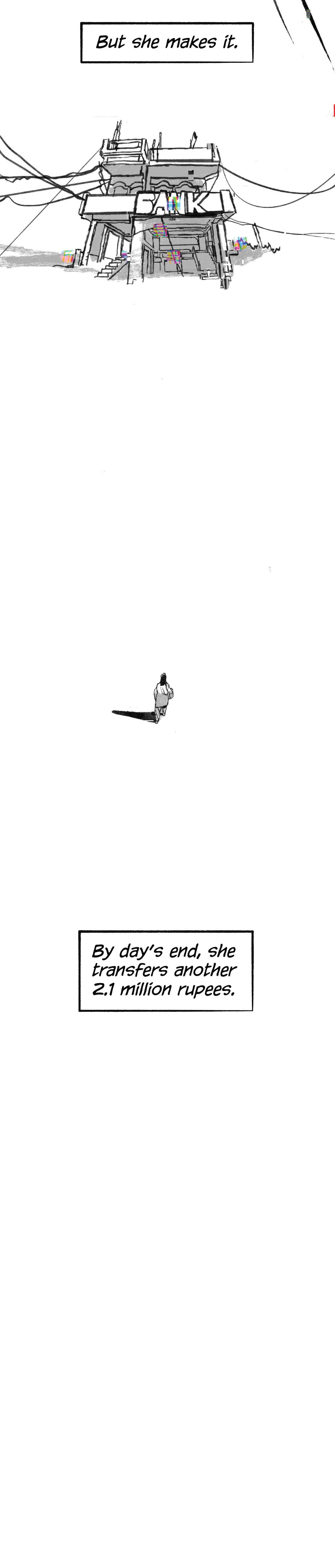
Phone: "We'll give you one last extension." Ruchika looks tired. A traffic jam unfolds. She is in the car, driving while the phone watches. A bus beeps loudly. It clips her mirror.
Ruchika makes a long trek to the last bank. Narration: “By day’s end, she transfers another 2.1 million rupees.”
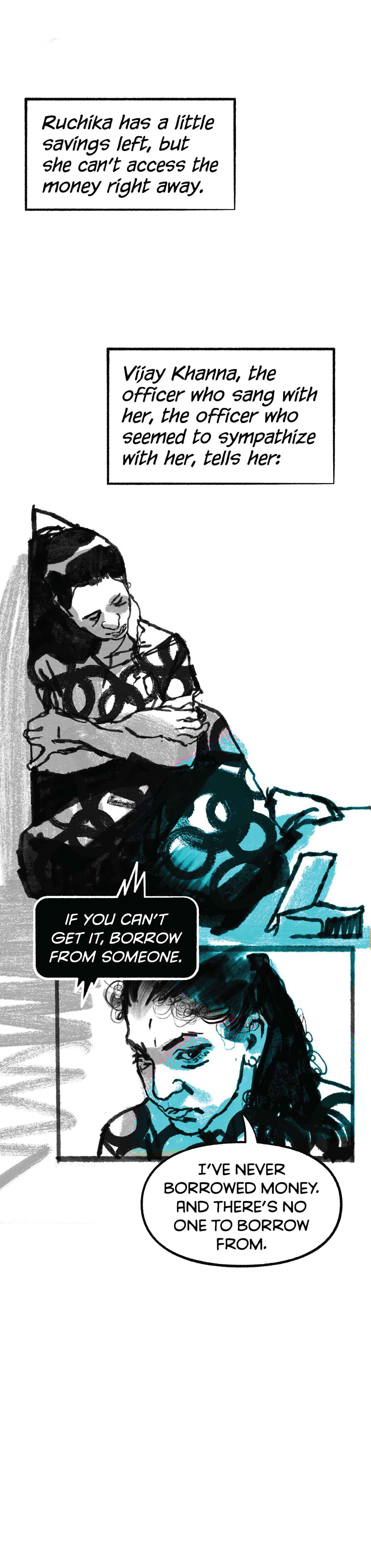
Ruchika is sitting slumped against a wall with the phone in front of her. It asks her if there's any more money. Can she borrow? For the first time, she looks angry and says no.
Day 9. Narration: “With no more money to move, the voices on her phone go away.” Ruchika, in bed again, wakes up, rubs her eyes. The phone sits in front of her, but its glow is gone.
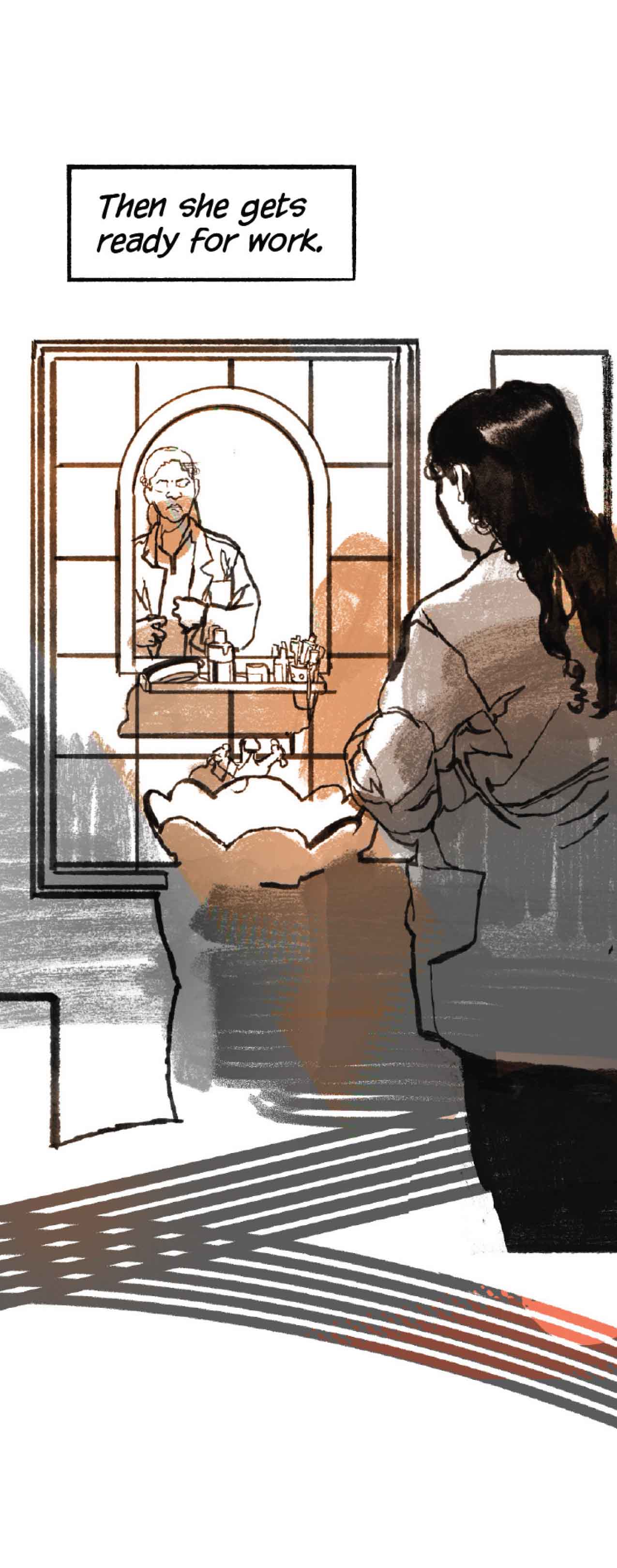
Narration: "Ruchika wonders what to do next." The sun shines through the window. Then she gets ready for work.
As she steps out onto the street, the sky above is vast, birds are flying. She exhales. Then, she’s back in the hospital, talking to patients.
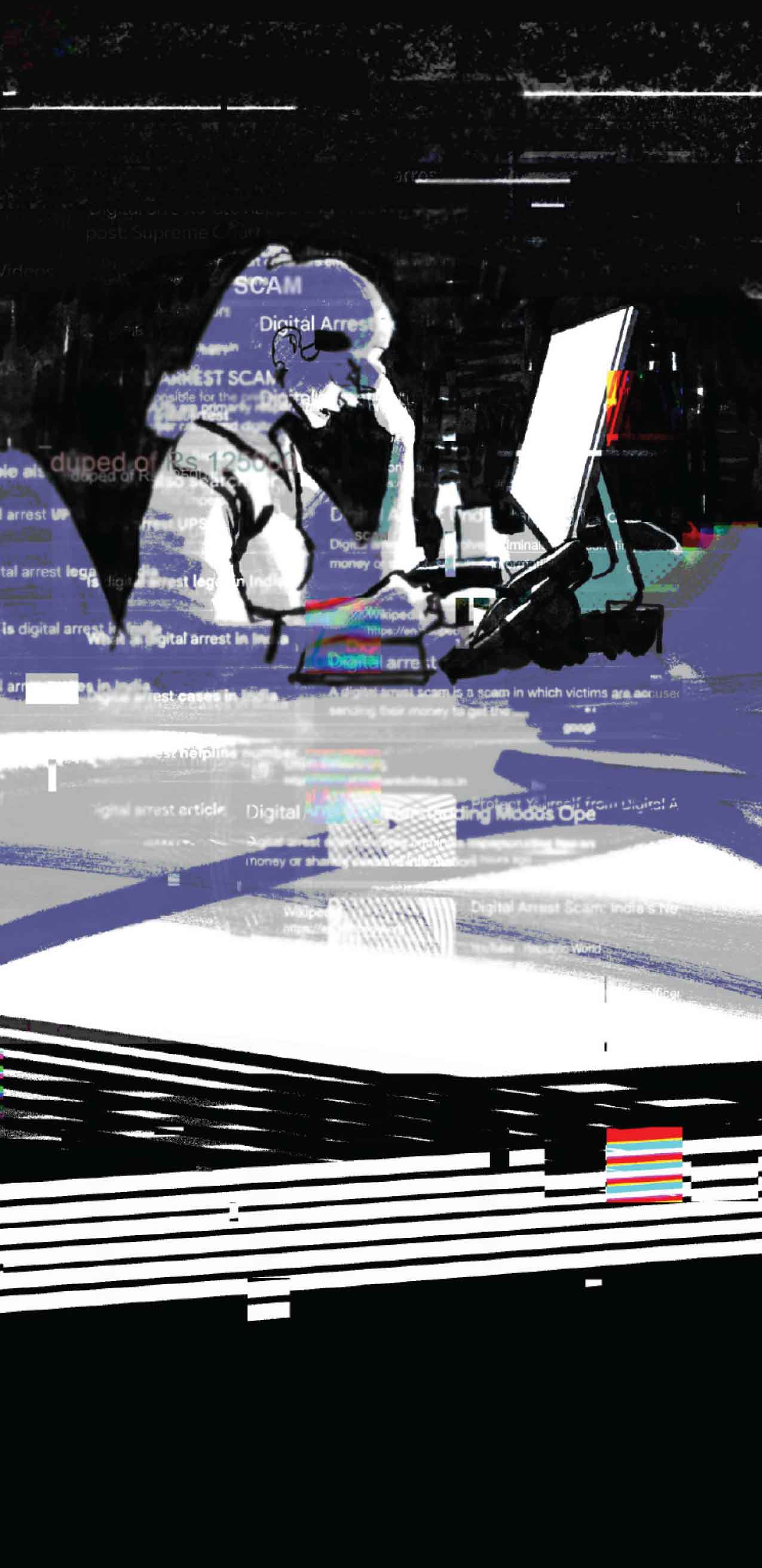
Day 10. Ruchika is sitting in front of a computer. Its glow envelops her. Narration: “By now, she feels safe enough to search for answers.” She types: “digital custo…”
The results come in: news stories, advisories, other links suggest people are being scammed, duped. She holds her head in her hands.
A long black sky reveals a building. Ruchika is walking up to it. The sign on the front reads: Cyber Crime Police.
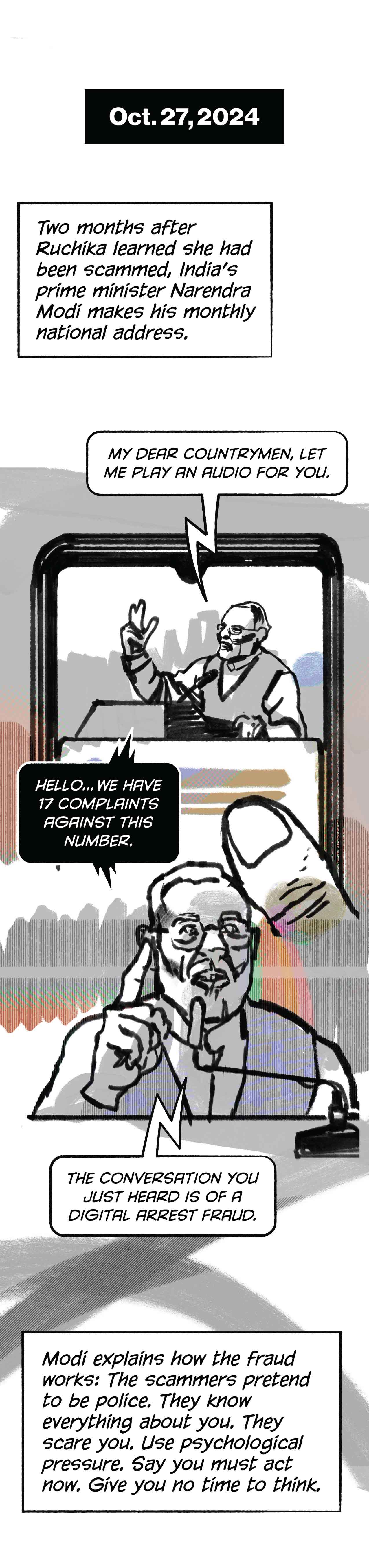
Oct. 27, 2024. Narration: “Two months after Ruchika learned she had been scammed, India’s prime minister Narendra Modi makes his monthly national address.” He explains such scams are proliferating.
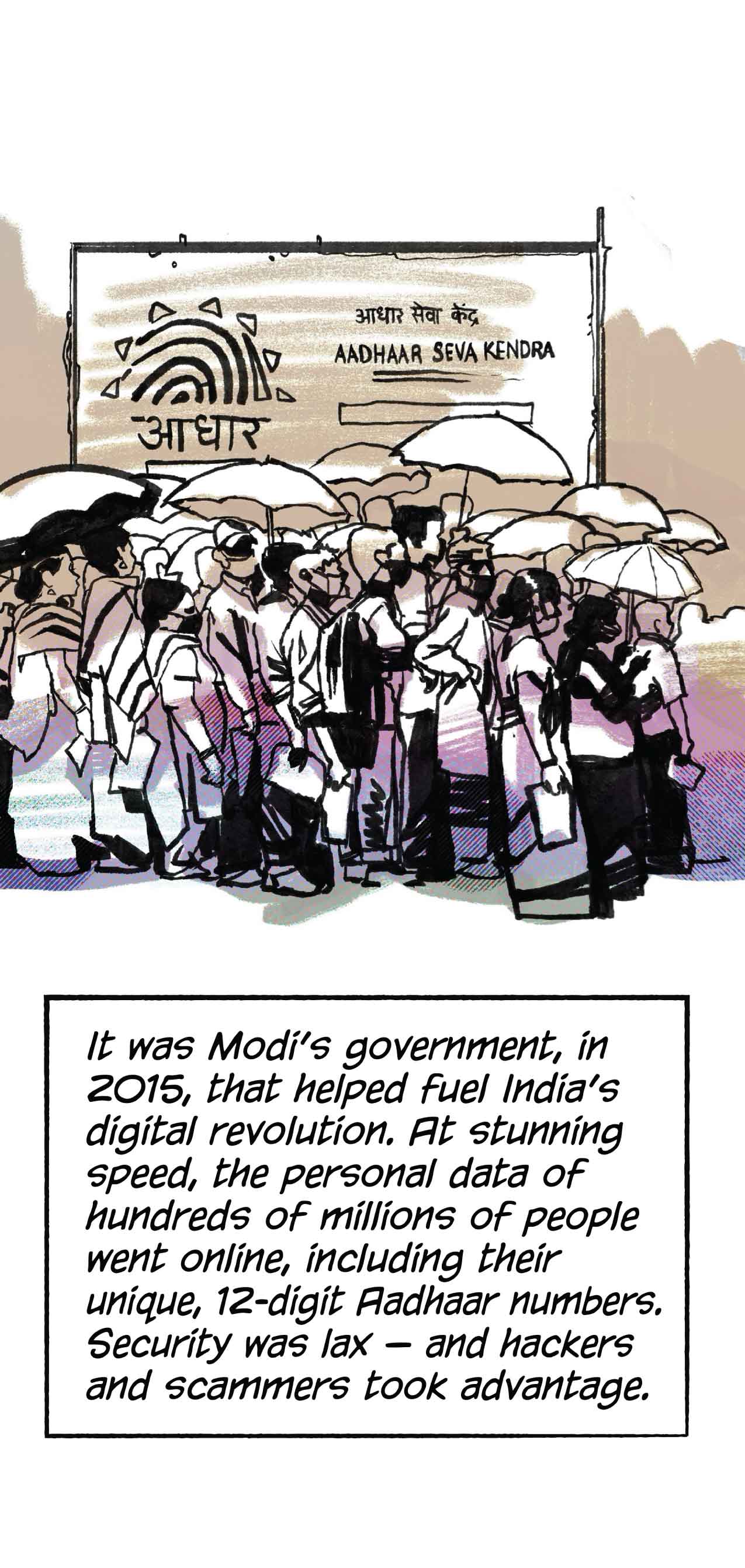
A crowd of people. Narration: “It was Modi’s government, in 2015, that helped fuel India’s digital revolution. Security was lax — and hackers and scammers took advantage.”
Back to night sky. Lucknow again. Narration: “This year Bloomberg reporters investigating these scams discovered a fraud kit online, with scripts and instructions on how to put someone under digital arrest. It can be bought for $9.99.” Wires crisscross the sky. Cars, trucks, people move down the street. Narration: “They also discovered spreadsheets of potential victims… including: Ruchika Tandon.”

Anand RK, an artist in Mumbai, illustrated the graphic novels “Blue in Green” and “Grafity’s Wall.” He also paints and has done artwork for DC Comics.

Suparna Sharma is a freelance journalist in Delhi. A veteran investigative correspondent, she has done extensive reporting on crime and the courts.

Natalie Obiko Pearson, based in Tokyo, is Bloomberg’s senior investigative reporter for Asia. She lived in and reported on India for seven years.

Lettering by Aditya Bidikar. Color by Nisha Singh. Translation by Zeeshan Hasan Akhtar.

Produced by Nadja Popovich, Amanda Cox, Ken Armstrong, Flynn McRoberts and Jui Chakravorty.

For a text version of this graphic novel, click here.