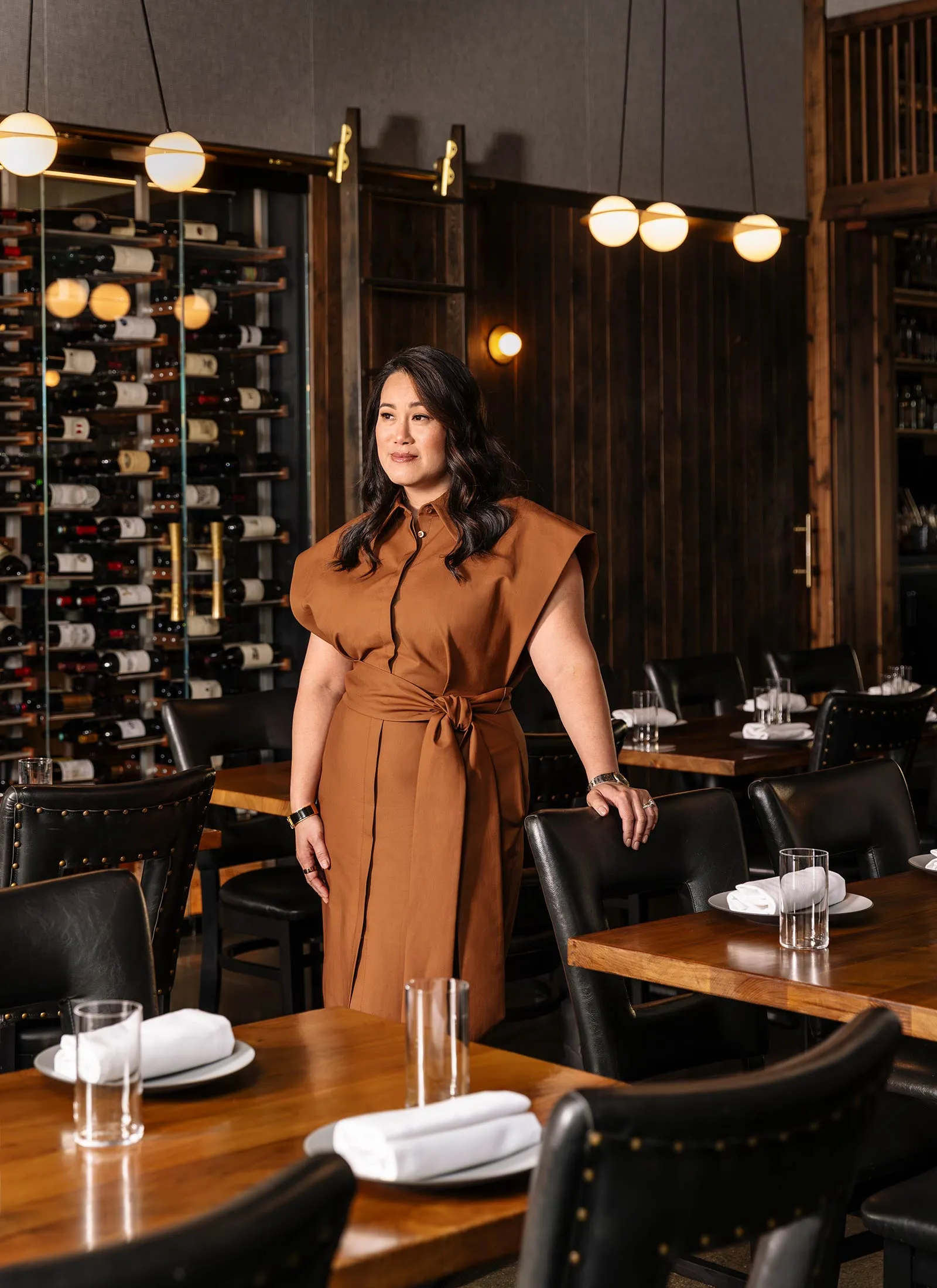
OpenTable CEO Debby Soo at Niku in San Francisco.
Photographer: Alanna Hale for Bloomberg BusinessweekOpenTable Won Over the Wrong Customers, Then Changed Course
The pioneering reservation app was losing marquee restaurant groups before its chief executive made some big changes.
When Debby Soo took the helm at OpenTable in August 2020, the world’s oldest online reservation platform was hemorrhaging customers—and she knew the pandemic wasn’t entirely to blame. The company was “resting on its laurels,” Soo says. “People called us a dinosaur.” Long before Covid-19 decimated the dining industry, OpenTable had been losing marquee restaurant groups to a rising cohort of competitors. And no wonder, she says: “Restaurants hated us.”
Though everyday diners might think of themselves as OpenTable’s core customers, it’s the restaurants that actually pay for its services, sometimes as much as $6,000 a year. OpenTable had been focusing too much on diners and too little on the needs of its real customers—in some cases forcing them to sign three-year contracts during the pandemic—and it had left a bitter taste. In her first two years as chief executive officer, Soo crisscrossed the country to sit down with eatery owners and “just got yelled at, meeting after meeting,” she recalls. “It was like, ‘You didn’t build these features. You were so expensive. You were fleecing me.’” To Soo, OpenTable’s mission statement at the time—“We make it easier for people to experience the world through dining”—betrayed a misguided self-conception. “Let’s not beat around the bush here,” she says. “Restaurants pay us.” And “if they’re suffering, we suffer.” (OpenTable’s new mission statement: “We serve restaurants so they can serve the world.”)