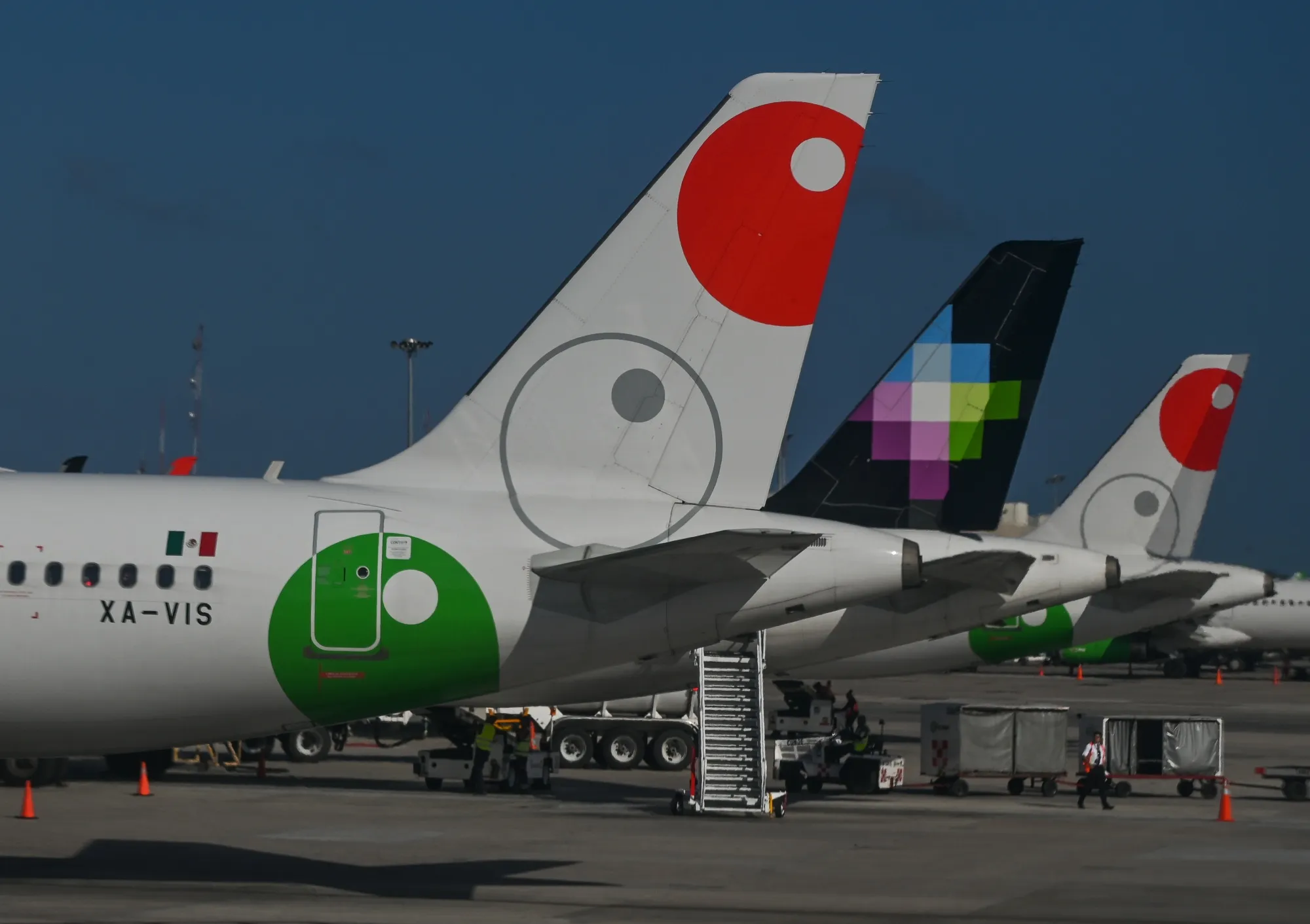
Mexico’s Viva and Volaris, center, low-cost carriers plan to merge.
Photographer: Artur Widak/NurPhoto/Getty Images
Mexico’s Low-Cost Airlines Are Merging in a Deal That Raises Antitrust Fears
Joining forces will give Viva and Volaris more leverage when buying fuel and aircraft. Critics worry it’ll mean the end of budget flying in Latin America’s second-largest domestic market.
Lea en español
The first few years of the millennium were a dream for Mexican air travelers on a budget. The country’s airspace, long dominated by legacy carriers Grupo Aeroméxico SAB and Grupo Mexicana de Aviación, was inundated with a flurry of low-cost airlines in 2005 and 2006, with the likes of Interjet, Viva Aerobús and Volaris all competing to sell primarily domestic airfare for only slightly more than the price of a bus ticket. Travel on local routes proliferated, and air travel was quickly transformed from a luxury for deep-pocket elites into a nearly everyday indulgence.
Today, after several pandemic-induced bankruptcies, only three major airlines operate Latin America’s second largest domestic market. That number will likely fall to two, raising concerns about an effective duopoly in a market that serves 63 million domestic travelers every year.