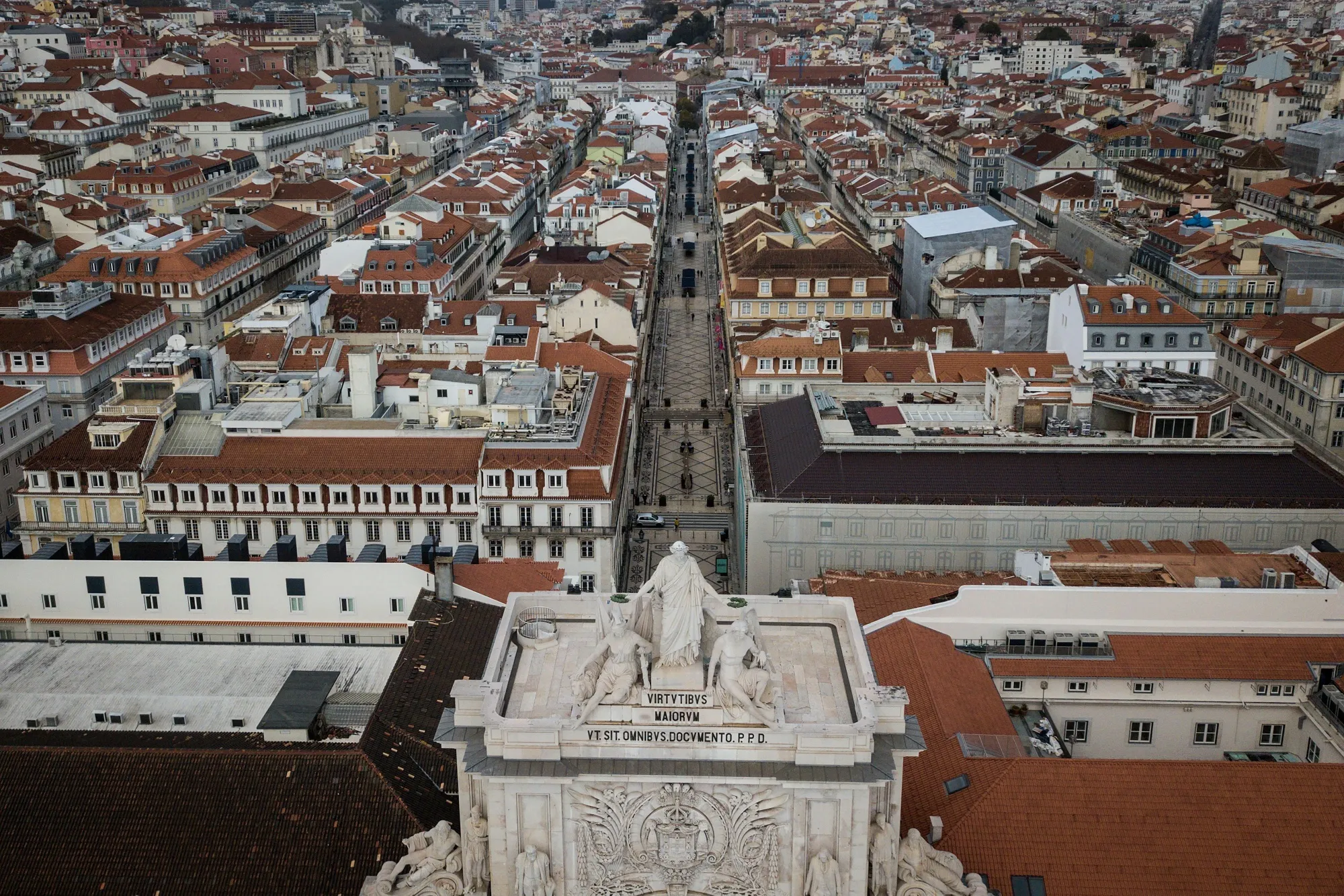
An aerial view of central Lisbon, which was largely reconstructed after a devastating 1755 earthquake.
Photographer: Carlos Costa/AFP via Getty Images
What Urban Planning’s Past Says About Tomorrow’s Cities
A new book from Harvard scholar Bruno Carvalho marks the milestones and missteps that have shaped urbanization patterns around the world.
In the opening of The Jetsons, the family zips around in a flying car, which ejects members at their respective destinations in individual capsules. At its final stop, the car folds neatly into a briefcase that George Jetson then carries to work.
The animated TV series of the early 1960s wasn’t just a kids’ cartoon; it reflected how many people imagined tomorrow’s cities would solve today’s dilemmas. In his new book The Invention of the Future: The History of Cities in the Modern World, Harvard scholar Bruno Carvalho notes that the show’s fanciful setting, Orbit City, enjoyed the conveniences of cars but not the unintended consequences of their dominance. In real-life American cities of the Jetsons era, parking lots were gobbling up valuable real estate, and urban highways were slicing through entire communities.