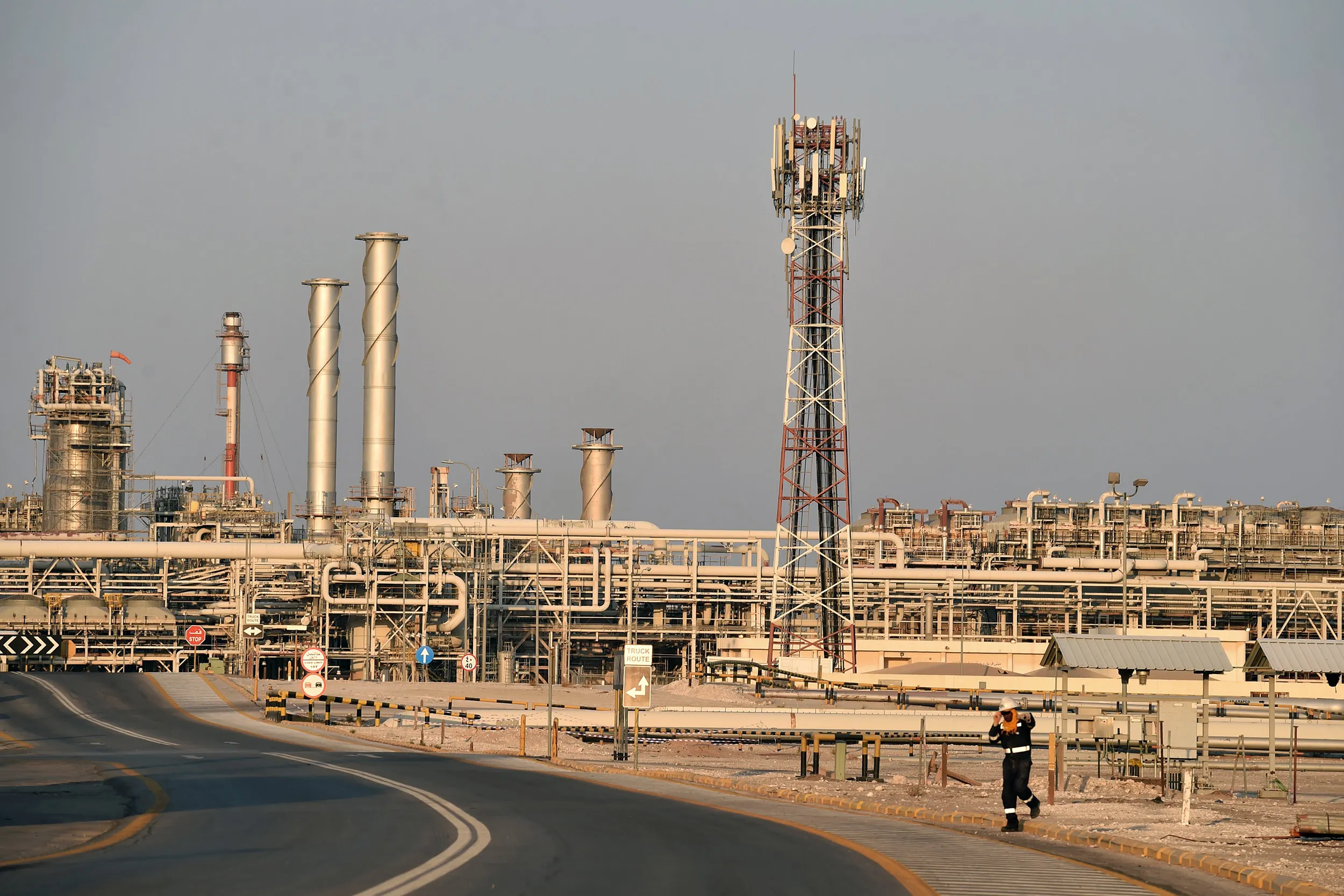
Saudi Aramco's Abqaiq oil processing plant in 2019.
Photographer: Fayez Nureldine/AFP/Getty Images
The Saudi Oil Pipeline the World Didn’t Know It Needed
As Trump threatens Iran over the Strait of Hormuz, the East-West route offers a vital release valve for global oil supplies.
Saudi Arabia had prepared and planned for the worst-case scenario for decades. So within hours of the first US and Israeli strikes on Iran which resulted in the effective closure of the crucial Strait of Hormuz waterway, the world’s biggest crude exporter rolled out a contingency plan — one that had waited 45 years to come to fruition — to keep its oil flowing.
The cornerstone of that plan is a 1,200-kilometer pipeline, built in the 1980s, which has become a pivotal character in the evolving Middle East conflict. Running the breadth of the Arabian Peninsula from Saudi Arabia’s massive oil fields in the east of the country, the East-West pipeline empties out at the port of Yanbu on the Red Sea — a modern industrial city where a huge flotilla of oil tankers is massing to load Saudi crude, with more vessels arriving every day.