When the Best Retirement Is No Retirement at All
The 60-plus crowd is hard at work, and it’s not (just) about the money.
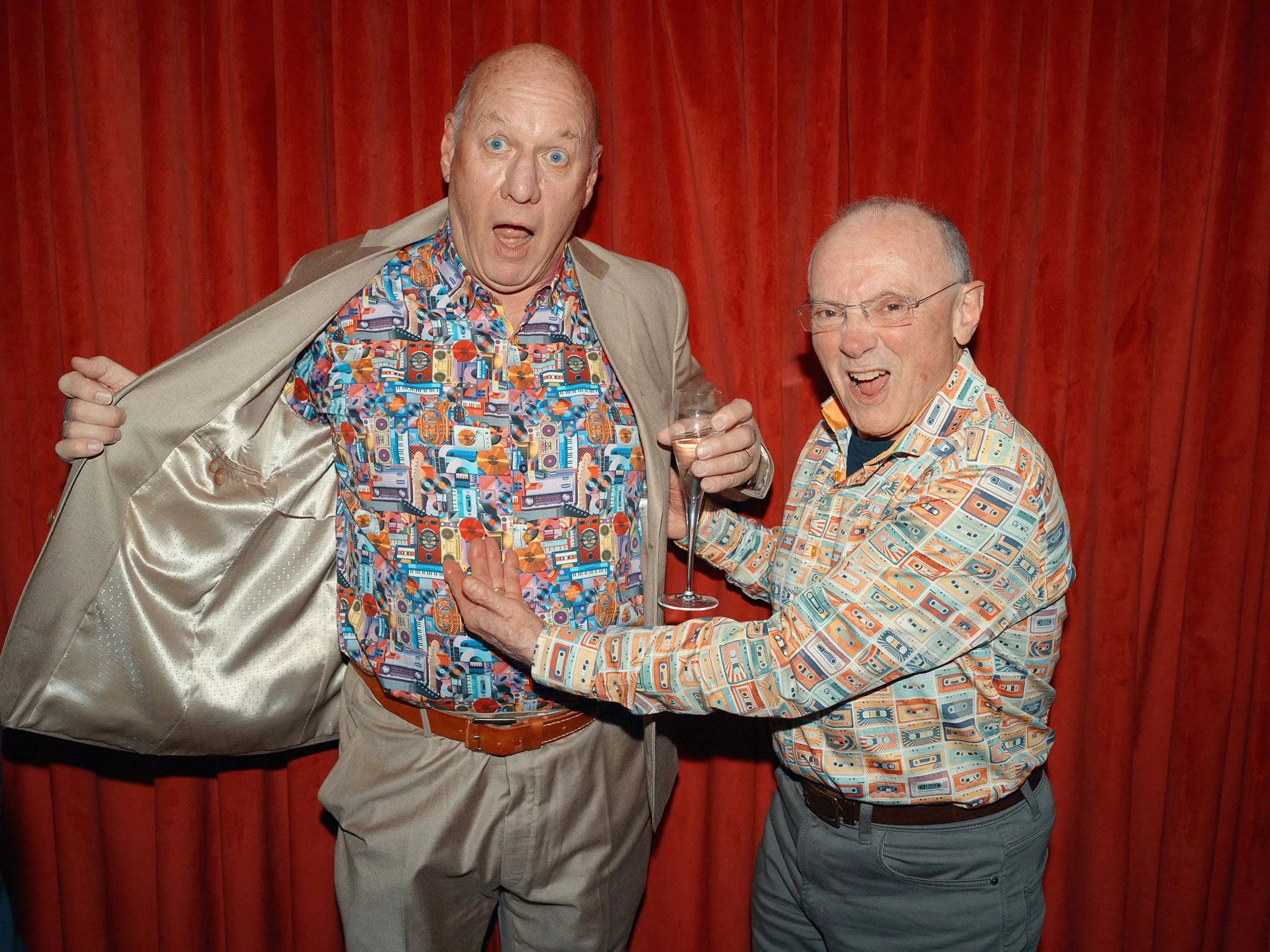
Boom Radio hosts Steve England and Graham Dene at the station’s fifth anniversary celebration.
Photographer: Murray Ballard for Bloomberg Businessweek
As David Lloyd approached 60, it seemed as if his professional life was over. He’d worked in radio in the UK his entire career—as a host, producer, station manager. But after 40 years in the business, opportunities had dried up. “The media business is a fairly young business for all these wonderful reasons,” he says. “But when you get to 60, 65, 70, 75, you’re at that stage of life where society has said, ‘We’ve had enough of you now. You can go away and just sit quietly.’” It was 2020—the beginning of the pandemic. His husband, Paul Robey, a longtime radio DJ, had just lost his job.
In fact, almost all of Lloyd’s peers were being phased out of their jobs, turning to contract work and consulting gigs. Lloyd could hear the same thing happening on the news shows: longtime hosts replaced with younger voices. He knew advertisers and stations wanted to capture young listeners and were less interested in older ears, but he also felt that he and his peers were in their professional prime. “We are probably at the peak of our powers,” he says. “As radio presenters get older, they get better. You’ve loved, you’ve lost, you’ve got more stories. I think I’m better at my job than I was when I was 30. Why on Earth would I want to sit around and do nothing?”