How Covid Quietly Rewires the Brain
Researchers keep discovering more about the long-term neurological effects of SARS-CoV-2.
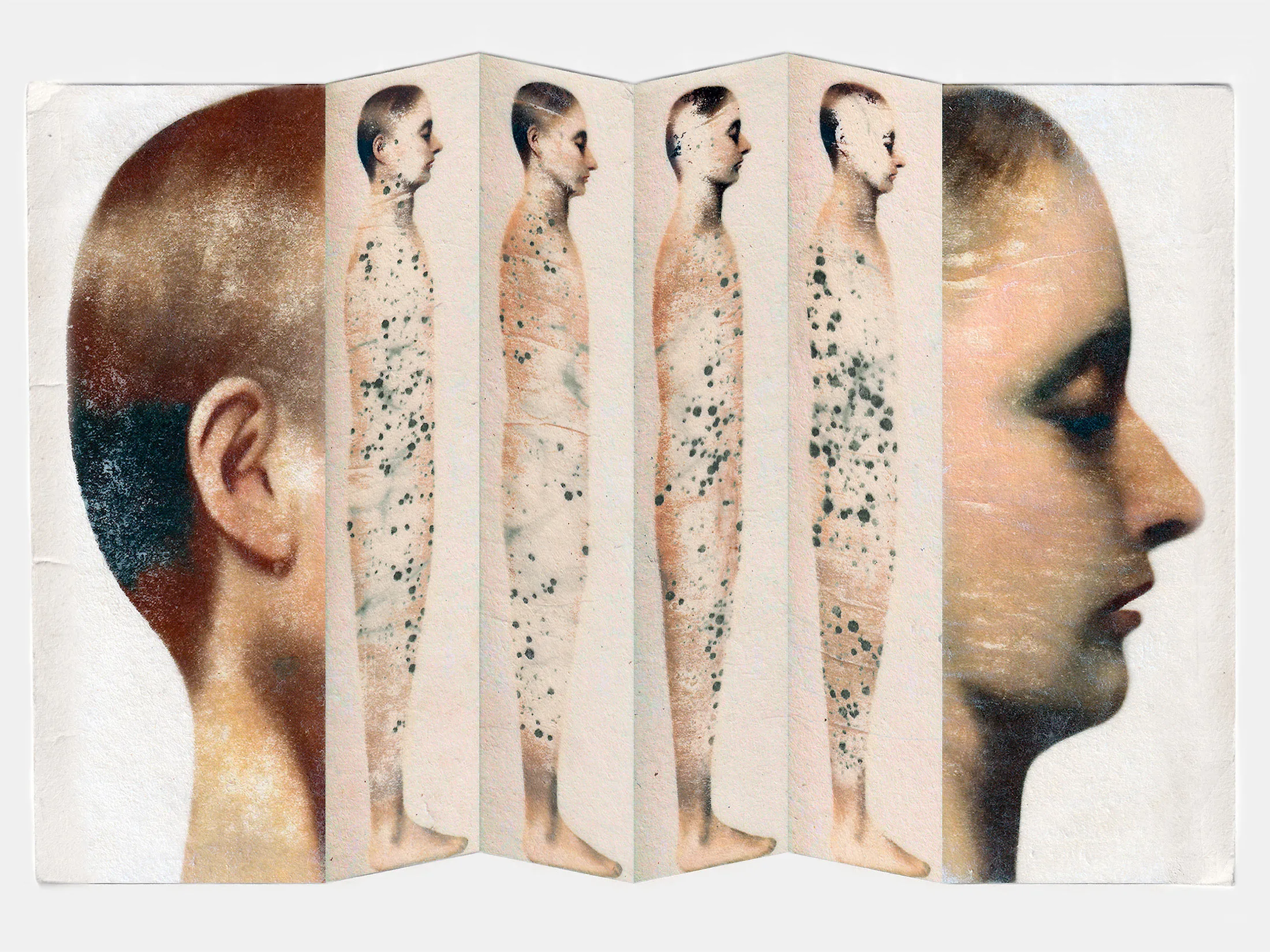
Illustration: Aldo Jarillo for Bloomberg Businessweek

Doctors call it Ondine’s curse—a catastrophic failure of the brain stem in which breathing no longer happens automatically, especially during sleep. It’s extremely rare, typically seen only in infants with genetic mutations or adults after severe trauma, and for a long time it wasn’t something doctors associated with viral infections.
But in the spring of 2020, Avindra Nath, clinical director of the National Institute of Neurological Disorders and Stroke, one of the National Institutes of Health, was helping investigate a handful of unexplained deaths in New York City. The victims had stopped breathing and died suddenly at home, with no lung or heart damage that might have suggested the underlying cause. The remains were sent for further examination to Maryland, where SARS-CoV-2, the coronavirus that causes Covid-19, was discovered in lung tissue. But that didn’t explain why the victims had stopped breathing. With no abnormalities evident in each victim’s brain, Nath was asked to take a closer look.