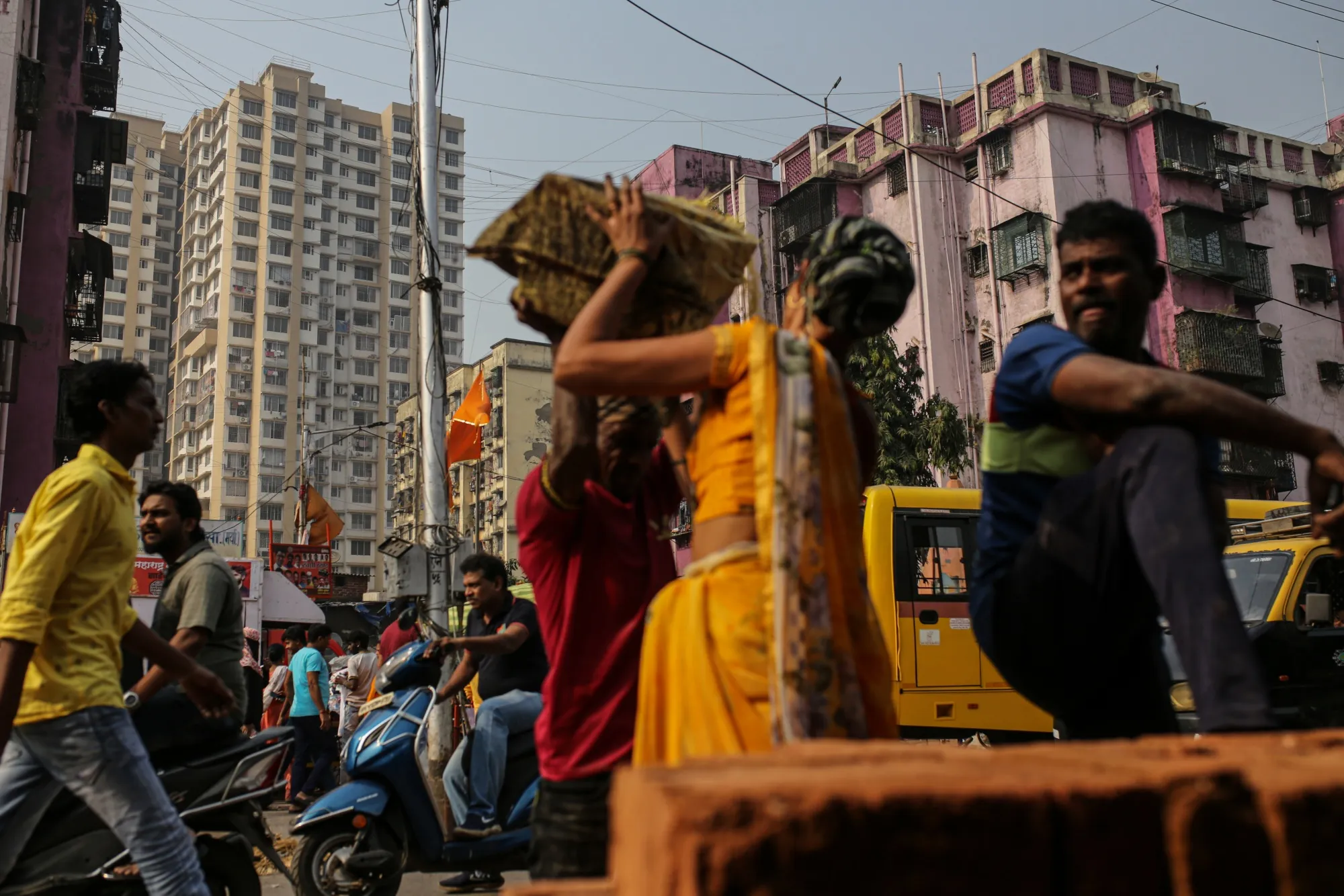
In the Dharavi district in Mumbai, India, newer residential high-rises tower over older buildings.
Photographer: Dhiraj Singh/BloombergSlums? Informal Settlements? Just Call These Cities ‘Homegrown’
A new book argues that unplanned urban areas that have been shaped by their residents can be models of resilience and adaptability as well as affordability.
In portrayals of developing world cities, there’s one striking image that crops up time and again — an urban vista where gleaming high-rise towers rub up against makeshift shanty housing. The photo might have been taken in Sao Paulo, Mumbai or Jakarta, but the contrasts it illustrates are the same globally: between the affluent and orderly modern city and the dirty, chaotic slums, seemingly from another era, that threaten to choke it.
While such places unquestionably exist, the contrasts they represent can be misleading and even harmful, argue the authors of a new book. In The Homegown City: Reclaiming the Metropolis for its Users, Matias Echanove and Rahul Srivastava reflect on 18 years of work as cofounders of the Mumbai-based design practice Urbz, which has been involved in bottom-up, citizen-led approaches to urban improvement in Mumbai and other global cities.