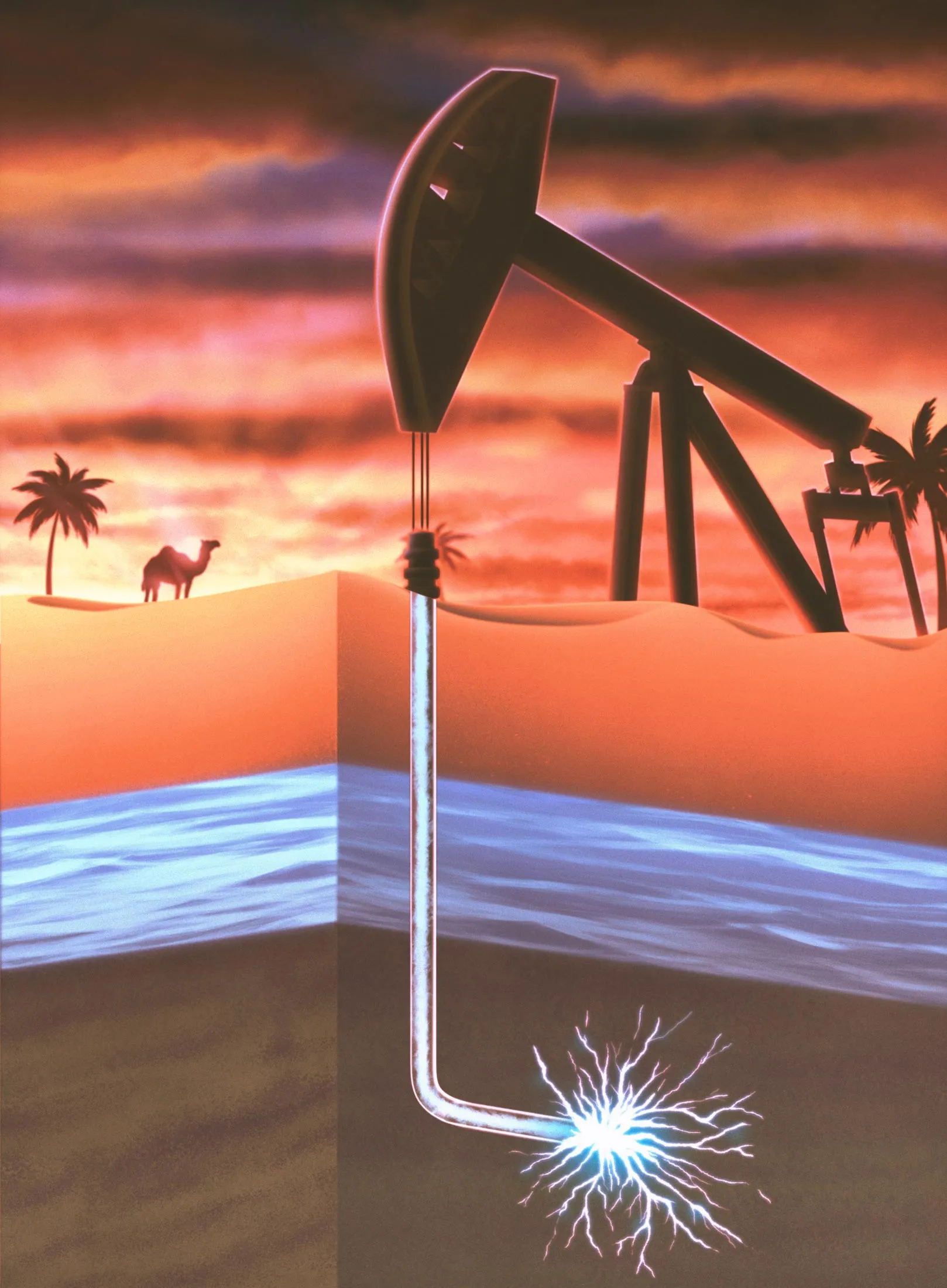
Fracking Goes Global
The technique, honed over the past 15 years in the US, is now being deployed to unlock hard-to-reach oil and gas reserves from Australia to Saudi Arabia.
Bag by bag—in what Ron Gusek calls giant “super sacks”—Liberty Energy Inc. loaded 45 million pounds of sand in late 2024 from a California port and sent it across the Pacific. The cargo was bound for Australia’s remote Beetaloo Basin, where beneath red dirt sits a hard-to-reach reservoir of natural gas roughly the size of Belgium. When the sand landed in the outback, Liberty planned to mix it with high-pressure fluids and inject it underground to release natural gas in a process commonly known as fracking. It’s a uniquely American invention that’s quickly becoming a major US export, thanks to rising power demand and the world’s inability to quit fossil fuels.
A 10,000-mile supply chain for frack sand is of course not “sustainable over the long run,” says Gusek, Liberty’s chief executive officer. But in the early days of fracking development—before oil and gas basins have established their own sand mines, water infrastructure or pipelines—this is how the industry spreads. And spreading it is.