China’s EV Battery Giant Is Trying to Find a New Road
CATL flooded the domestic market with inexpensive, efficient batteries. It wants to do the same overseas, but European politicians—and Donald Trump—stand in its way.
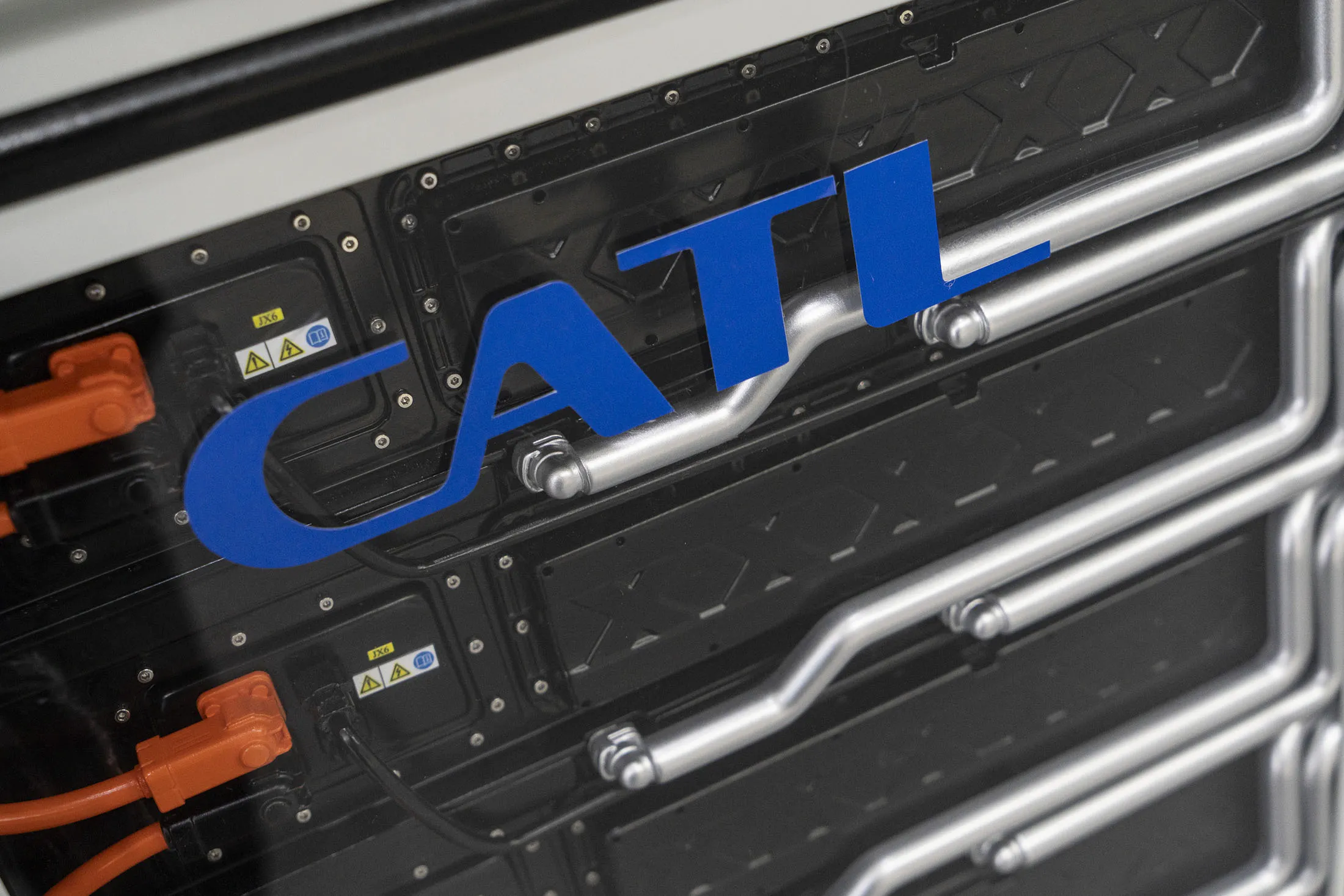
A closeup of a CATL product sample.
Photographer: Qilai Shen/Bloomberg
Inside the world’s largest battery plant, delicate robot arms coat sheets of aluminum and copper foil—each only 5 micrometers thick, about a 20th the diameter of a human hair—with an electrode slurry, a process that resembles nothing so much as spreading jam on bread. The coated material, along with a thin separator film, is guided along by massive steel rollers, precisely calibrated to ensure each strip is neither too tight nor too loose. The next step is to wind the strips into tightly packed spirals known as jelly rolls and seal them into casings. More robotic arms then inject an electrolyte solution, turning the assemblage of metal and chemicals into a highly efficient lithium-ion battery.
The process is largely automated, but a retinue of human inspectors trained to detect the slightest imperfection keeps watch at stations throughout the factory. A single air bubble or misaligned weld could lead to a short circuit, a rare glitch in production. Once inspected, the aluminum-enclosed battery packs will be loaded onto shelves to let stand for hours to days before being shipped to electric-vehicle factories around the world.