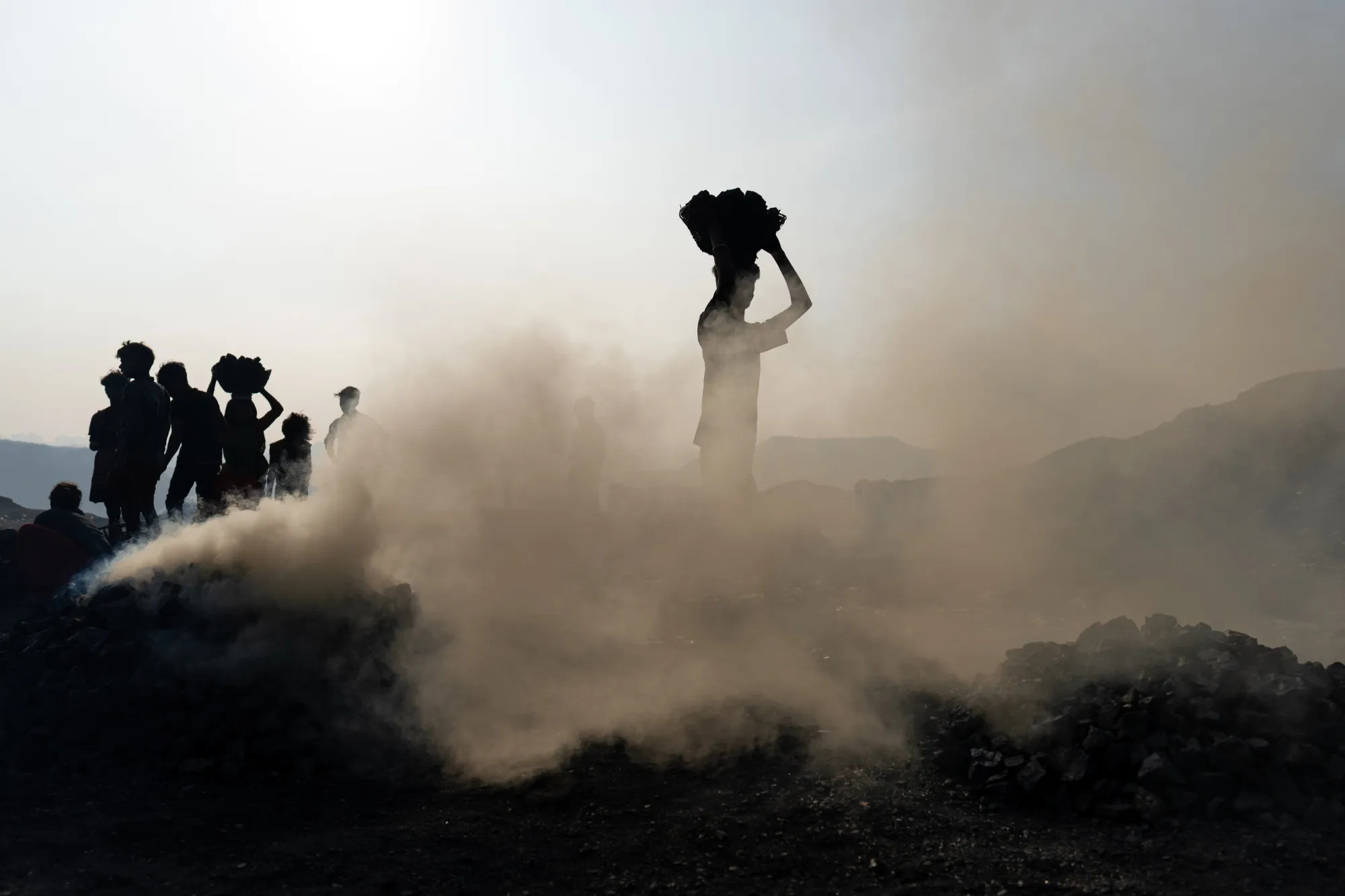
Workers carry coal on their heads at a mine in the outskirts of the city of Dhanbad, in Jharkhand.
Photographer: Anindito Mukherjee/BloombergThe Burning Landscape That Explains India’s Coal Addiction
A journey through Jharkhand reveals why coal remains embedded in the nation’s economy, politics and daily life — and what it would take to break free.
In the haze of early morning, India’s coal capital lies shrouded in gray. Soot coats the bare trees and low-slung buildings along the main road, while wisps of smoke drift in from courtyard fires. Trucks rumble past, hauling fuel from some of the country’s largest mines to rail cars that will carry it to buyers across the nation.
Bhootni, 60, a small, wiry woman in a crimson sari, crouches in the shadow of a towering coal heap on the edge of Dhanbad in the eastern state of Jharkhand. She avoids mine guards, but says she is too insignificant for them to pay her much heed. Using only her hands — blackened, red-flecked nails digging in the dirt — she picks out lumps of coal, which she will burn to remove moisture and impurities before packing them into gunny sacks for sale. With each bag filled, she’ll make 100 rupees — just over a dollar and enough for a day’s meal. The busy road behind her is lined with other scavengers, balancing oversize bundles on their heads or pushing bicycles straining under improbably large loads.