How a Nuclear-Fossil Fuel Alliance Is Winning the Fight for Energy Dominance
The once unlikely partnership’s influence now reaches right into the White House, where President Trump wants to ban certain renewable projects.
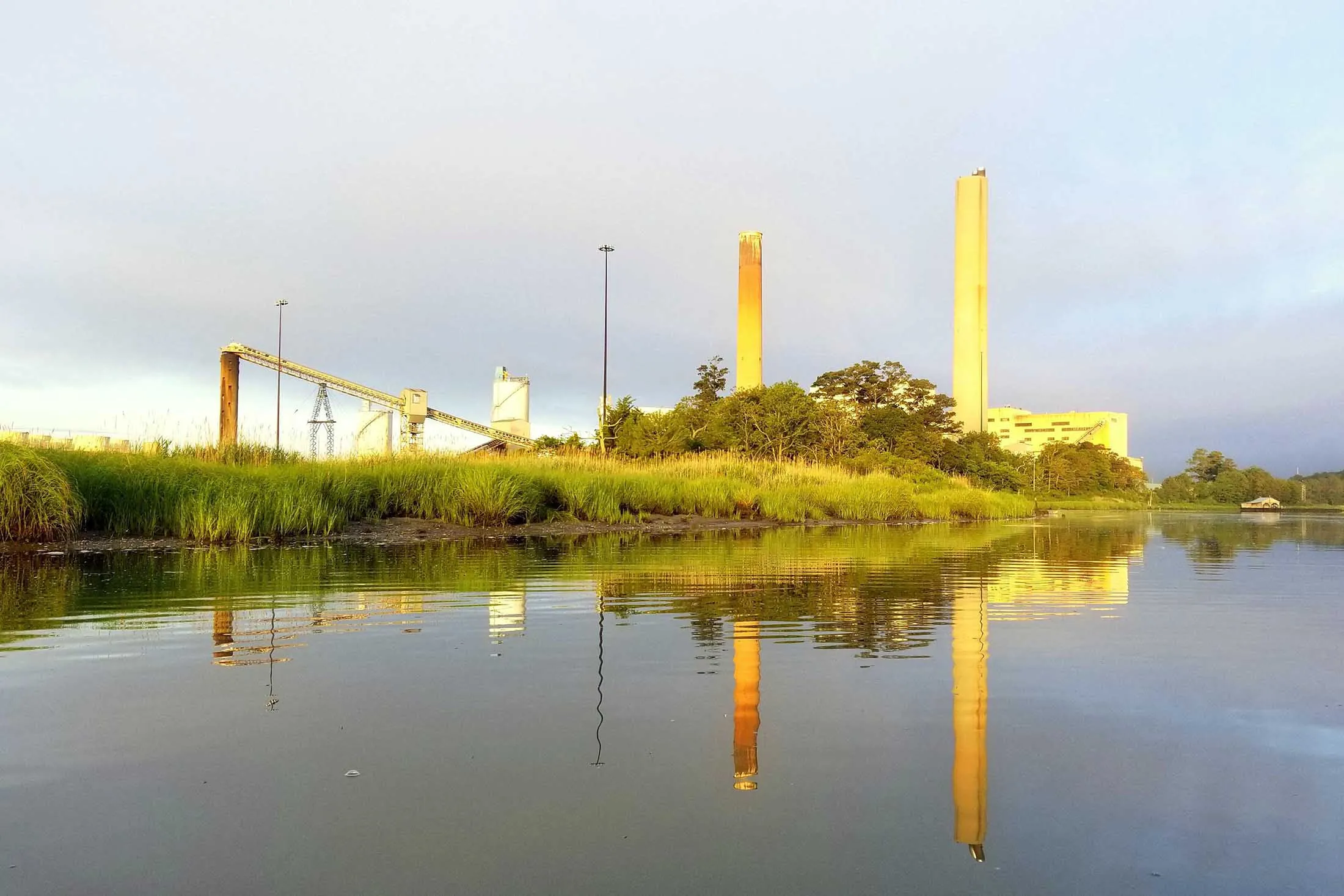
The Indian River power plant no longer burns coal, at least for now.
Photographer: Khairil Azhar Junos/Alamy
The towering smokestacks of the Indian River power plant have been etched on the horizon of Delaware Bay for more than 60 years. From its opening in 1957, the plant burned tens of millions of tons of coal, sending pollution over thousands of homes and toxic ash into the groundwater. About 20 years ago, residents began joining in opposition. They collected health data from downwind communities; their findings prompted Delaware to officially designate the area a cancer cluster and led the plant to start downscaling operations.
Last year the administration of Joe Biden, whose summer home is about 14 miles northeast of the plant, approved a plan that reimagined the site. The project called for putting a substation next to it that would distribute energy from more than 100 wind turbines to be built about 10 miles out to sea. The last of the plant’s four coal-burning units was already scheduled to shut down for good within a year. Renewable energy would take the place of coal.