China’s Biggest Beauty Firm Lays Out Strategy to Rival L’Oréal
Proya reported sales above 10 billion yuan last year, the first Chinese beauty company to do so. Its billionaire founder is now on the hunt for European brands.
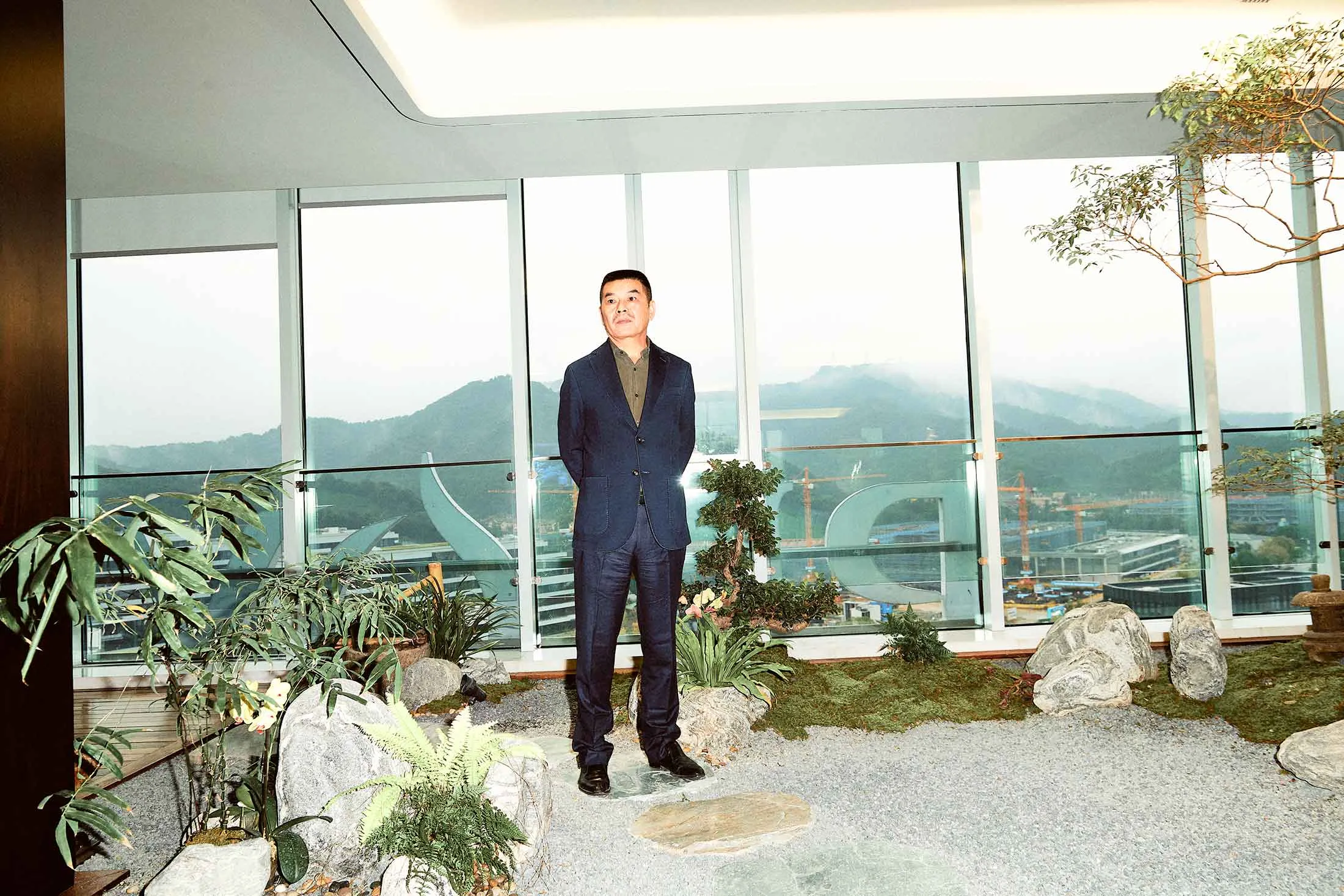
Juncheng Hou in his office at Proya headquarters in Hangzhou, China.
Photographer: Ka Xiaoxi for Bloomberg Businessweek
Proya Cosmetics Co.’s gleaming headquarters in Hangzhou, in Zhejiang province, is just steps downhill from the offices of Alibaba’s wildly successful fintech arm. “We bought facilities on the same site, and theirs are just slightly higher in elevation,” says Juncheng Hou, Proya’s billionaire co-founder and chairman. “In China, we say that when water flows from higher ground, it carries prosperity. So all of Alibaba’s ‘prosperous water’ flows down to Proya.”
That proximity isn’t merely physical: Proya’s meteoric rise to become China’s biggest beauty company has been closely intertwined with the vast e-commerce ecosystem of Alibaba Group Holding Ltd. About 95% of Proya’s sales come from online platforms such as Alibaba-owned Tmall and Taobao, where it’s mastered the digital strategies that many foreign rivals still struggle to replicate in China’s 1 trillion yuan ($140 billion) beauty market. Proya’s next challenge will be to expand beyond its huge online presence on apps and sites like Douyin and JD.com, plus the Chinese pharmacies and duty-free shops where it mostly operates, into high-end department stores. It also seeks to take on the Western conglomerates that have long ruled the world of high-end beauty. “We don’t want to be just the Chinese Proya,” Hou, 60, says via a translator during a recent business trip to Paris. “We want to be the world’s Proya.”