A Shipwreck Killed 41 Crew and 5,900 Cattle. The Brutal Business Behind It Goes On
The sinking of the Gulf Livestock 1 was an existential moment for farm animal exporters. Some of those lessons are being forgotten.
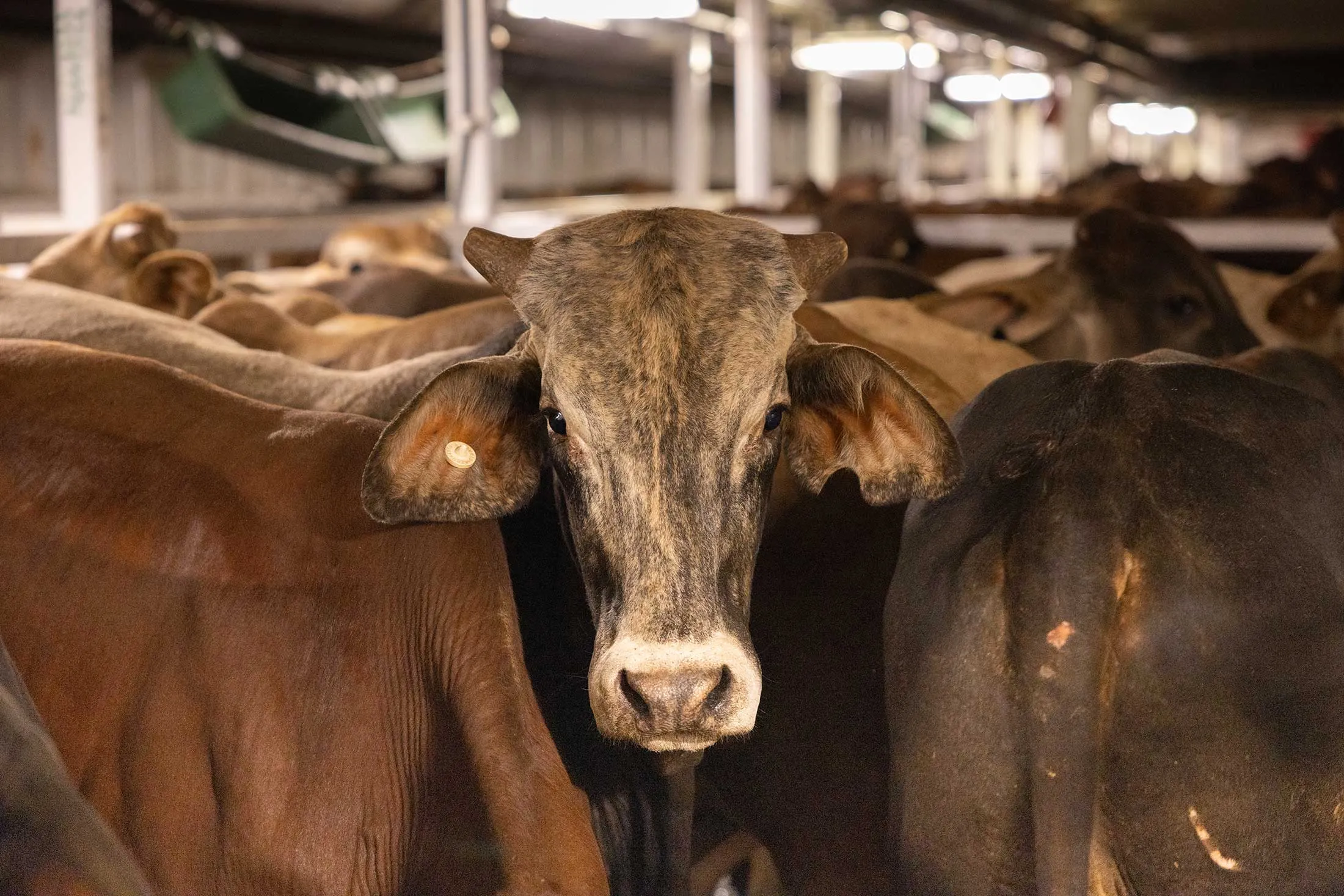
Cattle loaded aboard the Girolando Express, a live-export ship, at Darwin Port in Australia’s Northern Territory this past July, en route to the Philippines.
Photographer: Claire Martin for Bloomberg Businessweek
Captain Dante Addug must have been uneasy thinking about the 48 hours to come. It was Aug. 30, 2020, and his ship, the Gulf Livestock 1, was steaming into the path of Maysak, a Category 4 typhoon that was hurtling up the Philippine Sea with 130-mph winds and 20-foot waves. Even the sturdiest cargo ship would take a beating in such conditions, but for the Gulf, Maysak almost certainly promised catastrophe.
The Gulf was due to arrive at Tangshan, a massive port complex about 100 miles from Beijing, in four days. It was the height of pandemic gridlock in ports around the world, especially in China, where ships often waited more than two days to offload. For a vessel full of appliances, car parts or electronics, such a delay would be little more than an inconvenience, but for the Gulf, which carried a shifting, easily frightened cargo of 5,867 dairy cattle, every extra day at anchor heightened the risk of the animals becoming ill or dying—and of costing the exporter and ship owner money.