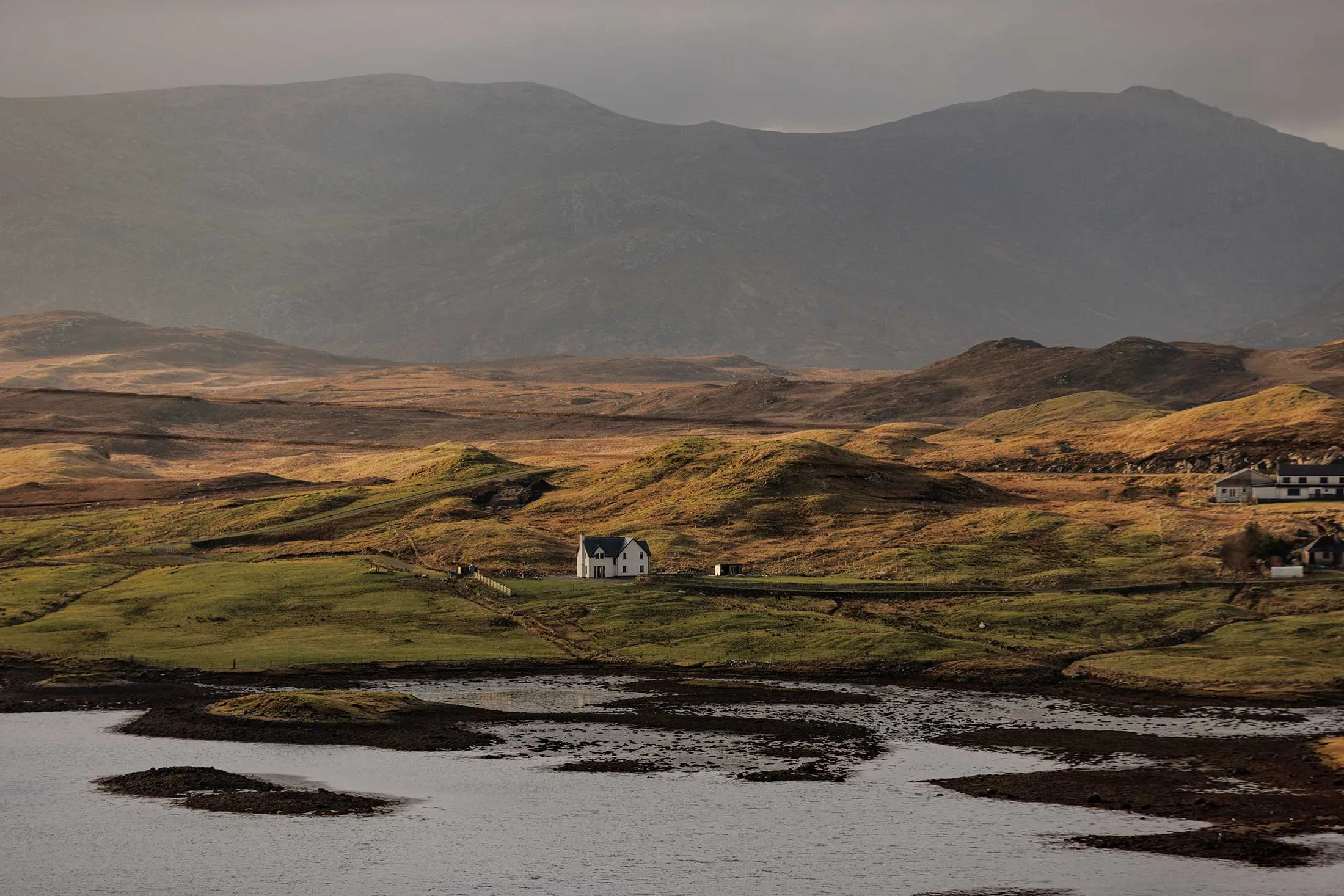
The Isle of Lewis near a potential wind farm site.
Photographer: Robert Ormerod for Bloomberg BusinessweekEveryone Loves to Hate Wind Power. Scotland Found a Way to Make It Pay Off
Projects on the Isle of Lewis were stalled for decades, but the perseverance of local leaders overcame regulatory obstacles and community concerns.
Almost monthly for the past 15 years, Darren Cuming has trekked to Lewis, an island that arcs out into the Atlantic northwest of Scotland like a lopsided diamond. Although it’s the third-largest of the British Isles, Lewis is sparsely populated—just 20,000 people—and faces economic challenges that have encouraged centuries of emigration. “The issue is keeping people on the island, having good, worthwhile jobs,” Cuming says, pointing out shuttered storefronts like they’re local landmarks while he pilots his Kia sedan through the main town, Stornoway.
Cuming is one of a growing legion of energy executives hoping to stem the outflow—and stoke profits—by harvesting a resource Lewis has in abundance: wind. The island is buffeted by gusts that average more than 20 mph (roughly double that of the “windy city,” Chicago), and its consistency makes turbines here about twice as productive as the UK average.