The Quest for a Hangover-Free Buzz
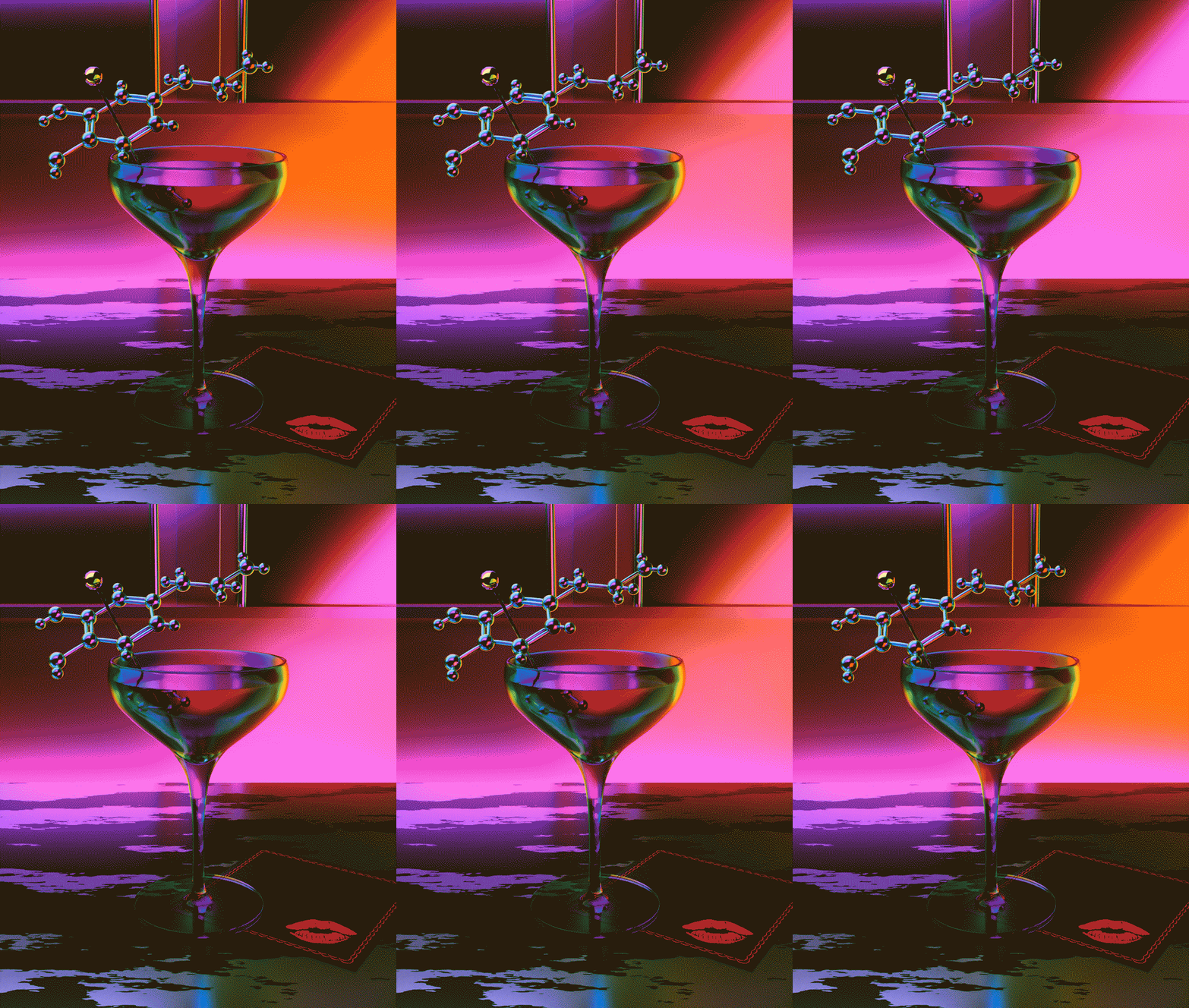
David Nutt is an accomplished professor of neuropsychopharmacology at Imperial College London, but he hasn’t always been great at reading a room. In 2009 he was the UK government’s top adviser on drugs, a key voice on a council tasked with recommending changes to the nation’s drug policies. That was until he argued that the field’s greatest challenge, the substance responsible for the most widespread harm, was alcohol. While this would have been considered heresy in many societies, it proved to be an especially untenable position in Britain. He was asked to resign from his government post two days after he shared his views with the press.
All these years later, Nutt is quick to clarify that he appreciates the upside of drinking. “Most people meet their partners with the help of alcohol,” he says. “It promotes sociability, and there’s not much else like it.” What he’s been after, he says, is a safer, healthier way to approximate the buzz of booze—something that can deliver the fun bits and skip the addiction, the cirrhosis, the sloppy aggro nonsense. By the time he was on the government council, research had made clear that the root of many problems with alcohol was its neurological complexity, that the good parts were intertwined with the bad ones. Once Nutt had more time on his hands, he decided to try making his own molecule, one that could give him the fuzzy feelings of a couple glasses of wine and leave it at that.