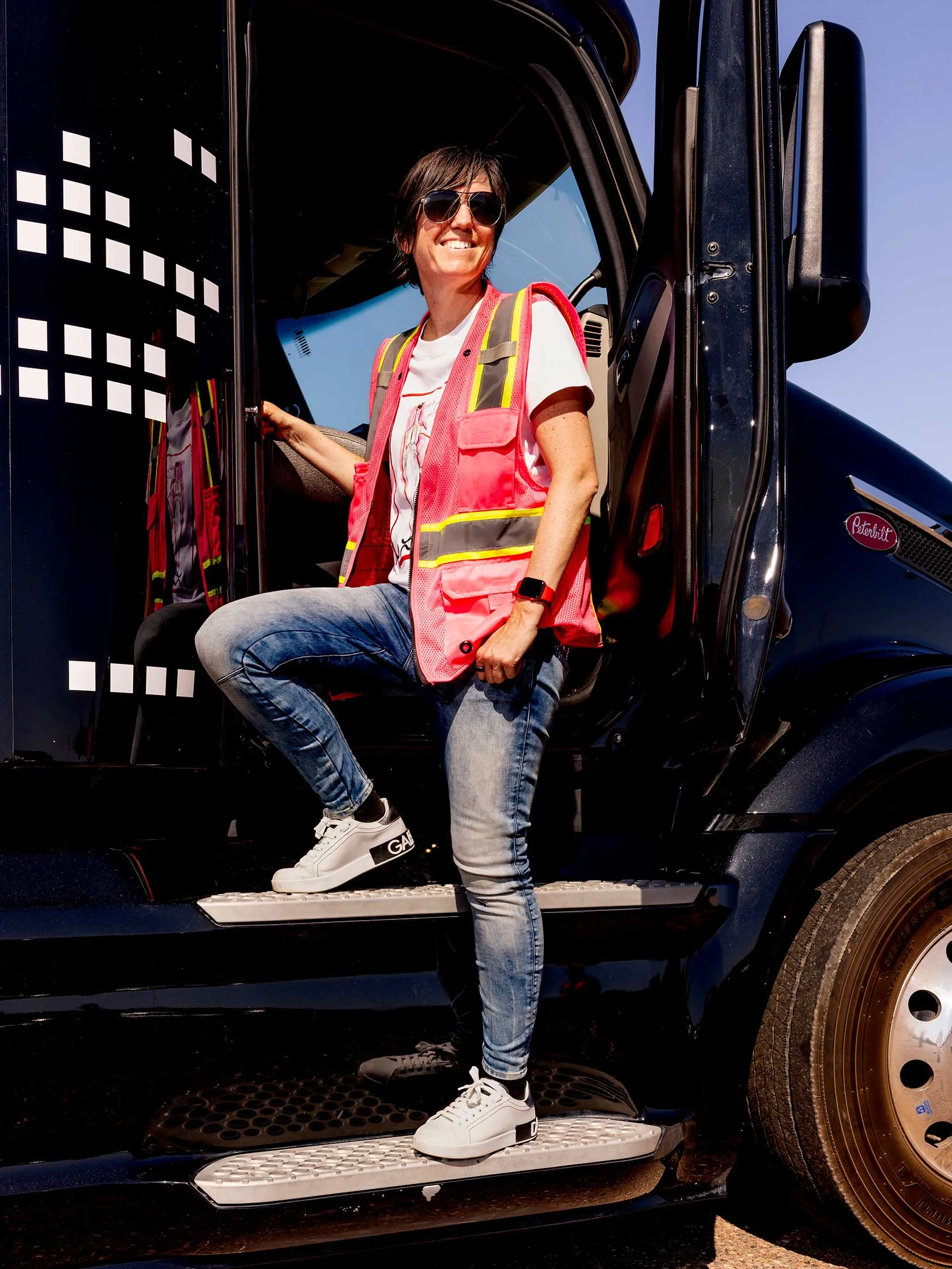
Waabi CEO Raquel Urtasun.
Photographer: Cassidy Araiza for Bloomberg BusinessweekMy Test-Drive in a Waabi Driverless Big Rig
Raquel Urtasun, CEO of the autonomous trucking startup, says the industry’s R&D stage is about to give way to commercial prime time.
Raquel Urtasun spent a few days in June working from a large tent in the Arizona desert. It came with a number of un-tentlike amenities, such as indoor plumbing and air conditioning to provide relief from the 110F heat, but its main appeal to Urtasun, who runs the self-driving truck startup Waabi, was its proximity to a 2-mile-long track where she can test her company’s hulking autonomous vehicles. Both tent and track are located inside a private facility where companies can perform critical, and sometimes perilous, field research, from ramming cars into one another to carrying out controlled explosions. (To visit, I had to sign one form promising not to discuss certain details of any tests I happened to witness and another saying I was responsible for any Gila monster bites I might suffer.)
Waabi’s tests don’t have the inherent drama of blowing things up, but they’re impressive in their own way, consisting of 17-ton driverless trucks maneuvering around physical and virtual obstacles. Urtasun founded the startup in 2021, years after the first companies began trying in earnest to build self-driving vehicles. The industry-standard formula was to drive around as an artificial intelligence system tracks what happens so it can learn from the experience. Waabi was launched with the idea that it could quickly catch up by using digital simulation. It created a sort of metaverse for trucks that Urtasun has dubbed “Waabi World,” a name the company says is in no way a reference to the similarly named theme park in National Lampoon’s Vacation.