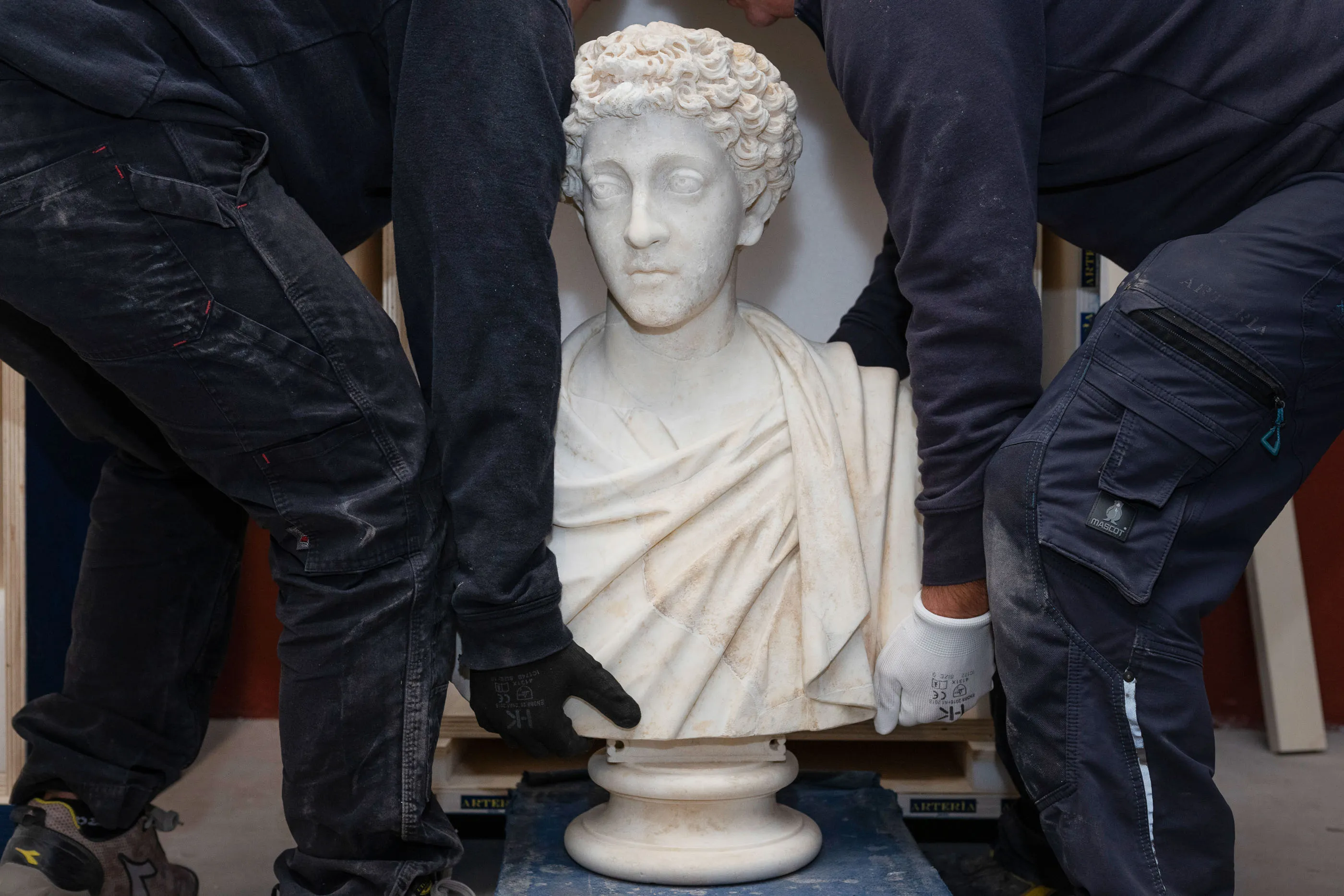
A bust of a young emperor Commodus.
Photographer: Federica Valabrega for Bloomberg BusinessweekHidden for Half a Century, Ancient Roman Treasures Return to the Spotlight

It’s a cold January day in Rome, and I’m standing on the street in the touristy Trastevere neighborhood, trying to explain myself to two security guards in front of a sprawling building complex. “I’m here to see the Torlonia Collection,” I say. “Can I please go in?” It’s unclear if the blank looks I get in response are because of my halting Italian or because the guards are very good at not revealing what they know is inside.
Both are possible. Despite being hailed as the greatest private collection of Roman antiquities in the world, the Torlonia Collection has been locked away for almost 70 years, shrouded in myth and mystery. Thanks to a 19th century museum catalog, people know that the trove includes many hundreds of marble statues roughly dated between 1,700 and 2,500 years old, most of them dug up during excavations from the 16th century to the 19th century. Few people knew exactly where to find this “great treasure of erudition,” as it was once called, or what condition it was in. There are even stories—perhaps apocryphal—about Italian government officials posing as janitors to see the works in situ. Interest in the collection has ranged from academic yearning to public outrage, such as when an old photo of the statues covered in dust raised brief howls of condemnation from armchair art conservators.