Netflix Had a Password-Sharing Problem. Greg Peters Fixed It
Now all he’s got to figure out is live programming, sports, gaming, pricing and, oh, advertising.
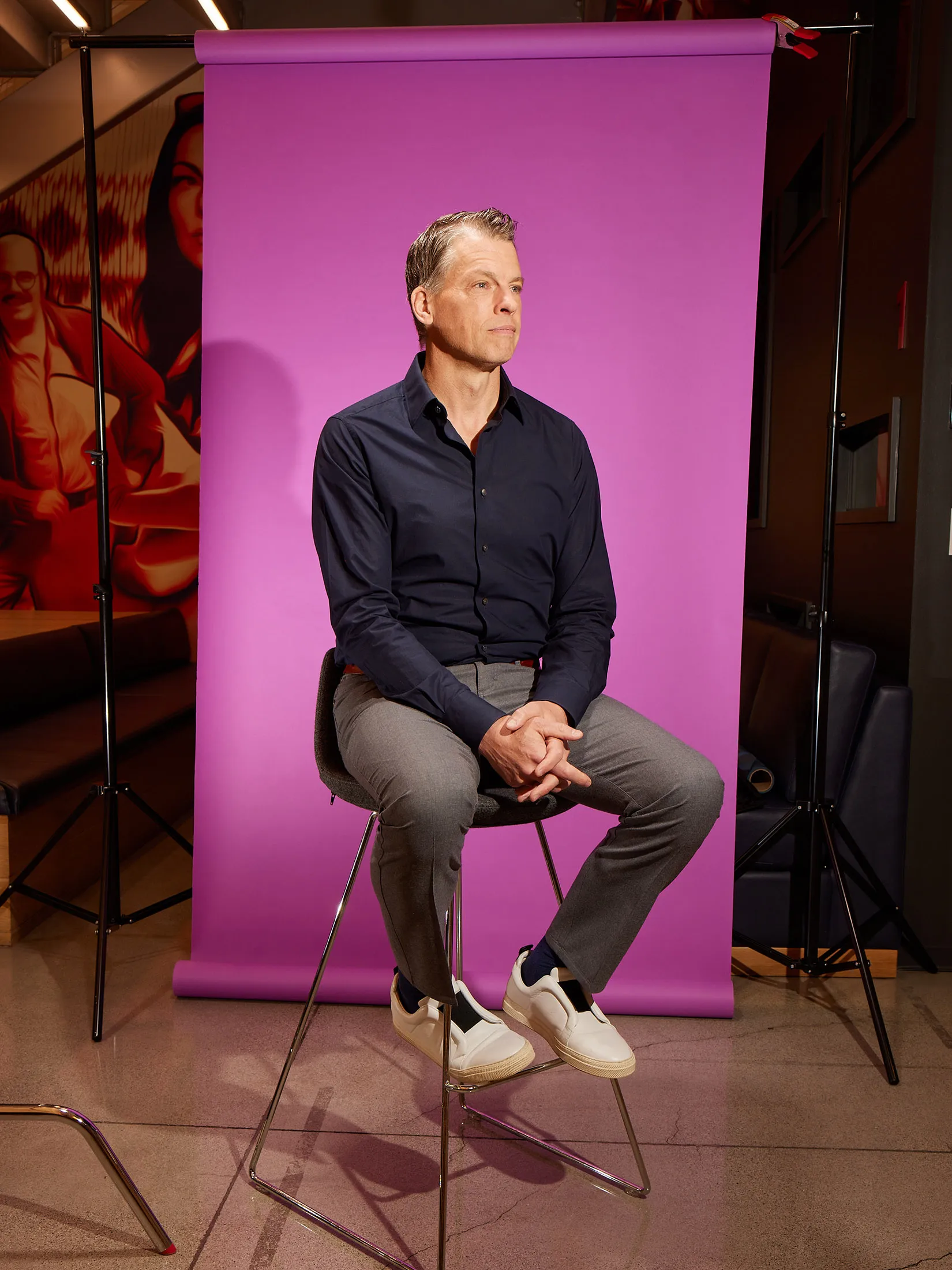
Co-CEO Greg Peters at the Netflix office in Los Gatos, California.
Photographer: Maggie Shannon for Bloomberg Businessweek
In mid-February, Greg Peters, the co-CEO of Netflix, strode onstage at the Hollywood Palladium, an art deco concert venue in Los Angeles, to deliver a pep talk to what the company calls its New Employee College. Dressed in a button-down shirt and white zip-up sweater, Peters, lanky with striking green eyes, gave a summary of Netflix’s history before analyzing the competitive landscape. Traditional media companies such as Walt Disney Co. and Paramount Global, which had been slow to introduce streaming services, were now struggling to make money. Big Tech businesses like Amazon.com Inc. and Apple Inc. can outspend others but aren’t focused on entertainment. Some of these companies, he said, will shut down their services eventually. Netflix Inc., already more popular than all its competitors (except YouTube), is growing quickly and generating billions of dollars in cash every year. The business is in a good position—no, “a great position,” Peters said, correcting his teleprompter. He then left the crowd with a simple message: “It’s ours to lose.”
Peters walked off to applause and settled into a dressing room, where he talked to Bloomberg Businessweek about an idea he’d teased onstage: the company’s next big competitive advantage, a version of the streaming service that will adapt to customers’ preferences. If you like watching documentaries on Thursday nights, that’s what you’ll get served then, and if you like watching comedies on Sundays, get ready to laugh over brunch. The idea is ambitious and unproven, but it could help Netflix differentiate itself from copycats. The company has long tracked the time it’s taken its rivals to rip off its look; Disney and Apple did a quick job, while Amazon took forever. “I would literally start a stopwatch,” he said.