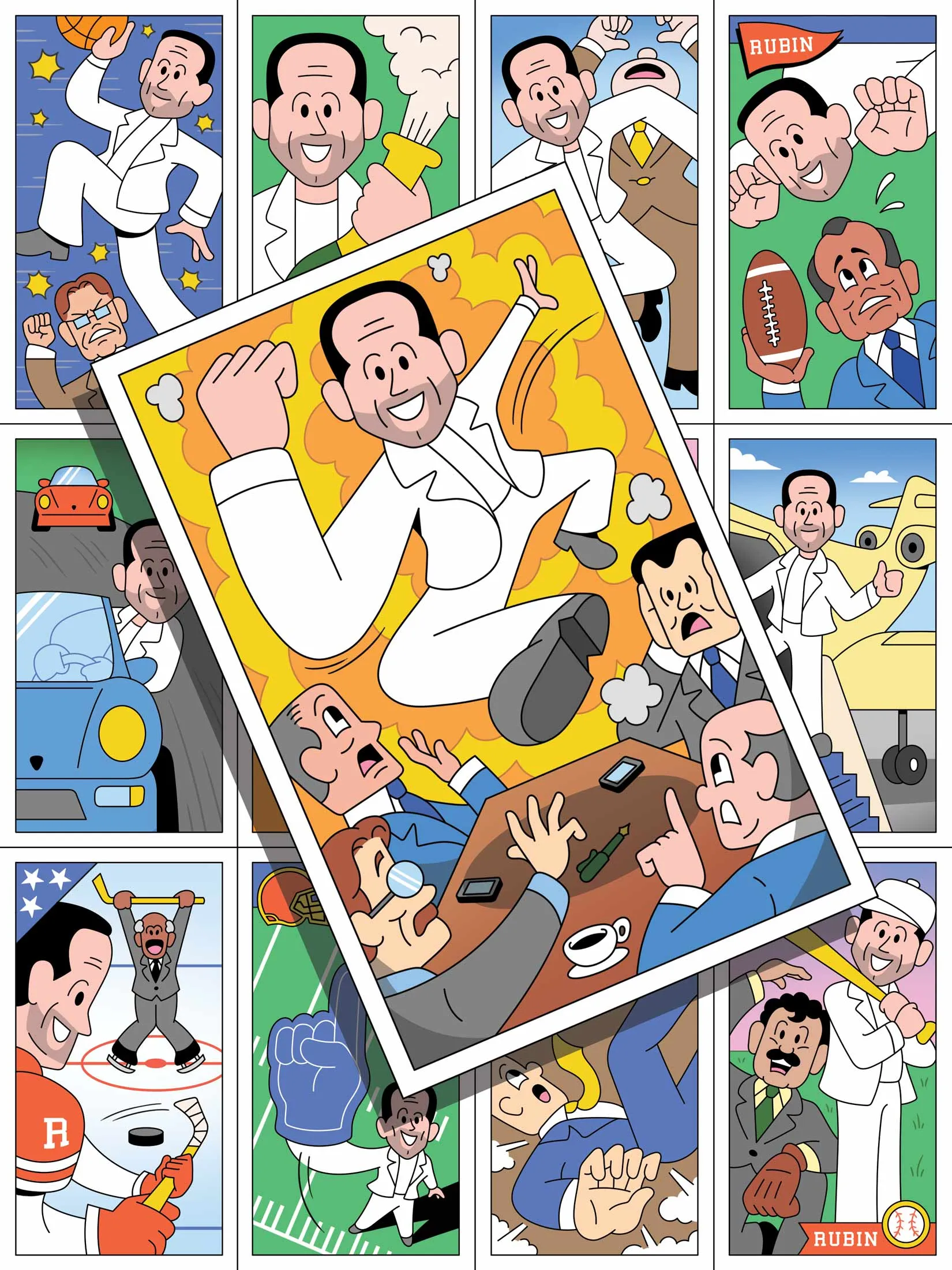
How Michael Rubin Ended Up Holding All the Cards
Hijacked contracts. Scuttled public offerings. Stealth acquisitions. The Fanatics CEO famous for his Hamptons white parties has become the most feared dealmaker of his generation.

Michael Eisner left Walt Disney Co. one of the most feared executives ever to enter a boardroom. He’d fought off a $54 billion hostile takeover, battled with the founder’s nephew and sparked a war that split Hollywood in two after a bitter breakup with his studio chief. By the late aughts, Eisner was itching to lead another iconic American brand and eyed Topps, the Depression-era tobacco-turned-trading card company that eventually became synonymous with baseball. A half-century later, collectors still yearned for the oldest and rarest Topps items, such as a 1952 Mickey Mantle card that sold at auction for $12.6 million. But after years of operating woes and stagnant sales at the company, Eisner saw an untapped opportunity that reminded him of his early days at Disney. “I just thought the brand Topps meant something,” Eisner told Marketplace’s Kai Ryssdal at the time. “How many brands make you feel good and make you smile, even if they’re tired and rusty?”
So in 2007, two years after his Disney exit, he teamed with a private equity firm to buy the company and quickly rattled the entire collectibles industry. Major League Baseball—among the largest partners to sports memorabilia companies—had long resisted exclusive deals, wanting as much exposure as possible through a multitude of card labels such as Donruss, Fleer and Upper Deck. But Eisner believed exclusivity was everything, and within two years Topps’ new owner had won over MLB, locking it into a long-term licensing contract and shutting out the competition.