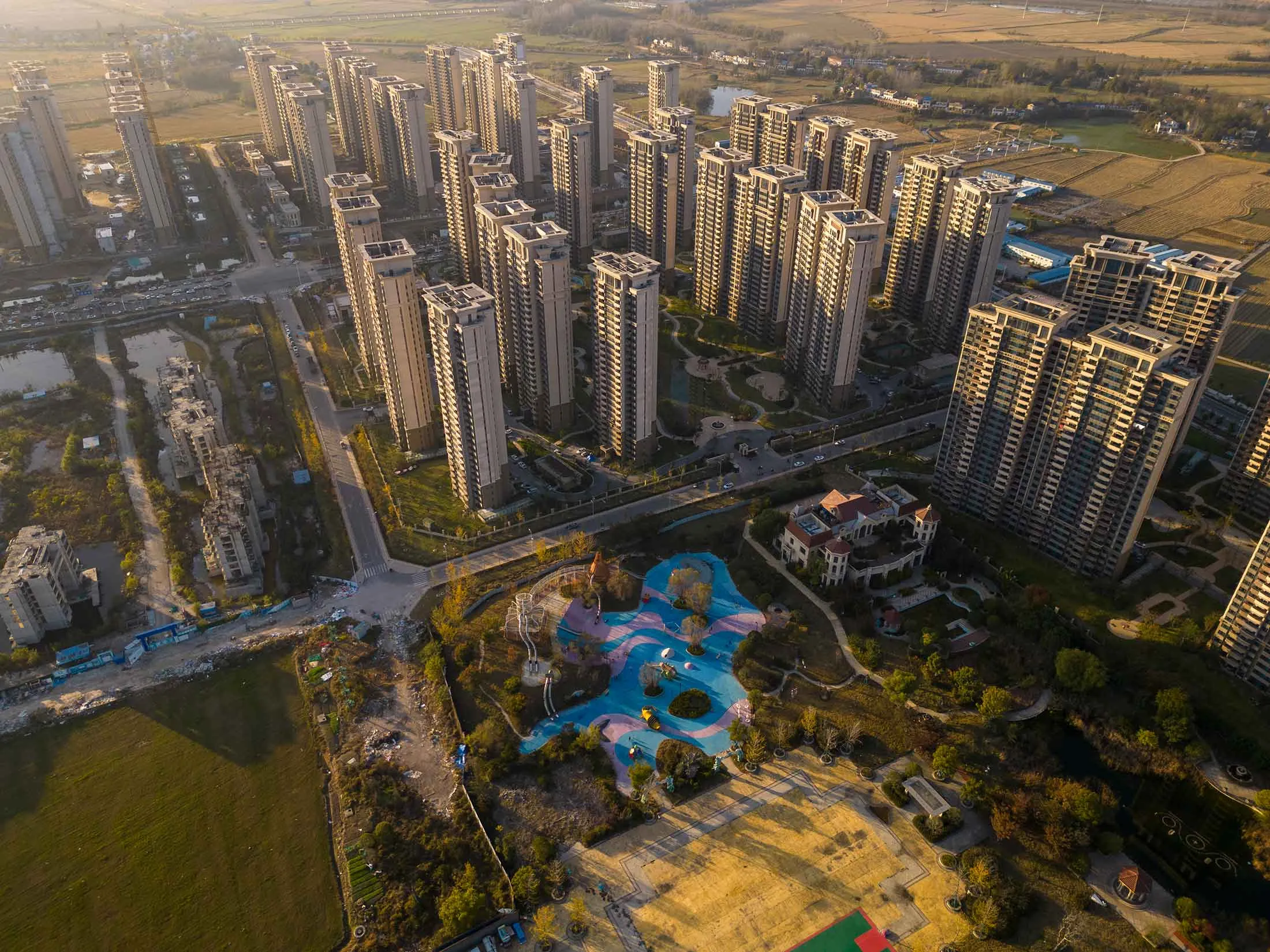
A housing development and a building site in Lu'An, China
Photographer: Raul Ariano for Bloomberg Markets
The End of the Debt Bubble Has Put the Chinese Dream On Hold
The government’s campaign to clean up the speculative, over-leveraged real estate sector has also been a shock to the burgeoning consumer economy
In 2020, one of the world’s most heavily traded bonds was a 2025 note for China Evergrande Group. Investors loved the debt of the Chinese real estate conglomerate for several reasons: It was liquid; it was tied to one of the biggest companies in the country; and it gave them a piece of the world’s second-largest economy. It also heralded a major transition for China, symbolizing an era of turbocharged growth that had put it on a path to one day surpass the US. No longer was the country going to be merely a factory to the rich world—it would have its own consumerist middle class, with beautiful apartments and all the furniture, appliances and electronics to go in them. Evergrande was building that dream, apartment tower by apartment tower—along with theme parks and business lines in bottled water, electric vehicles, health-care services and even a soccer club.
Now the Evergrande bond trades for pennies on the dollar, and its fate tells the story of an epic crash that’s affected everyone in China. For decades, real estate has been a surefire way to make money in the country—for homeowners who bought first, second and even third or fourth apartments as prices kept rising; for property companies borrowing to build projects to match demand; and for local governments relying on land sales to provide cash and infrastructure projects to help meet Beijing’s ambitious economic growth targets.