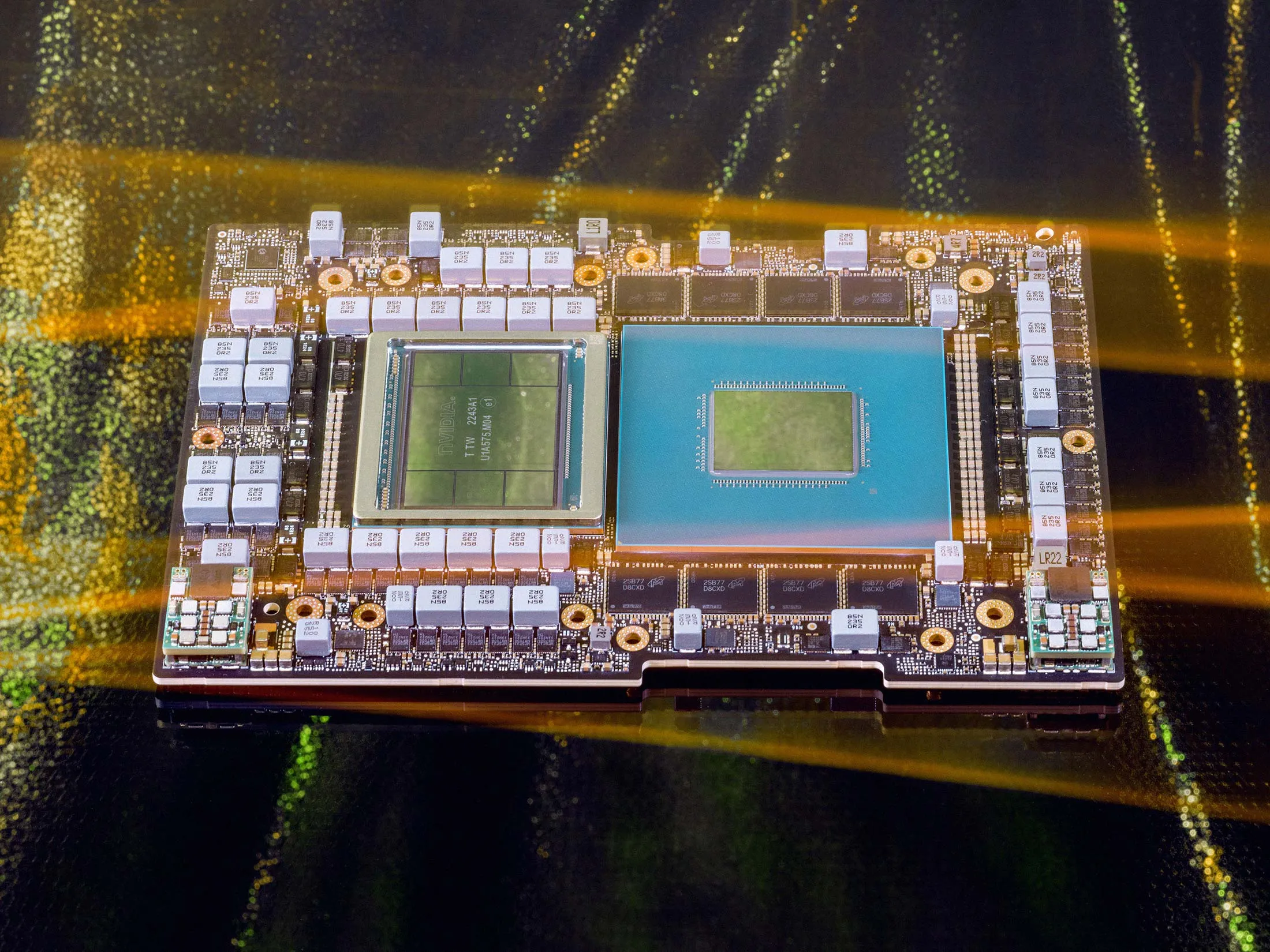
Nvidia’s new superchip, with a top-of-the-line Hopper 100 processor.
Photographer: Kelsey McClellan for Bloomberg Businessweek
How Nvidia Became ChatGPT’s Brain and Joined the $1 Trillion Club
CEO Jensen Huang’s big bet on AI went from hand-delivering processors to Elon Musk and Sam Altman in 2016 to joining today’s alpha pack of Silicon Valley.
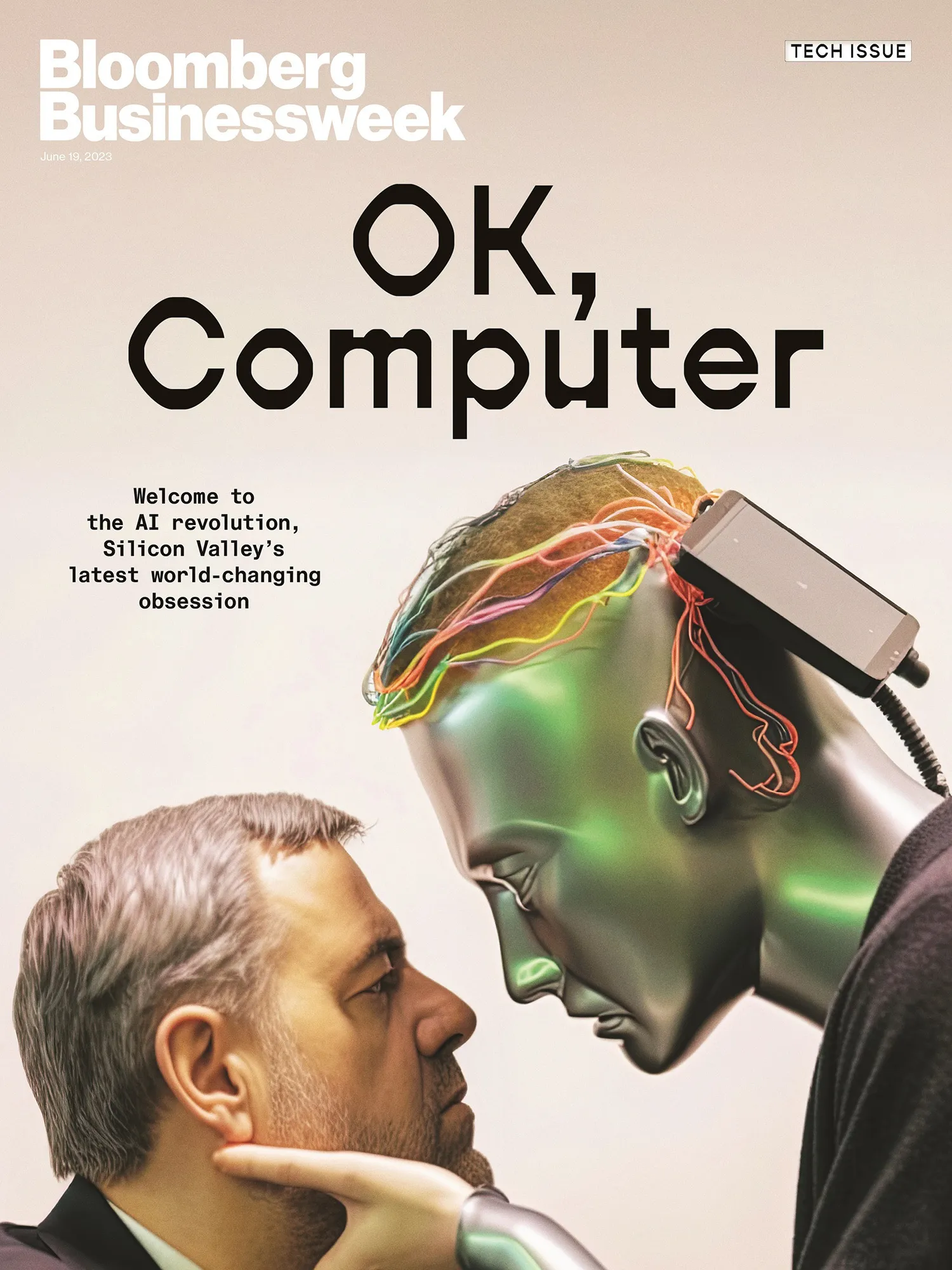
The first time Jensen Huang tried ChatGPT, he asked it to write a poem about his company. Huang, who’d made a bet more than a decade ago that Nvidia Corp.’s computer chips could serve as the brains for artificial intelligence, was pleased with the result: “NVIDIA rises to the challenge. / With their powerful GPUs and AI, / They push the boundaries of technology’s edge.” The robo-poem was evidence, by his literary standards anyway, that the wager was finally paying off.
For much of the past 30 years, Nvidia chips have been the main engine for ultrarealistic explosions and lush foliage in video games such as Call of Duty and Counter-Strike, but Huang strongly suspected they were also uniquely suited to sift through the massive data sets that artificial intelligence requires. To help test this theory, he instructed his team to build a server designed for AI and hand-delivered the first one in 2016 to Elon Musk and Sam Altman, the founders of OpenAI. Billed as an AI supercomputer, the $129,000 rig was the size of a briefcase and contained eight interconnected graphics processors that could digest in two hours what would take a traditional computer processor more than six days. Huang personally brought it to the startup’s office as a gift, and as he gestured to the components, Musk beamed at the silvery box like a proud father.