How a Ruling Family Tipped Sri Lanka Into Economic Free Fall
Not long ago, the island nation was an economic success story. With stunning swiftness, it’s become a cautionary tale of corruption and financial fragility.
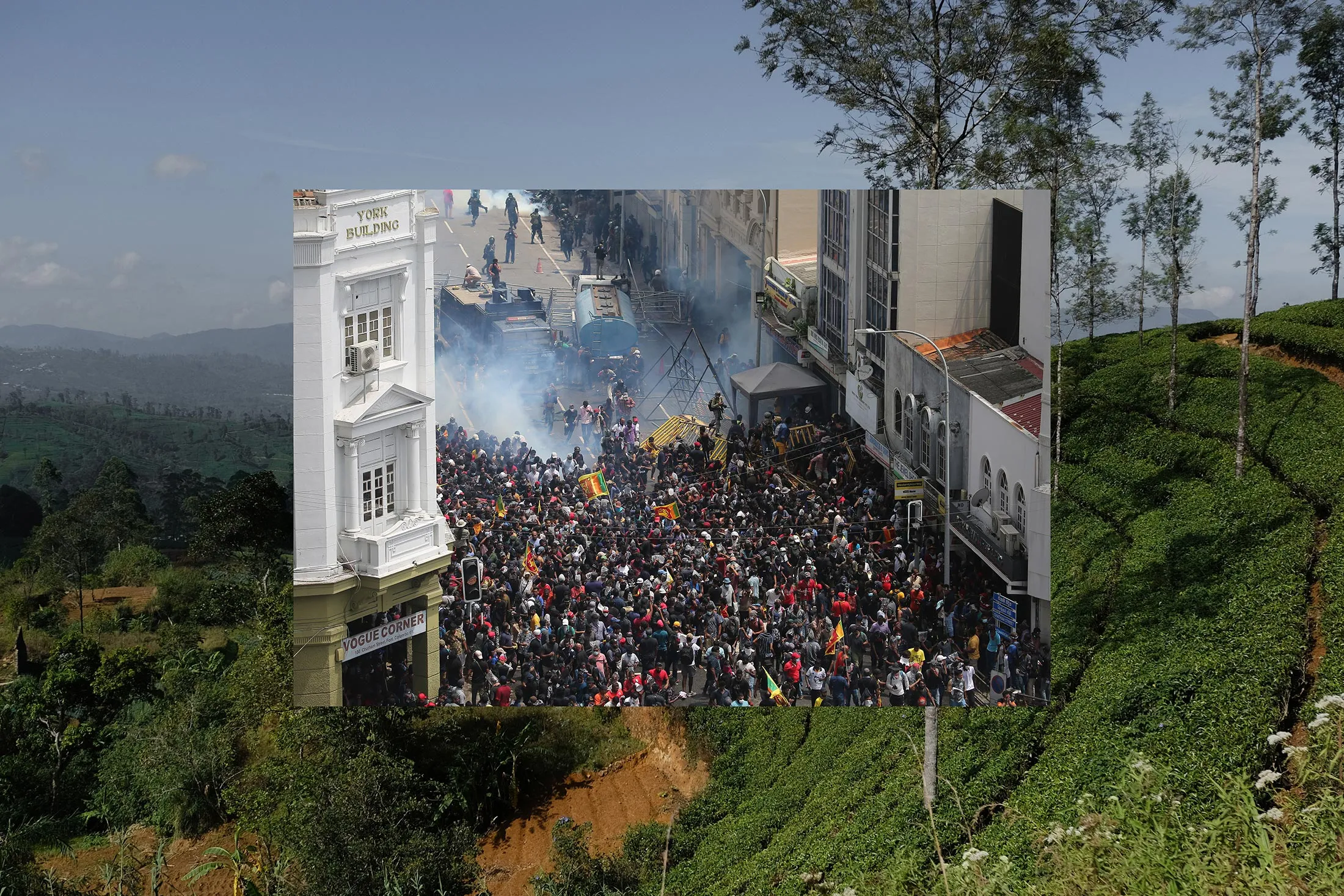
A plantation near Kandy. Inset: Police fire water and tear gas to disperse protests against President Gotabaya Rajapaksa in July.
Photographers: Yuriko Nakao/Getty Images (tea plantation); Pradeep Dambarage/Getty Images (protest)

The central highlands of Sri Lanka are tea country. Lush plantations climb the hillsides, and trucks loaded with 40-kilogram (88-pound) bales of tea leaves clatter down winding roads, bound for the port of Colombo.
But during a recent visit to the Geragama tea estate on the outskirts of Kandy, Sri Lanka’s second city, few bales were going out. The country is experiencing one of the most severe economic meltdowns to strike any nation in decades, and like virtually every business, Geragama was struggling to obtain basic materials. The price of fertilizer had gone up ninefold since 2019, while electricity shortages forced it to rely on a generator for at least a few hours each day.