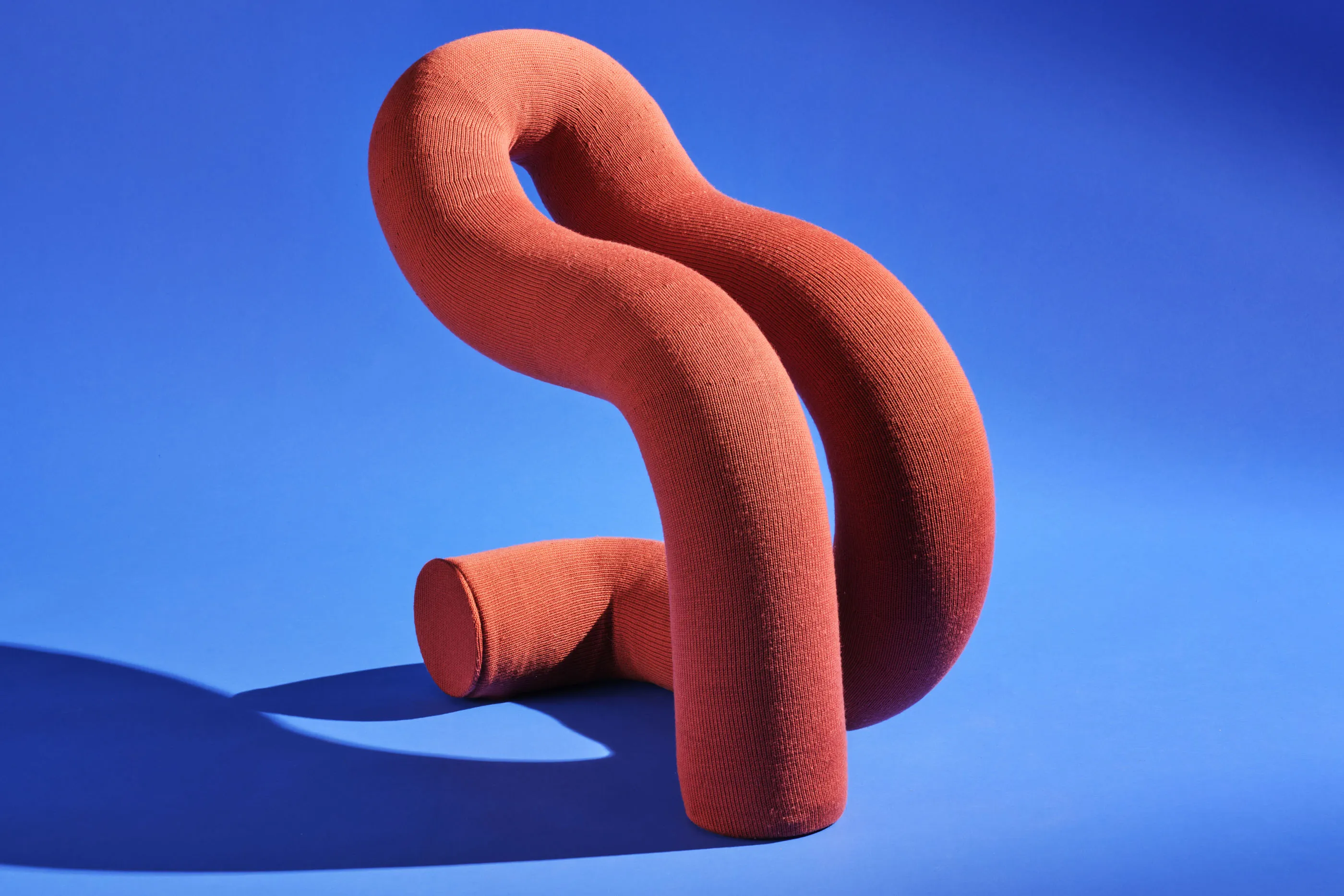
Designer Ara Thorose’s $10,000 Ulu chair is not for slackers. The backrest cradles your tailbone, but the low profile promotes good posture: The longer you sit in it, the more effort it takes to sit up straight.
Photographer: Sarah Anne Ward for Bloomberg Businessweek
The Latest Design Trend Is Chairs That Don’t Look Like Chairs
Sometimes, sitting is beside the point.
Chairs are often a bellwether of broader societal shifts. What makes one seem comfortable, or covetable, evolves with time and taste: Stiff Chippendale chairs suited the formal dining habits of wealthy Americans in the 1800s, but in leisure-obsessed 1960s and ’70s Europe, seating turned softer and more colorful. “Design is meant to suit the way we live now,” says Emma Scully, who runs a furniture gallery on New York’s Upper East Side. “When our chairs change, it’s typically because the way we live is changing.”
After more than two years of the Covid-19 pandemic, our definition of comfort is definitely in transition. It can mean the traditional cocooning feel of a La-Z-Boy, but just as often it’s simply something that you like to look at.