Gamification Took Over the Gig Economy. Who’s Really Winning?
Ride-share drivers say that the pandemic has exacerbated the imbalance with their overlords.
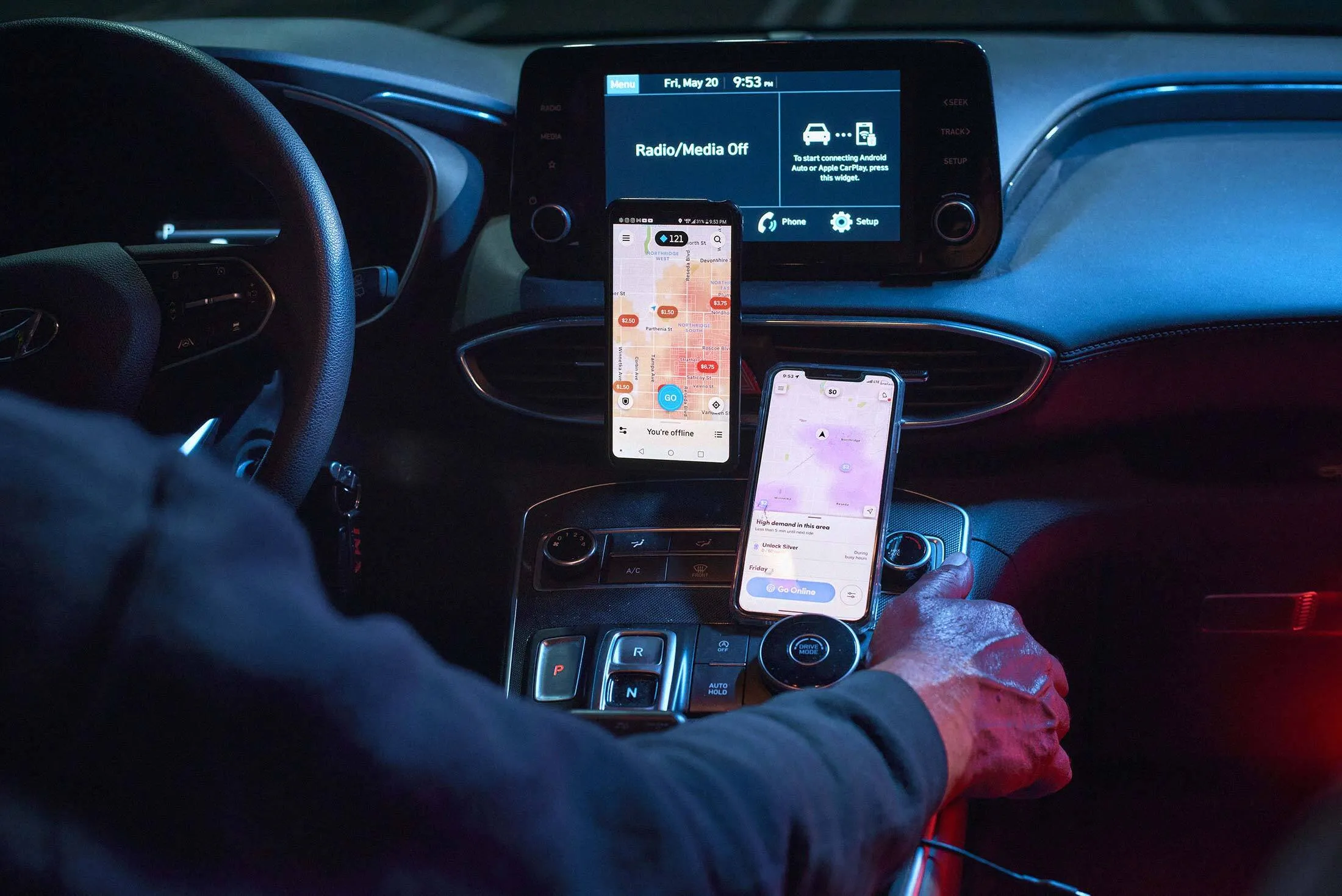
In 2008, University of Chicago economist Richard Thaler and Harvard Law School professor Cass Sunstein published Nudge: Improving Decisions About Health, Wealth, and Happiness. It’s a breezy tour through behavioral science, especially the ways in which decision-making can be shaped by what the authors call “choice architecture.” When a store puts sugary snacks at eye level so a customer is enticed to buy them, that’s choice architecture, and when credit card companies set low minimum payments to get people to pay interest, that’s choice architecture, too. The book’s argument is that we should enlist so-called nudges to socially beneficial ends, such as automatically enrolling workers in 401(k) plans. In the years since the book’s release, policymakers have occasionally adopted the ideas, with mixed results.
Where nudges have really caught on is in the part of the tech world that uses algorithms to mobilize and manage freelance workforces. Armed with troves of data and the quickly improving capabilities of machine learning, online platforms such as Uber Technologies Inc. and Lyft Inc. use nudges to coordinate millions of independent workers and extract maximum productivity. This model let Uber scale quickly, with the force of a command-and-control structure, even while corporate framed its drivers as independent, self-directed, and entrepreneurial. The company’s rapid growth was seen as proof that the human-machine relationship could work, and it became a template for a generation of startups looking to take a cut of people’s labor without putting them on staff. The concept of directly connecting customers to contractors paved the way for marketplaces including home-cleaning (Handy), pet-sitting (Rover), and, of course, food-delivering (Grubhub, DoorDash, and Uber again with Uber Eats).