My History With Scoliosis Made Me Seek a Better Treatment for My Son
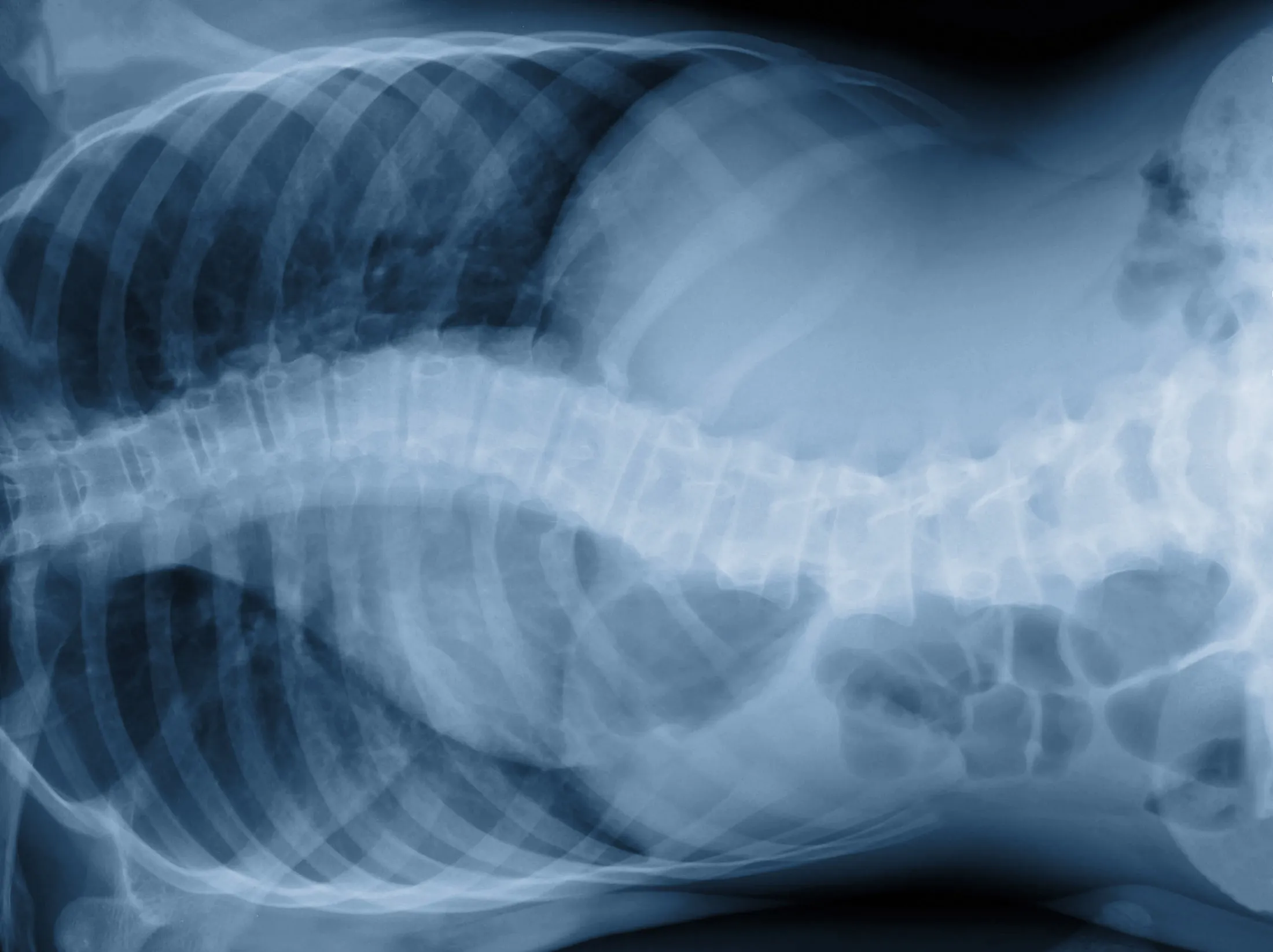
An X-ray showing a spinal bend in a teenage patient.
Photo: Getty Images
At the end of my son’s annual checkup last year, the pediatrician called me back into the exam room, where my 15-year-old had his shirt off and his back to me. He’d asked my son to bend toward the floor, his spine standing out in a knobby ridge. “See that?” the doctor asked. I did: My son’s back was askew, the ribs slightly higher on the right side than on the left. I didn’t have to ask what it meant. I remember taking—and failing—the same test myself, decades ago.
Scoliosis, a curvature of the spine in a C or S shape, runs in my family. The condition affects 2% to 3% of the population around the world. Usually appearing around puberty, it’s much more likely to become severe for girls than for boys. (In this article, I use the term scoliosis as shorthand for adolescent idiopathic scoliosis, or AIS, by far the most common form of the condition.) Doctors don’t know exactly what causes AIS. There’s often a genetic component, but how it gets passed down is unpredictable. It can skip generations, and it might affect one child in a family but none of her siblings.