Anyone Seen Tether’s Billions?
A wild search for the U.S. dollars supposedly backing the stablecoin at the center of the global cryptocurrency trade—and in the crosshairs of U.S. regulators and prosecutors.
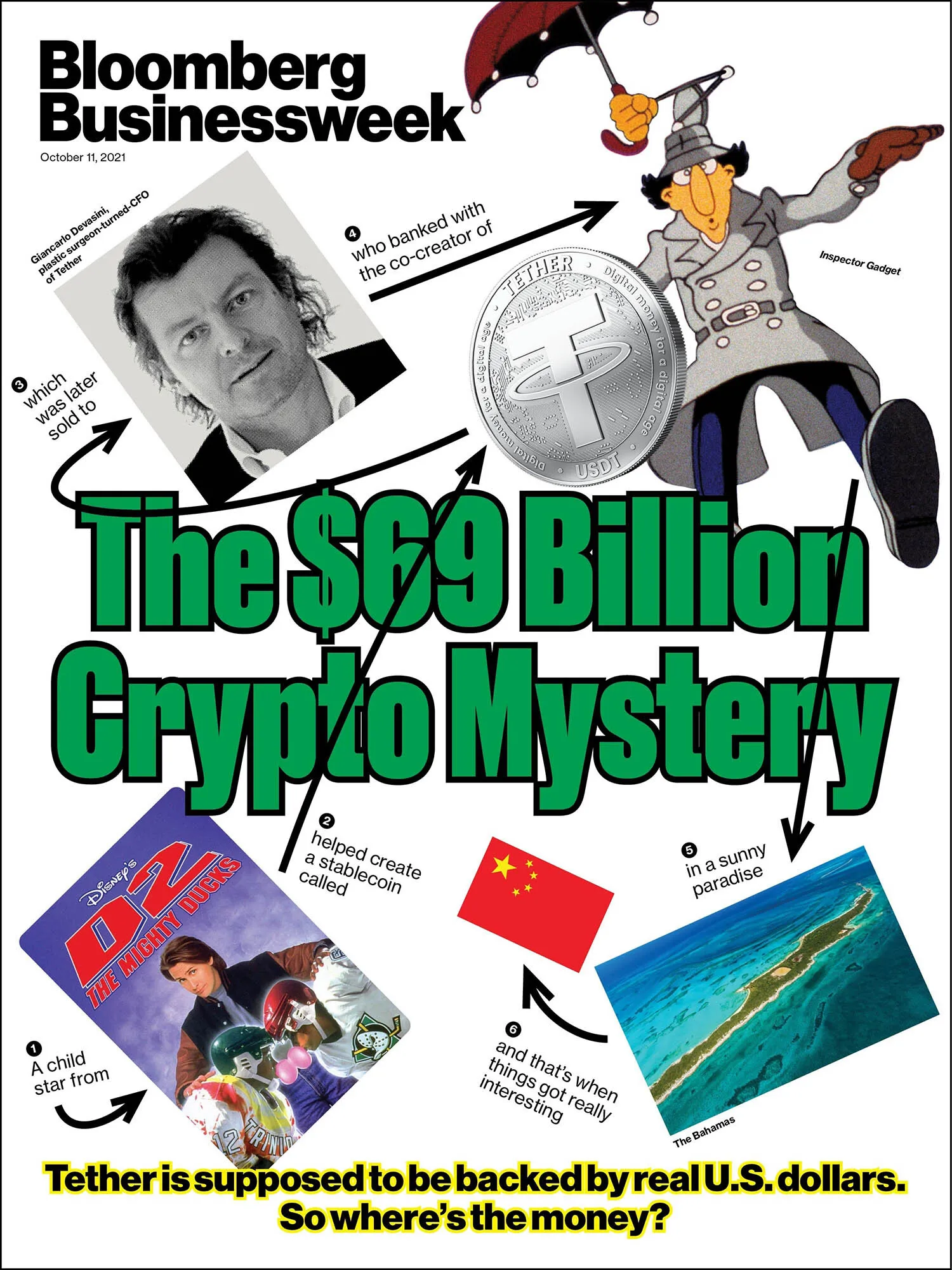
In July, Treasury Secretary Janet Yellen summoned the chair of the Federal Reserve, the head of the Securities and Exchange Commission, and six other top officials for a meeting to discuss Tether. The absurdity of the situation couldn’t have been lost on them: Inflation was spiking, a Covid surge threatened the economic recovery, and Yellen wanted to talk about a digital currency dreamed up by the former child actor who’d missed a penalty shot in The Mighty Ducks. But Tether had gotten so large that it threatened to put the U.S. financial system at risk. It was as if a playground snowball fight had escalated so wildly that the Joint Chiefs of Staff were being called in to avert a nuclear war.
Listen to this story
Tether is what’s come to be known in financial circles as a stablecoin—stable because one Tether is supposed to be backed by one dollar. But it’s actually more like a bank. The company that issues the currency, Tether Holdings Ltd., takes in dollars from people who want to trade crypto and credits their digital wallets with an equal amount of Tethers in return. Once they have Tethers, people can send them to cryptocurrency exchanges and use them to bet on the price of Bitcoin, Ether, or any of the thousands of other coins. And at least in theory, Tether Holdings holds on to the dollars so it can return them to anyone who wants to send in their tokens and get their money back. The convoluted mechanism became popular because real banks didn’t want to do business with crypto companies, especially foreign ones.