U.S. Chemical Companies Face Few Legal Risks, and the Cartels Bank On It
Taminco illegally sold enough MMA for Mexican narcos to make $3.2 billion worth of methamphetamine. For that, it paid a fine of just $1.3 million—in one of the only prosecutions of its kind ever.
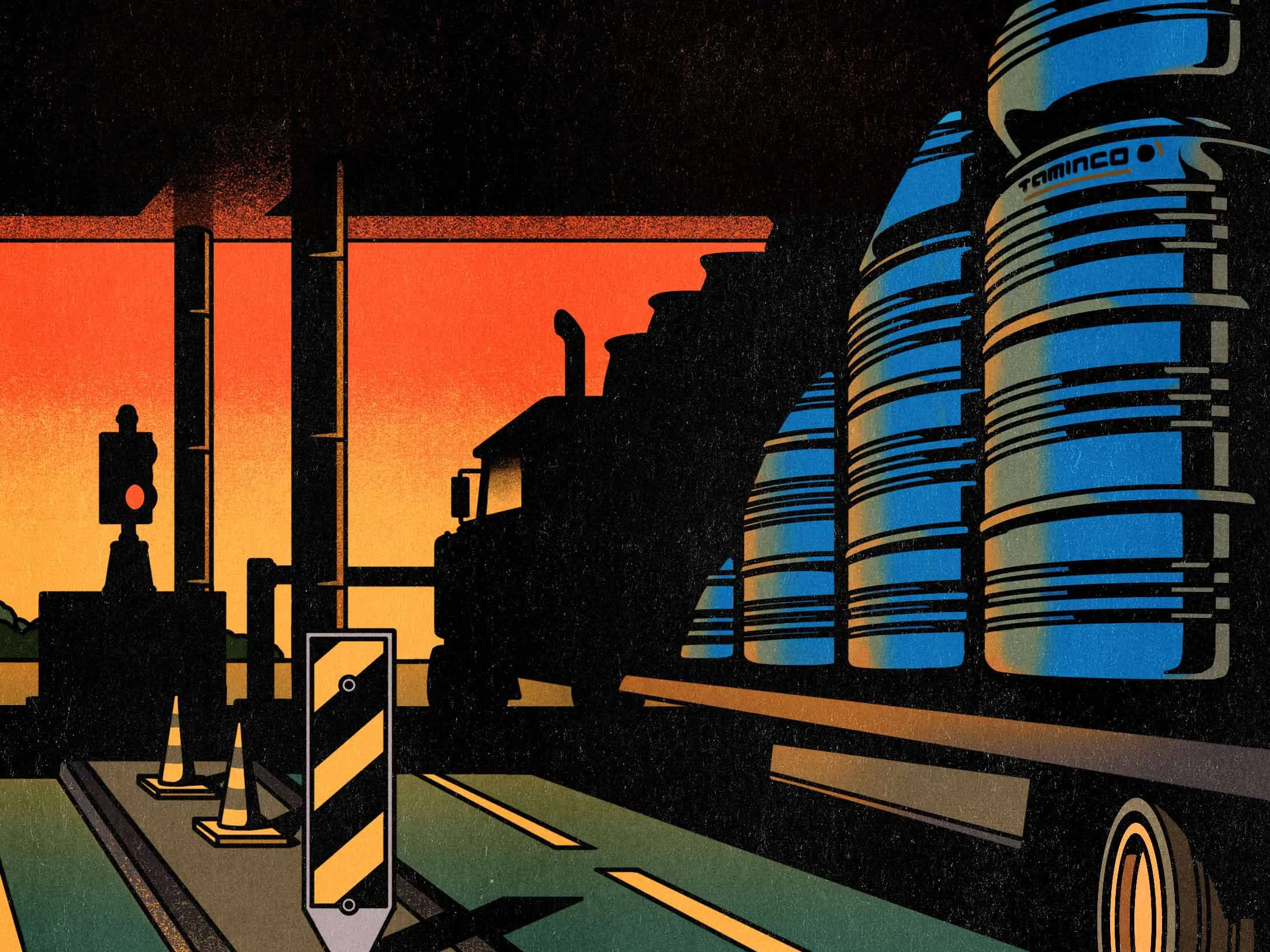
Illustration: Maxime Mouysset
One November morning in 2015, a lawyer named Clark Jordan rose sheepishly from his chair to face the judge in a federal courtroom in eastern Pennsylvania. Jordan, then 51, had spent most of his adult life in corporate law, but this day was different. As a vice president of Eastman Chemical Co., he was appearing for Eastman’s board of directors to enter a guilty plea in a drug case. The six-count criminal information charged that an Eastman subsidiary, Taminco U.S. Inc., had knowingly violated federal narcotics laws. Before that morning, Jordan had thought this would be “no big deal,” he later recalled. But in the solemnity of the courtroom, the gravity of the moment sank in.
Taminco, which Eastman had acquired 11 months earlier for $2.8 billion, was one of the world’s top producers of a chemical called monomethylamine, or MMA. Legally used to make pesticides and pharmaceuticals, it’s also an essential ingredient for Mexican cartels cooking the cheapest and most potent methamphetamine ever sold on American streets. Federal drug laws contain a set of crimes for U.S.-based companies that fail to control the sale and distribution of every liter they make. Requirements include verifying the legitimacy of any customer worldwide. Even contractors that pour the chemical into barrels must be licensed by the Drug Enforcement Administration.