What a 1902 Coal Strike Tells Us About Essential Workers Today
Thousands of miners showed Americans the dangerous, low-paid nature of crucial labor. It helped forge a new kind of social contract—could it happen again?
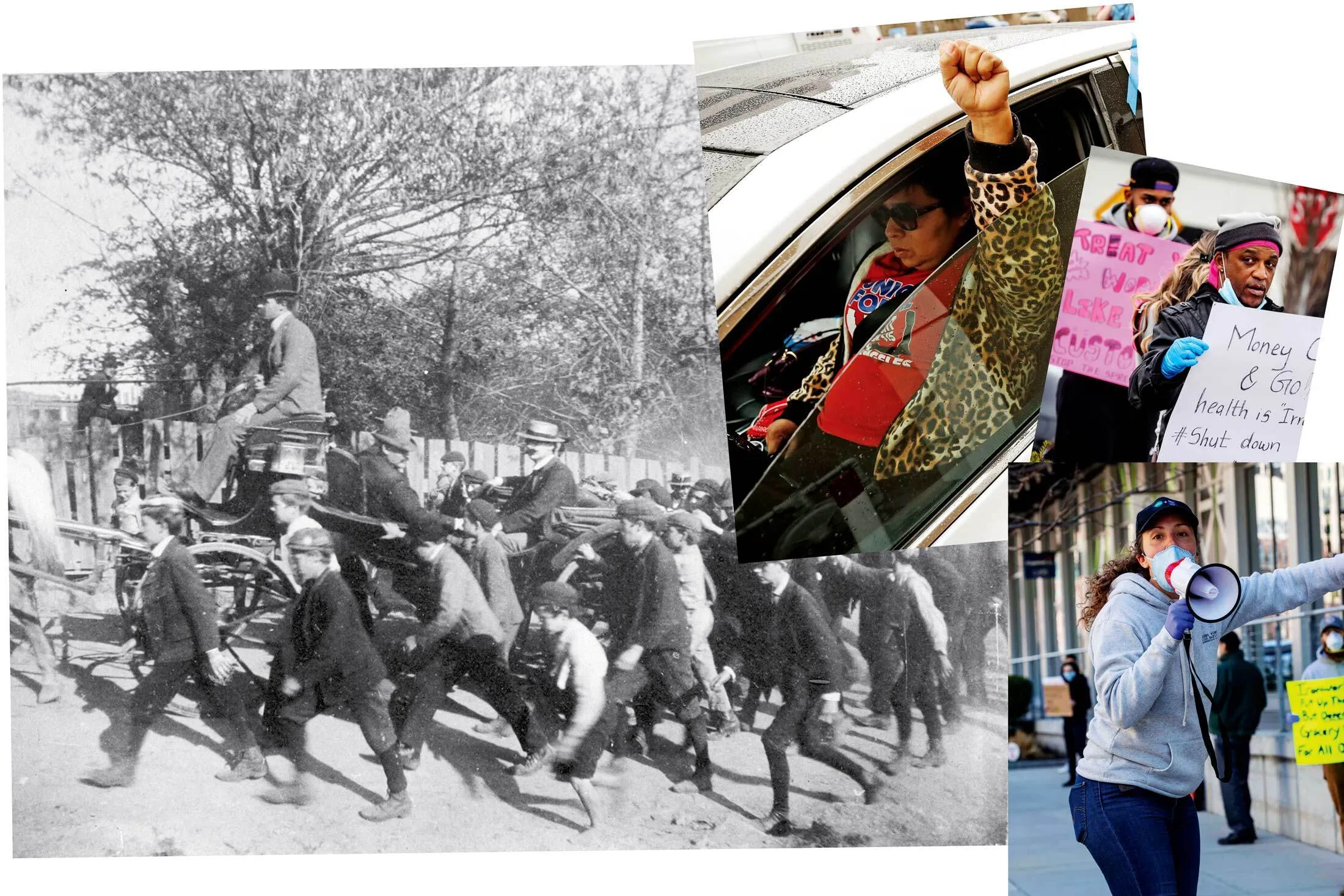
Miners’ union president John Mitchell arriving in Shenandoah, Pa., in 1902 (left), and (from top) McDonald’s, Amazon, and grocery store workers protest as the pandemic spreads.
Source: Library of Congress (1902); Photographer, clockwise from top: Al Seib/Los Angeles Times/Polaris; Bebeto Matthews/AP Photo; M. Scott Brauer/Redux
In the weeks since the coronavirus pandemic took hold in America, the country has come to redefine essential work and to appreciate that essential often means vulnerable. We’ve watched the people who pack online orders, stock grocery stores, and deliver takeout assume unprecedented risk, often for low pay in unsafe working conditions. Some who’ve protested have been silenced; some who’ve carried on have been infected.
We’ve also seen evidence, though, that in a collective (and profit-threatening) emergency, the big companies that employ essential workers will, under duress, raise wages and offer paid sick leave. The government will find the money to give many families at least $1,200, no application necessary. And at seven every night, we cheer.