El Salvador’s Reformist President Takes an Autocratic Turn
Nayib Bukele had been hailed as one of the world’s most promising young leaders. Then he called in the army.
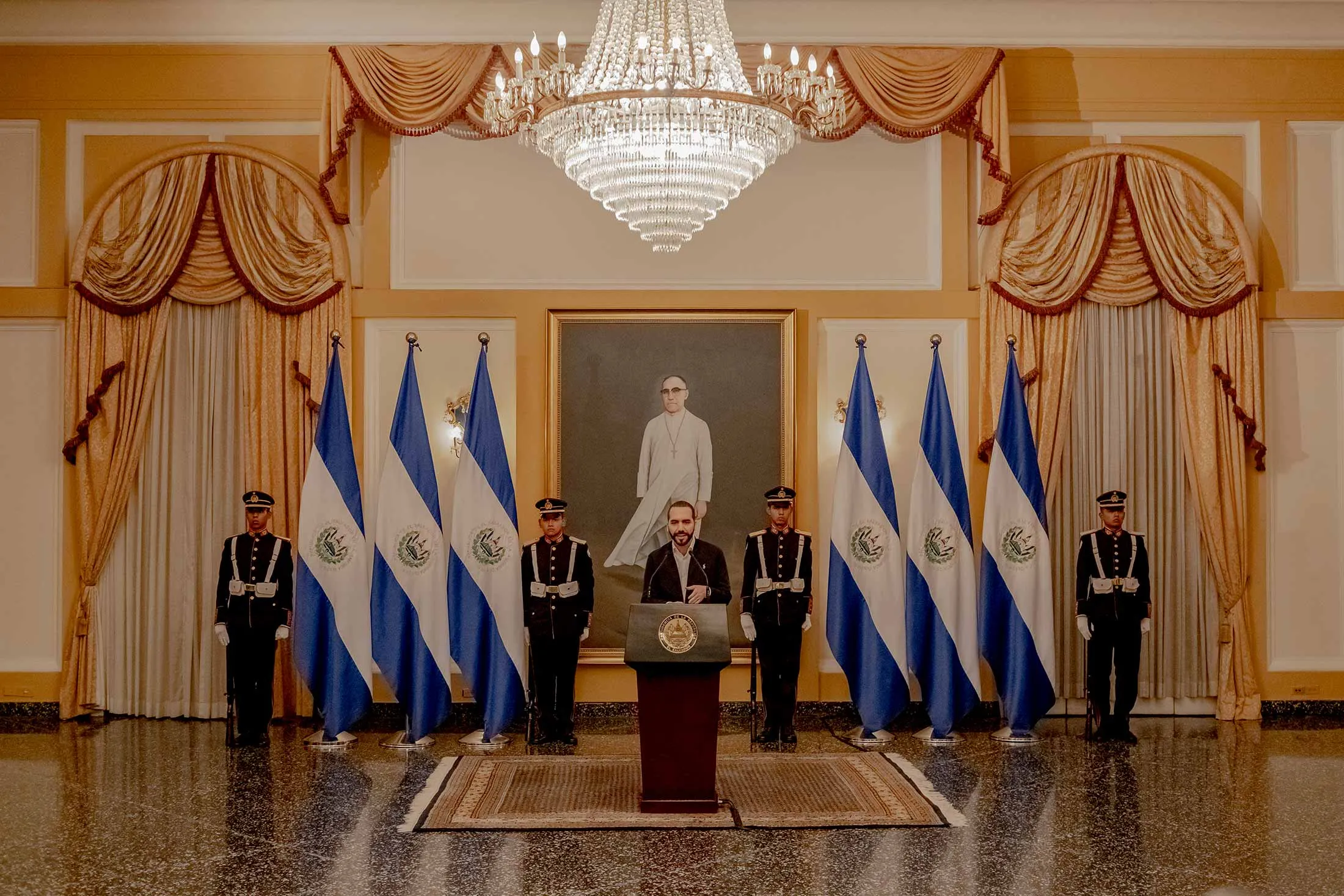
Bukele at a Feb. 28 press conference at the Presidential House.
Photographer: Fred Ramos for Bloomberg Businessweek
In early February, soldiers and police in riot gear barged into the legislature in San Salvador. Lawmakers sat in shock, and the new president, who brought the troops in, warned them, “I think it’s clear who has control of the situation.” Even veteran observers of Central America were confused. What was happening?
Until then, El Salvador’s President Nayib Bukele had been hailed by the Trump administration and U.S. investors as one of the most promising young leaders in the developing world. He is 38 and, until now anyway, seemed savvy, gutsy, and impatient for reform. Bukele said Salvadorans were fleeing to the U.S. because previous governments had failed them. Don’t send more aid, he implored America. Invest in our country so we can create jobs and bring our people home.