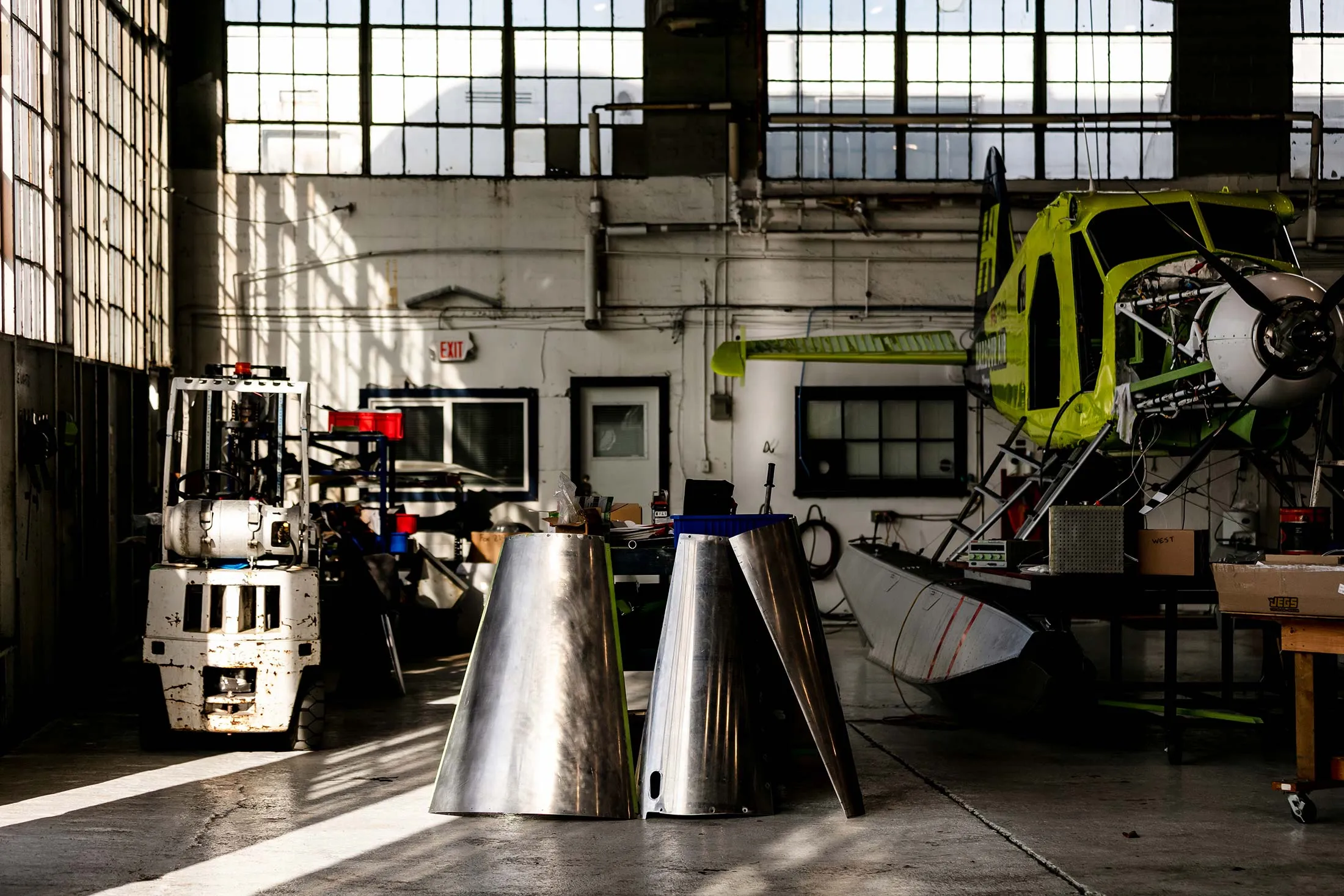
Converted nose cones for Harbour Air’s all-electric e-plane inside an aircraft maintenance hangar at Vancouver International Airport’s South Terminal on Oct. 30. With 42 aircraft, the carrier operates the largest all-seaplane fleet in North America.
Photographer: Robert Ormerod for Bloomberg BusinessweekA Zero-Emission Seaplane Prepares for Takeoff
Canada’s Harbour Air will test-fly a prototype electric aircraft in December.
It all started with a summer vacation. Growing up in Southern California, Greg McDougall and his family left sweltering Santa Barbara for his parents’ lakeside cabin on Nelson Island in the Sunshine Coast region of British Columbia as soon as school let out. As McDougall recalls, he spent hours sitting on a dock, marveling at the sight of floatplanes landing and taking off. In the summer of 1962, when McDougall was 7, a ferry strike meant the only way off the island was on a seaplane. That clinched it: The young boy was hooked on planes.
In a region where people use seaplanes as often as New Yorkers call for an Uber, McDougall, 63, is known as the floatplane king. He founded Harbour Air in 1982 and operated it from a waterfront office in downtown Vancouver. With two leased De Havilland Beaver aircraft and a handful of employees, the business took off. Today, the company is North America’s largest and first fully carbon-neutral airline. In 2019, Harbour brought in CAD $70 million (USD $52.8 million) in revenue. It boasts a fleet of 53 planes and 450 employees across Vancouver; Victoria, B.C.; and Seattle. And, McDougall says, Harbour soon will run emission-free flights.