We’re Running Out of Helium, and Two Geologists Might Have a Fix
MRI machines, fiber-optic cables, and kids’ birthday parties need it. Helium One wants to help.
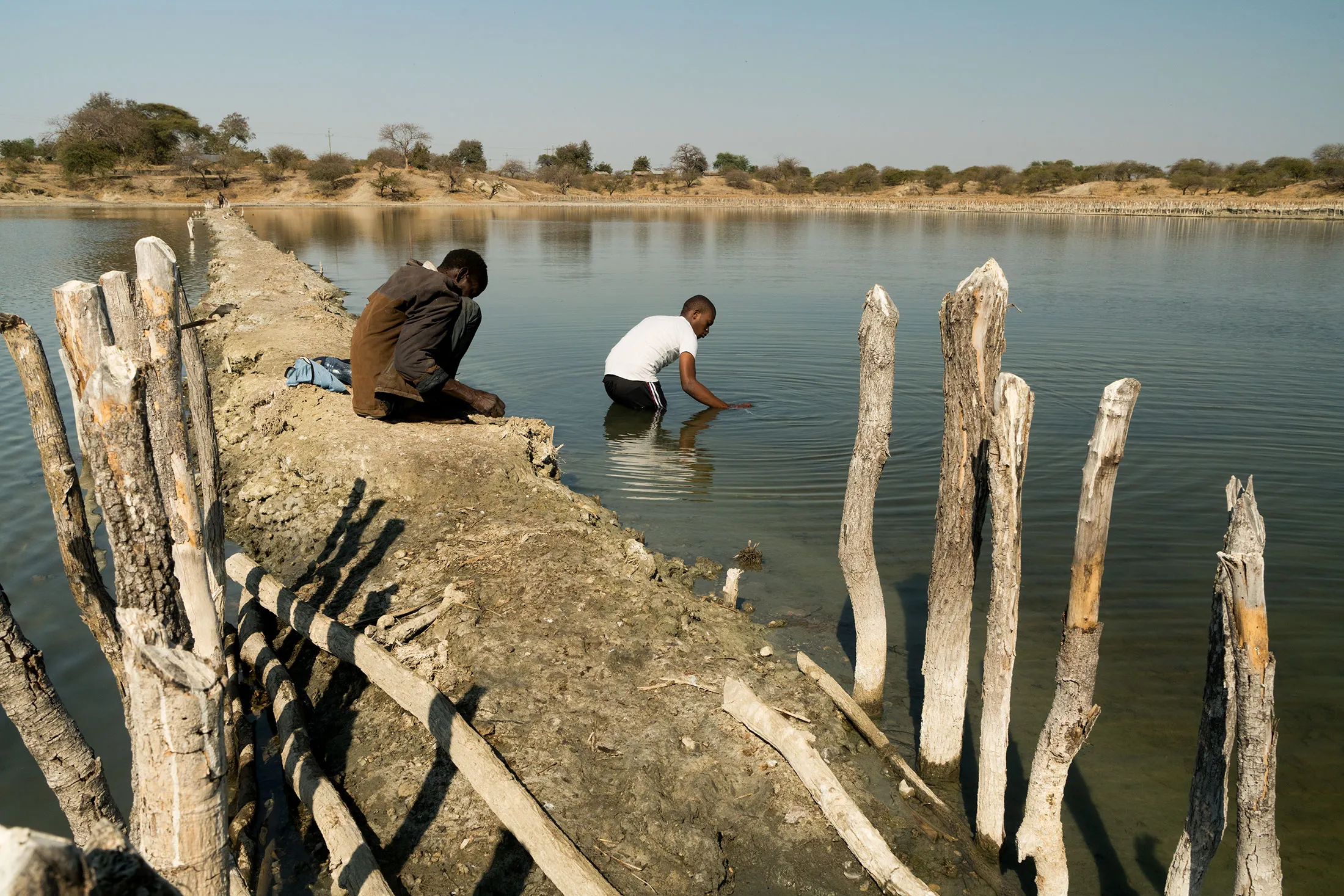
Grad student Karim Mtili (right) collects gas samples in Itumbula, Tanzania.
Photographer: Adriane Ohanesian for Bloomberg Businessweek
If Josh Bluett and his pal Thomas Abraham-James hadn’t run out of things to talk about during a road trip, they might never have read the six pages that changed their lives. Bluett and Abraham-James are Australian geologists and onetime housemates in Brisbane who’d been hunting precious metals and fossil fuels for mining and energy companies. By November 2013, Abraham-James was living in Tanzania, looking for gold and copper, and he invited Bluett for a visit. “I was having a great time—this was proper exploration,” Abraham-James recalls. “I told him, ‘You’ve got to come experience this place.’ ”
During the long drive from the city of Dar es Salaam to one of the sites where Abraham-James’s company was prospecting for gold, Bluett found in the back of the car a government-published book, Industrial Minerals in Tanzania: An Investor’s Guide. Inside were summaries of old reports identifying deposits around the country, and some numbers concerning helium caught Bluett’s eye. While conducting geological analyses for his employer a couple of years earlier, he’d gained some experience spotting caches of the universe’s second-most abundant element, which has lately been in short supply here on Earth.