The Hottest Thing in Food Is Made of Peas, Soy, and Mung Beans
Impossible Foods has Burger King. Beyond Meat has Whole Foods. The ultimate prize, McDonald’s, is still up for grabs.
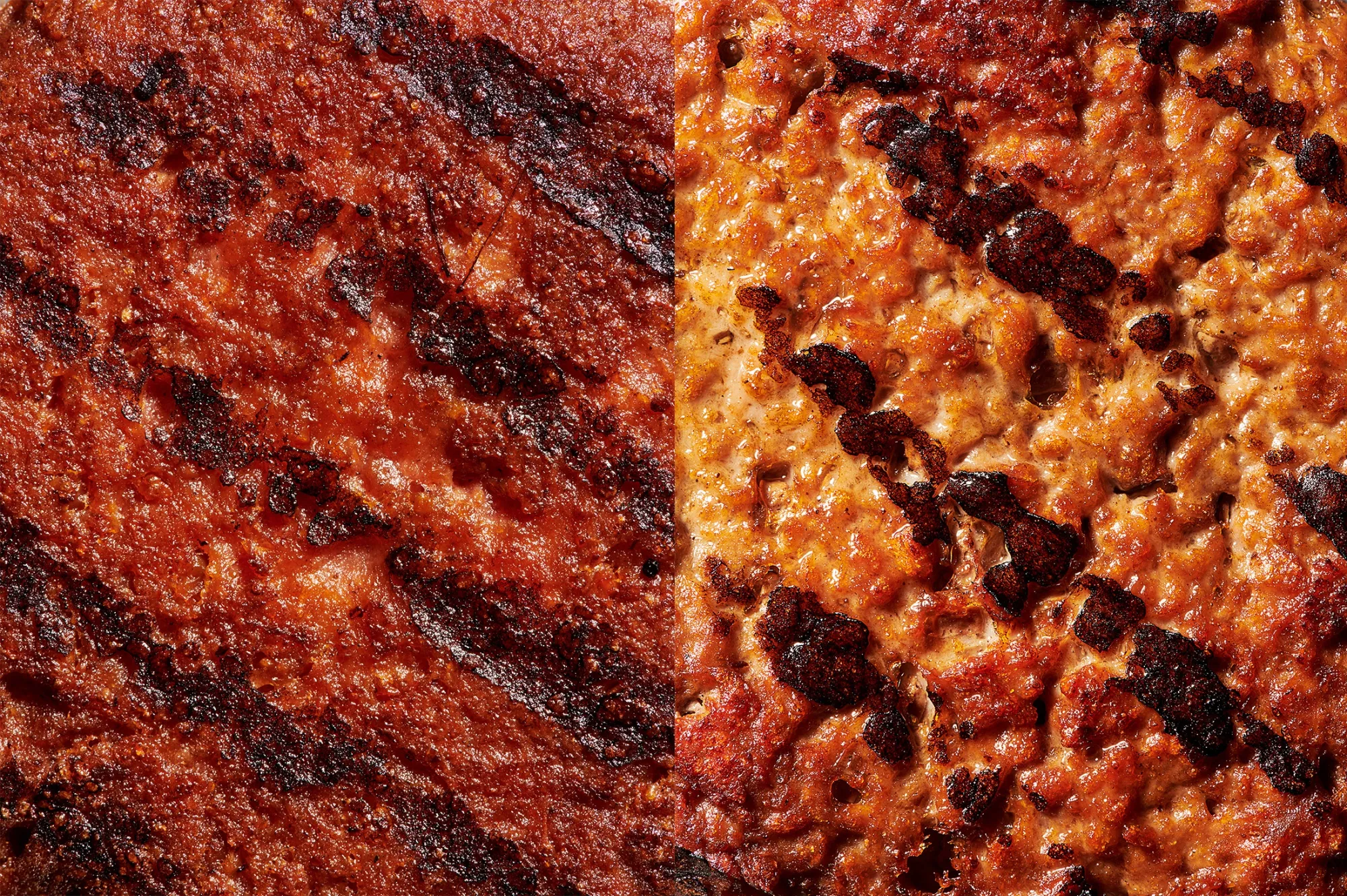
Where’s the beef? Not here. Left, a Beyond Burger. Right, the Impossible Burger.
Photographer: Hannah Whitaker for Bloomberg Businessweek; Food stylist: Michelle Gatton
Ethan Brown, chief executive officer of Beyond Meat Inc., doesn’t want to talk about his company’s stock price. He’s more than happy to talk about Beyond’s plant-derived meat matrix or its athlete spokespeople, or even how his products aren’t quite as good as they should be—yet. But the stock price? No. Not even in June, when the shares were trading at 500% above their initial public offering price. “I generally don’t comment on stock price,” he says, possibly out of genuine humility, or maybe so as not to jinx anything.
Brown prefers to hold forth about the meatlike substances he’s been working on for more than 10 years, breaking plant materials down into their component parts—amino acids, lipids, minerals—and then rebuilding them to mimic the structure of animal flesh. He’ll identify the five necessary sensory experiences: fat, flavor, aroma, appearance, and texture. “Meat is these five components,” he says. “What the animal is doing is organizing plant material.” Instead of using cows to turn plants into burgers, Beyond uses a system of heating, cooling, and pressure. The result is a raw, reddish-brown patty that’s closer to animal meat in taste and texture than any freezer-aisle predecessor.