Businesses Flock to Baltimore Wasteland in Epic Turnaround Tale
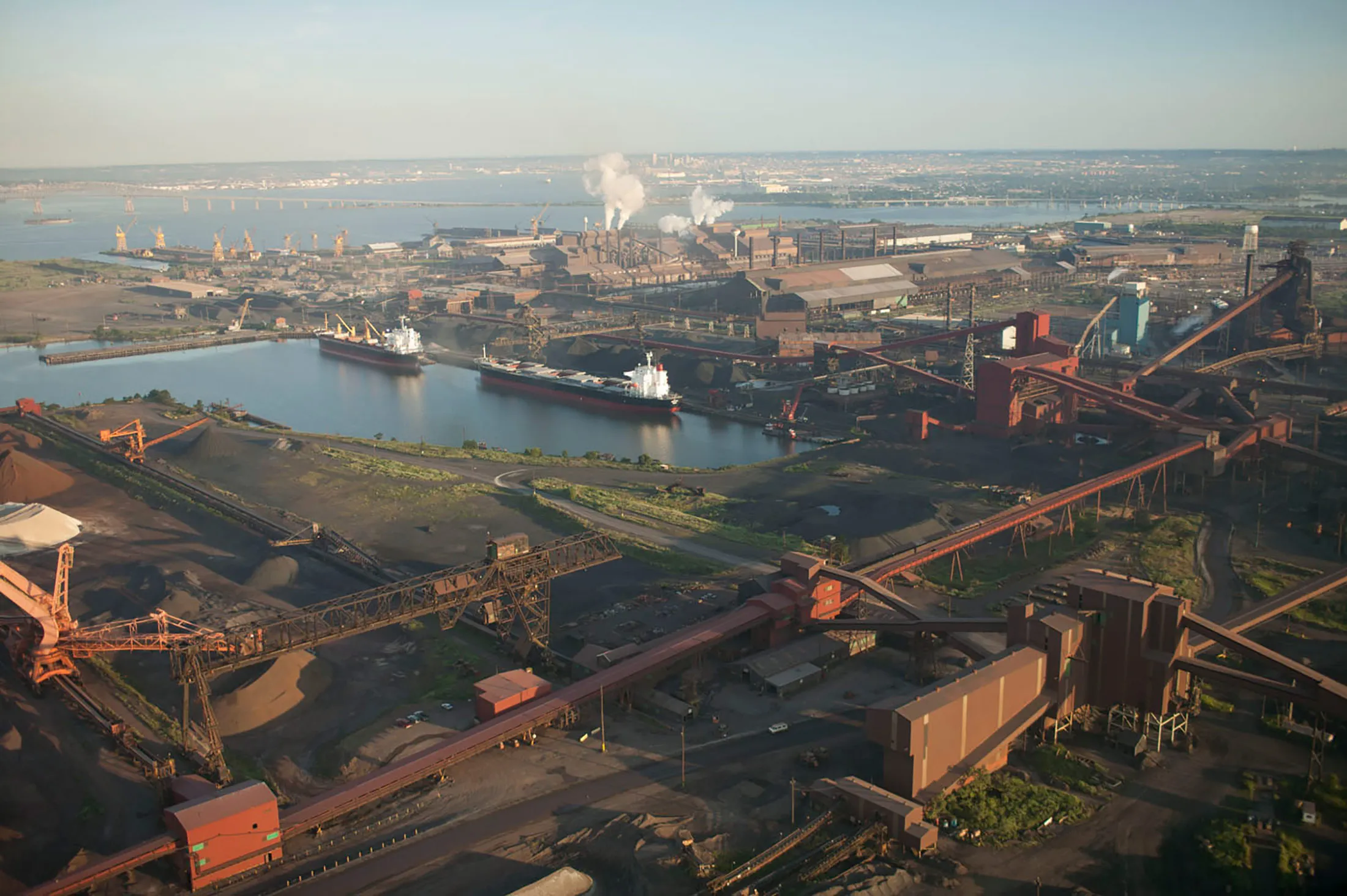
Sparrows Point before Hilco bought it in 2012.
Photographer: Cameron Davison
Sparrows Point looked like the backdrop to a dystopian sci-fi flick when Roberto Perez first laid eyes on it in the summer of 2012. Located along Chesapeake Bay in Maryland’s Baltimore County, the site housed what was once the world’s biggest steel mill as well as a shipyard. Scrap metal and giant machinery littered the landscape. The soil and water were laced with toxins.
When he heard Sparrows Point’s owner, RG Steel LLC, had filed for bankruptcy, Perez chartered a flight from Chicago for his team to see what could be salvaged. At a minimum, his employer, Hilco Global—a company that specializes in selling distressed assets—could strip Sparrows Point for parts and make a quick profit. Perez, who as chief executive officer of Hilco Redevelopment Partners oversees the group’s real estate investment activities, had an inkling there might be other ways to wring money from a 3,100-acre spread of industrial land with its own deep-water port, 100 miles of shortline railway, and easy access to an interstate highway—all within a day’s drive of about a third of the U.S. population.