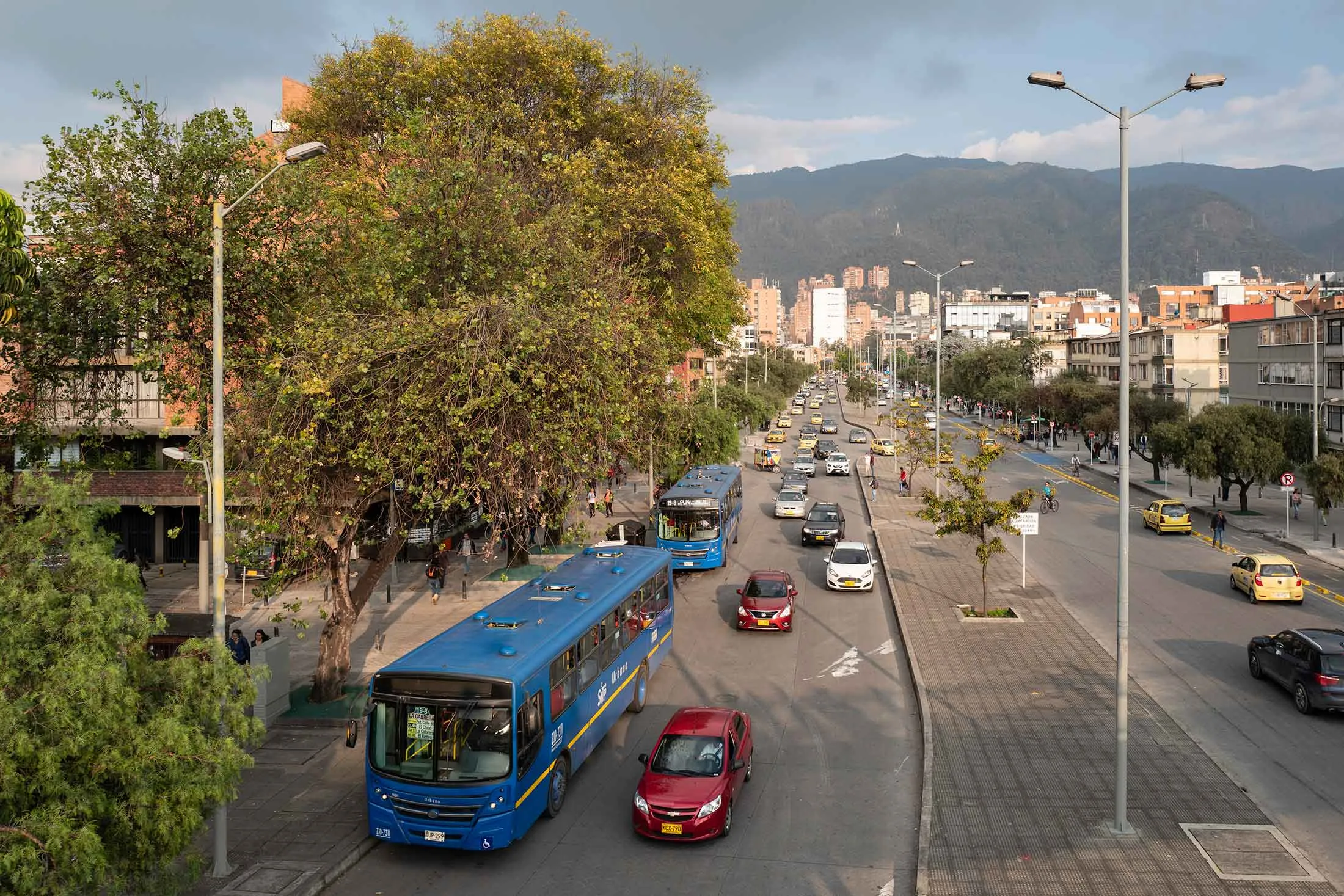
Calle 85 in northern Bogotá.
Photographer: Juan Cristóbal Cobo for Bloomberg Businessweek
Mercenaries, Spies, and Double Agents Gather En Masse in Bogotá
In the Casablanca of the Andes, seemingly everyone’s plotting—or counterplotting—for control of neighboring Venezuela.
Small families with bedrolls loiter quietly on the red-brick sidewalks outside the high-end eateries and upscale boutiques of Bogotá’s northern neighborhoods, taking handouts. Along the gritty, honking avenues farther south, young men push cartloads of candy for sale or shoulder food-delivery backpacks as employees of one of the Colombian capital’s fastest-growing startups. They are Venezuelan refugees, hundreds of thousands of them, and in the past couple of years they’ve poured into this damp, thin-aired, sprawling city high in the Andes.
Geopolitical crises tend to create unexpected centers of refuge and espionage. During the Cold War, it was West Berlin; in the buildup to the Iraq War, the Jordanian capital of Amman. Now the world’s attention has shifted to Venezuela, a nation whose people are near starvation, even as they sit atop the world’s largest known oil reserves. The Trump administration, invoking the Monroe Doctrine claim of U.S. primacy in the Western Hemisphere, says the departure of its president, Nicolás Maduro, is nonnegotiable. It’s led more than 50 countries in supporting opposition leader Juan Guaidó as interim president and has imposed punishing economic sanctions. Moscow has replied by sending military advisers to Caracas. Along with Beijing, Ankara, and Havana, it’s standing by Maduro. So is the Venezuelan military command, at least so far.