It’s Tough Being the First Birth Control App
Natural Cycles is more effective than the pill, but that didn’t help it escape a PR crisis.
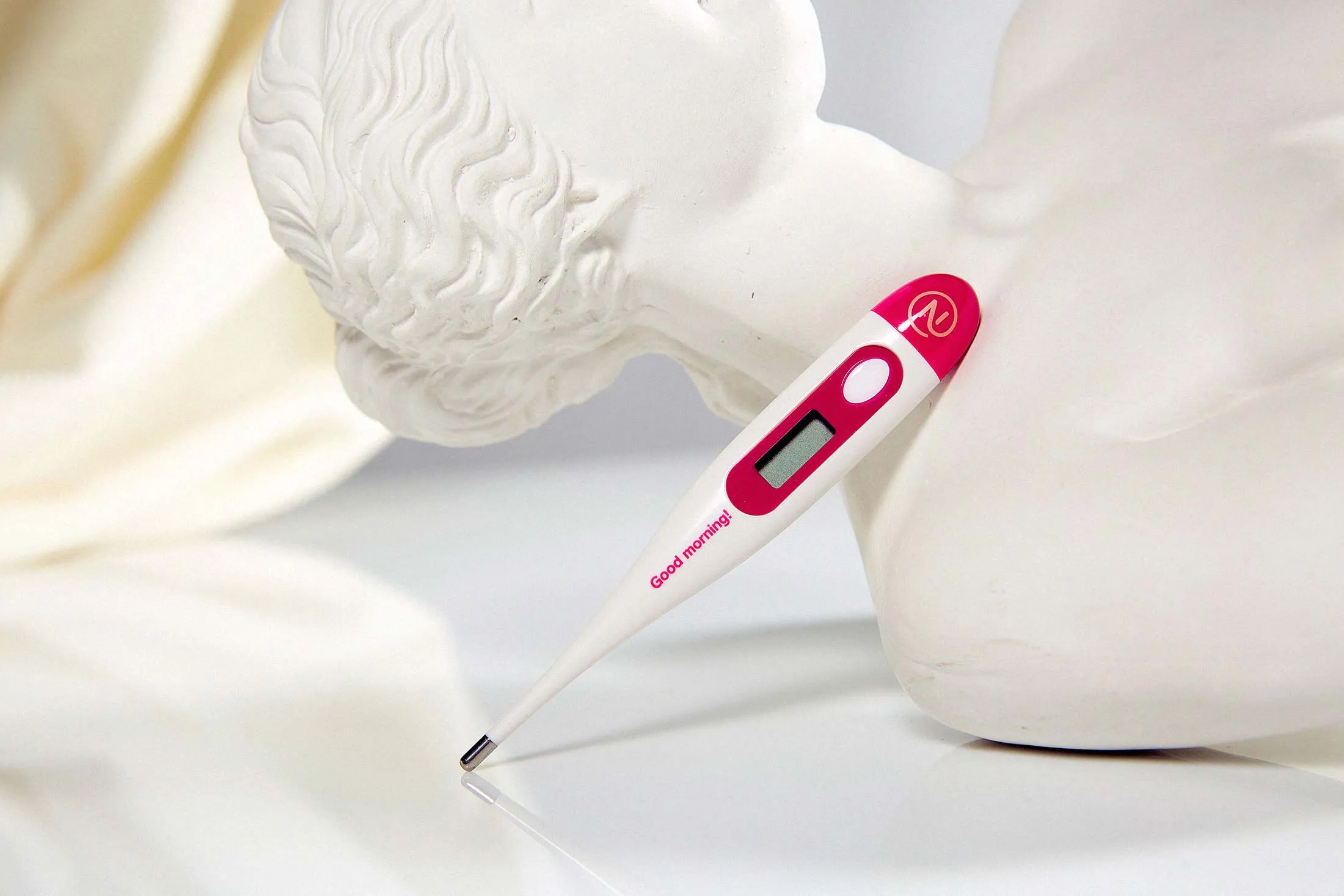
A Natural Cycles branded thermometer, which the company sends to users of its fertility-tracking app.
Photographer: Caroline Tompkins for Bloomberg Businessweek
Late one evening last February, Raoul Scherwitzl posted a tweet that, even in this age of oversharing, might have seemed a little too personal: He and his wife, Elina Berglund, would stop trying to avoid pregnancy and begin trying to have a baby. “As of now, the founders of Natural Cycles are switching from Prevent to Plan,” he wrote from Stockholm. “May the odds be in our favor.”
Natural Cycles is a fertility-tracking app the couple had built five years earlier. It’s also the first, and still the only, mobile application cleared for marketing as a certified contraceptive in Europe. In August of last year, it earned a similar distinction from the U.S. Food and Drug Administration, which put a cluster of smartphone-tailored code and pixels in the same regulatory class as condoms. For Berglund and Scherwitzl, announcing their intention to use Natural Cycles to help them procreate felt like a way to hold their technology to account in real time. The method worked: Within a few months, the couple had conceived their second child, who’s due in a few weeks.