The Gazillion-Dollar Standoff Over Two High-Frequency Trading Towers
The hunt for a millionth-of-a-second advantage in the town best known for Wayne’s World is getting heated.
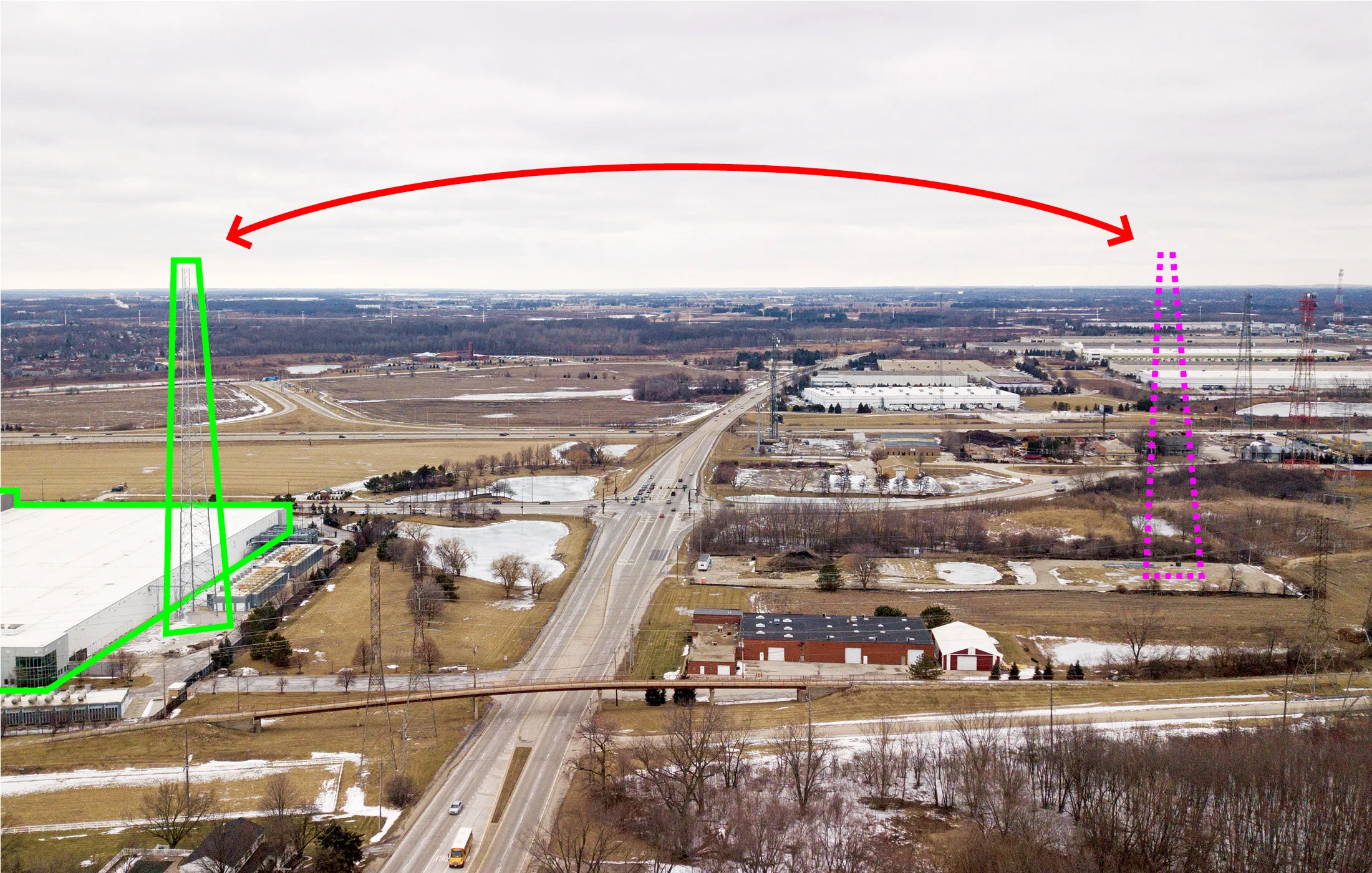
Overview of the battleground in Aurora, Ill., looking north. The large white building at the left is the CME data center. Beside it is the center’s still-unused tower, built to hold dish antennas capable of transmitting data via microwave to points east. The proposed site for a rival tower is across the road.
Photographer: Jason Reblando for Bloomberg Businessweek
In a weedy field 35 miles west of Chicago squats a tidy red-brick building with a peaked roof, about the size of a one-car garage. Against the eastern wall, reaching just above the roofline, are poles equipped with small dish antennas that send microwave signals to and gather them from financial markets on the East Coast. At the same time, the site communicates via subterranean cable with an enormous steel-and-glass building across the street. That fortress is home to CME Group Inc., a $63 billion exchange where some of the world’s most vital financial products trade, including derivatives on oil, gold, U.S. Treasuries, and the S&P 500. If you want to be a serious player in global markets, you have little choice but to stash your trading machines here.
The little brick hut in Aurora, Ill., is part of New Line Networks LLC, a joint venture of Chicago’s Jump Trading LLC and Virtu Financial Inc. of New York City, two of the nation’s most successful high-frequency trading firms. In 2016, Jump Trading paid $14 million for the 31-acre plot where the building sits to be close to the CME center.