What Happens to All Those Beads After Mardi Gras?
The city of New Orleans pulled 93,000 pounds of beads from just five blocks of storm drains in 2018.
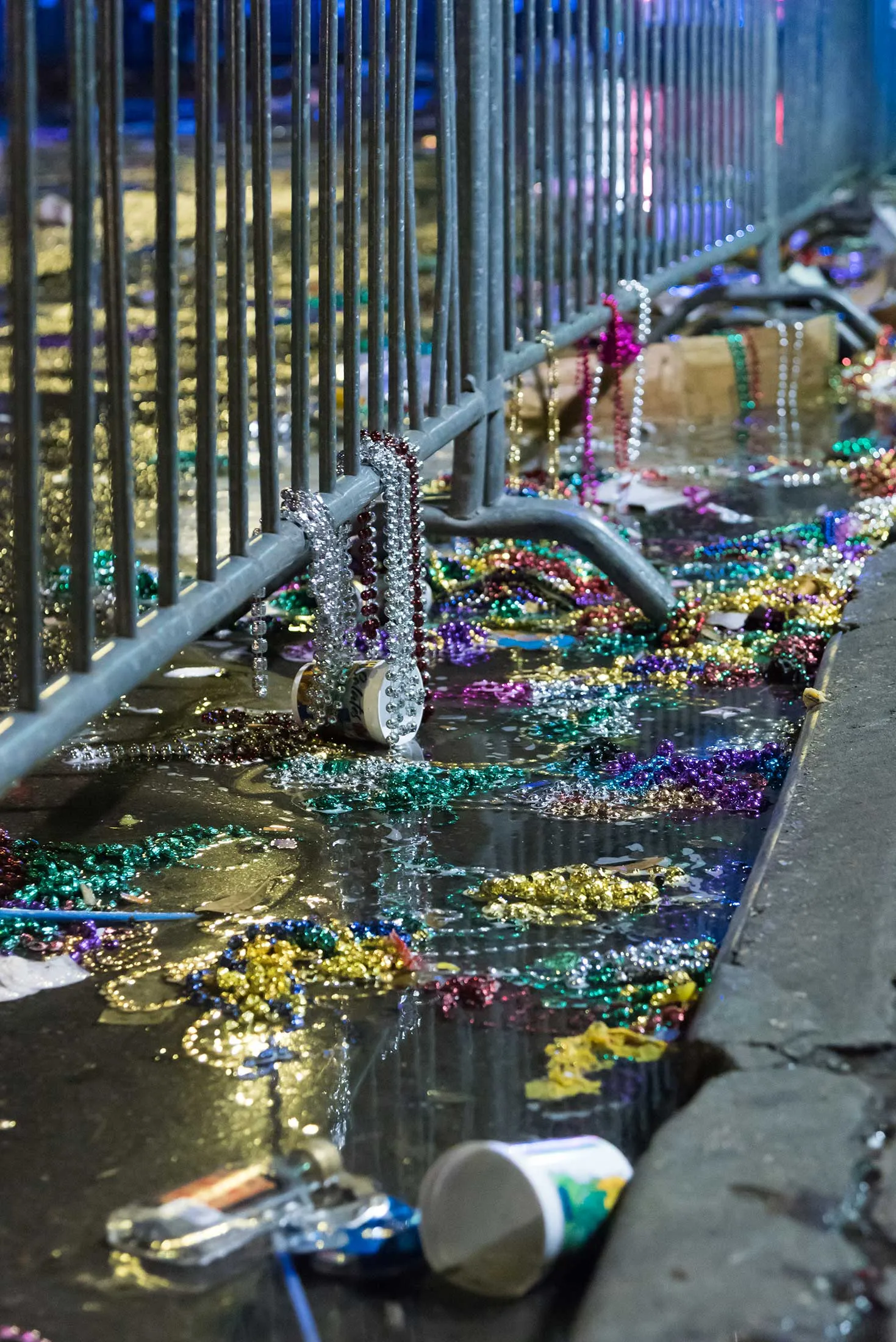
Pile of beads waiting to be picked up by the sanitation crews at Lee Circle on March 1.
Photographer: Carrie DeMay for Bloomberg Businessweek
New Orleans celebrated Mardi Gras for decades before paraders rewarded their admiring throngs by hurling objects at them. By 1913, beaded necklaces had become the currency of the holiday and were named after what paraders did with them: “throws.” Dozens of parades are conducted every year by groups of revelers called krewes, some many decades old. All of them, every year, toss millions of pounds of beads and other items to observers, who wear them, take them home, cherish them forever—or just leave them on the streets of the French Quarter.
More than a century later, and five decades after cheaper imported plastic entered the scene, Mardi Gras beads are the celebration’s ubiquitous symbol, particularly after the crowds disperse and costumes are put away.