The Forces That Could Plunge Venezuela Into Chaos
From Juan Guaidó and U.S. sanctions to a starving population and protest, the country is rushing toward a breaking point.
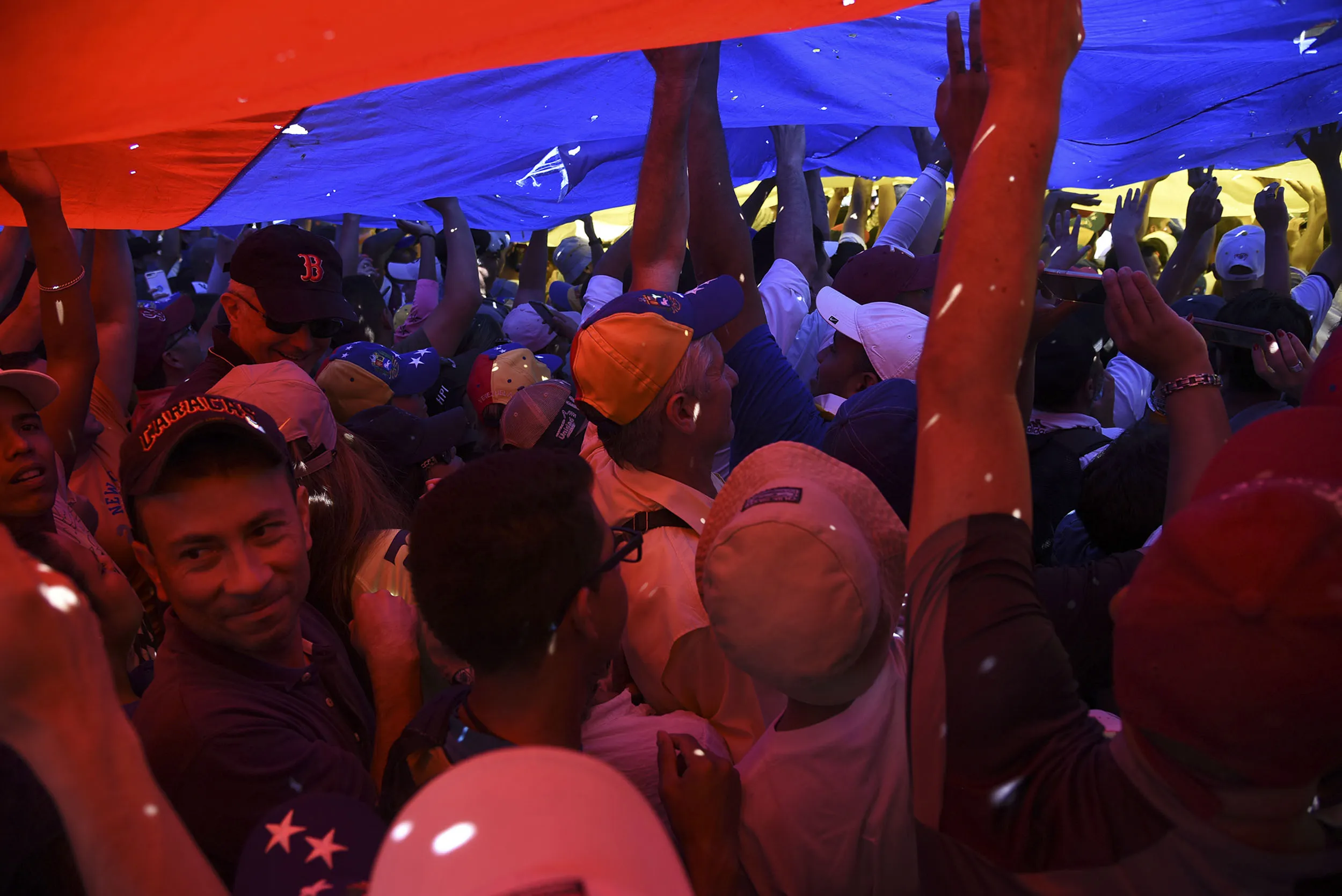
Caracas on Jan. 23: Protesters rally for the opposition.
Photographer: Carlos Becerra/Bloomberg
Events are moving fast in Venezuela, and not in President Nicolás Maduro’s favor. Scattered protests in Caracas the night of his second inauguration, on Jan. 10, quickly grew into organized demonstrations as thousands heeded opposition leader Juan Guaidó’s call to march against the regime. At press time, Maduro remains in office, but he faces a litany of threats: the economy, which has been devastated by low oil prices; powerful international interests, including the U.S., which condemned his 2018 reelection as illegitimate; Guaidó, head of the National Assembly, who’s claimed the title of interim president until new elections can be called; and the military, whose loyalty Maduro needs above all else to hold on to power. The president made a show of courting the armed forces’ support and has sent security forces into areas of unrest. But every day Guaidó roams freely in Caracas, holding rallies and building a government in waiting, Maduro’s grip on power becomes more tenuous.
Guaidó supporters first fanned out to military bases and national guard stations around Caracas in the days after he declared himself president on Jan. 23. They carried copies of a law from the National Assembly granting amnesty to any member of the armed forces who defects to the anti-Maduro cause. So far the top brass has stood behind the commander-in-chief, who long ago secured their loyalty with lucrative prizes: the reins of Petróleos de Venezuela SA (PDVSA), the state-owned oil company; control of the ports; contracts for housing projects; and the rights to valuable mining and oil-services concessions.