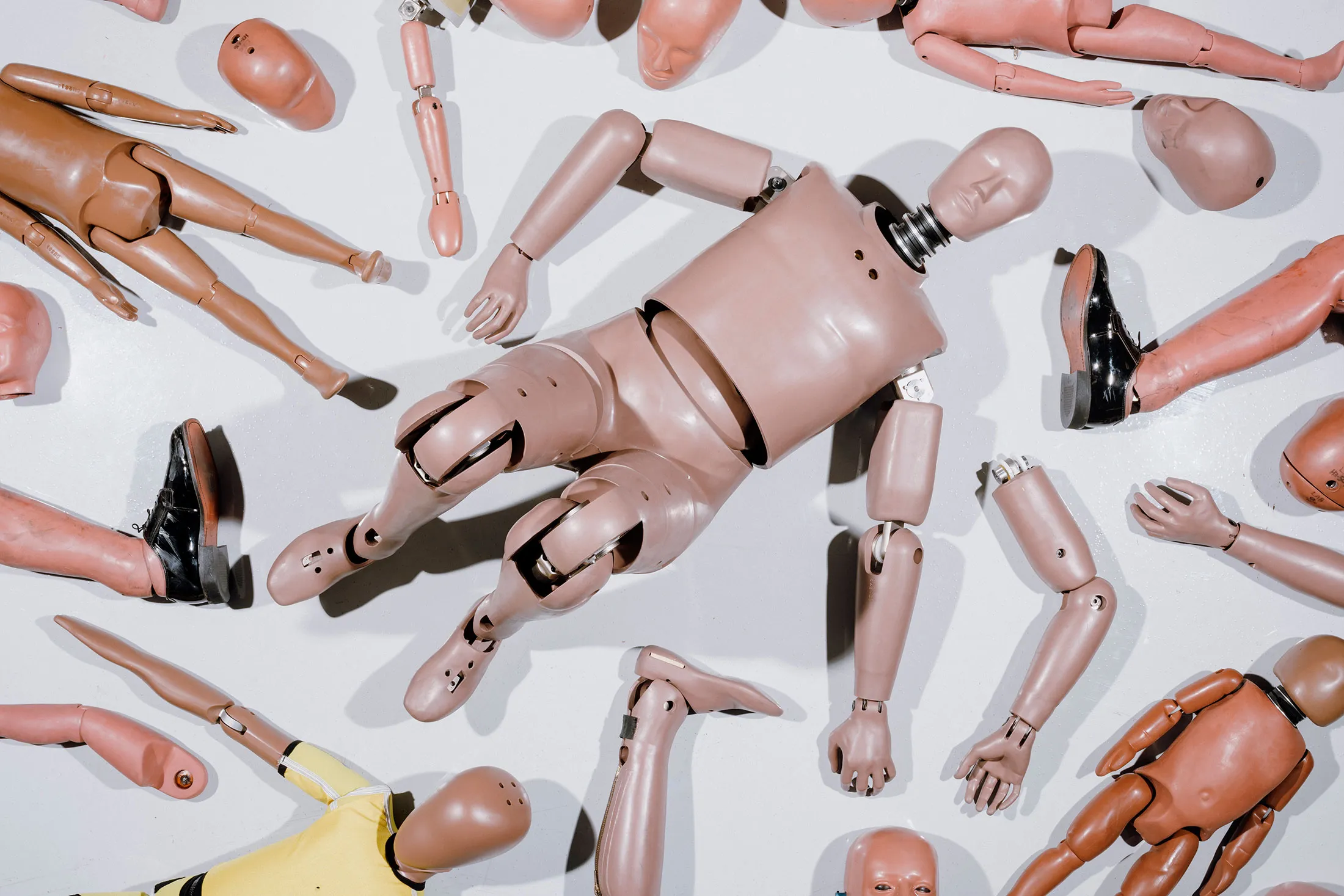
Dummies and dummy parts at Humanetics headquarters in Farmington Hills, Mich.
Photographer: Lyndon French for Bloomberg BusinessweekCrash-Test Dummies Are Getting Fatter Because We Are, Too
The economics of one strange corner of the automotive safety industry.
At first glance, Humanetics Innovative Solutions Inc. looks like it has a pretty sweet business model. The suburban Detroit company is the world’s largest maker of crash-test dummies, the steel-and-vinyl humanoids stuffed with electronics that gauge how a car crash could injure a human body. The company enjoys a global market share exceeding 70 percent, and its dummies can cost as much as $1 million apiece. Regulators in the U.S. and other countries effectively require Humanetics customers to buy at least some of its products.
With a setup like that, you might say, even a dummy could make a fortune. This makes Humanetics Chief Executive Officer Christopher O’Connor laugh, though for a different reason than you might think. He’d much rather discuss the implications of 3D printers and driverless cars than how Humanetics, or any dummy maker, turns a profit. “I’ve said to myself, if I had $10 million, I wouldn’t invest in this business,” O’Connor says. “I love it, but the reality is, you’re not going to make a ton of money. The margins are always going to be tight.”