The Progressive Populist Who Wants to Help Democrats Win Back the Rust Belt
If Richard Cordray wins the governorship of Ohio, he could provide a road map for 2020.
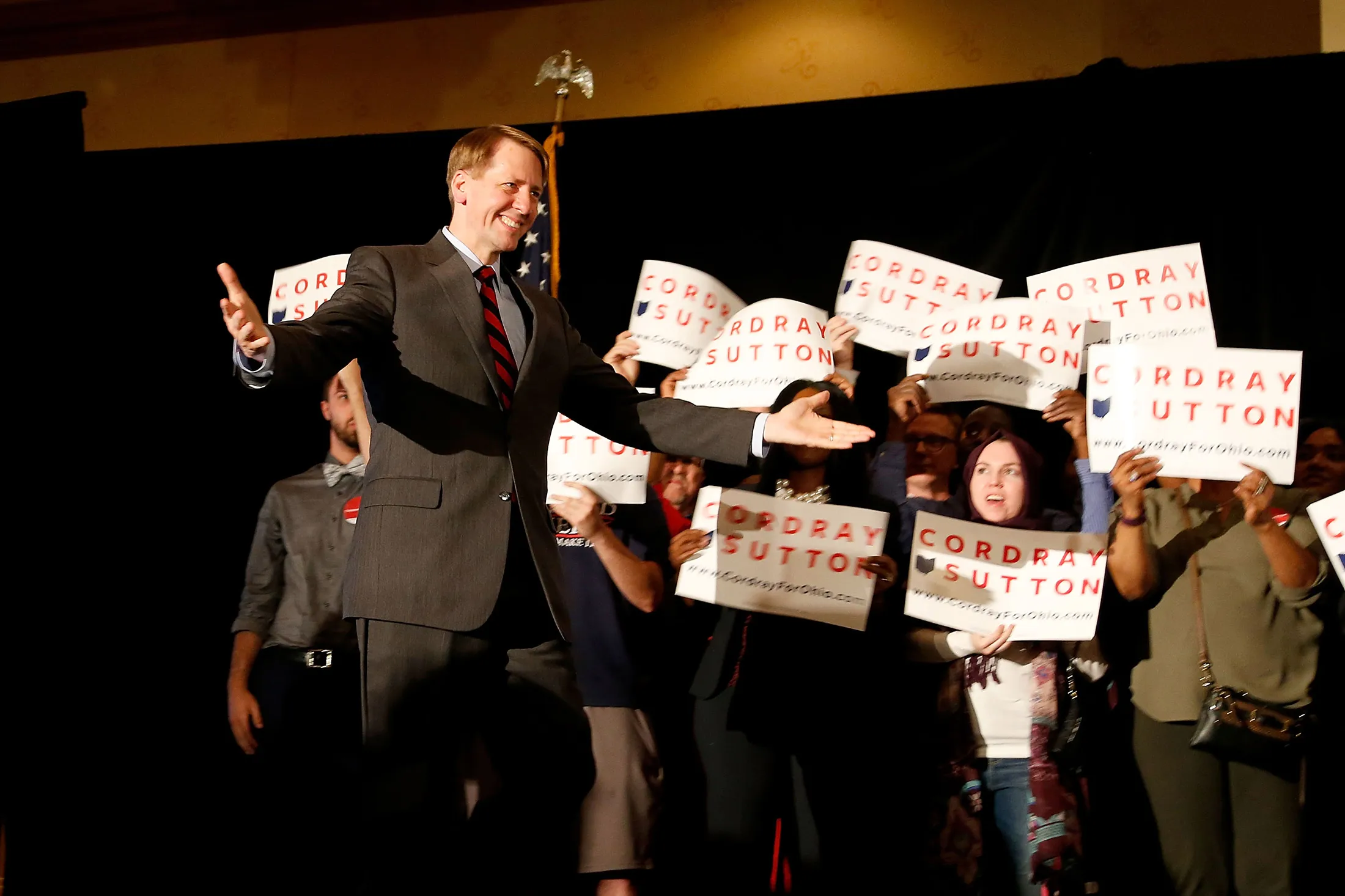
Ohio gubernatorial candidate Richard Cordray walks on stage in Columbus, Ohio, after winning the Democratic primary on May 8, 2018.
Photographer: Kirk Irwin/Getty Images
In early May, Richard Cordray was wrapping up a two-day campaign sprint during which he spoke to crowds of plumbers, pipefitters, ironworkers, teachers, firefighters, furniture workers, and now, as dusk settled over a low-slung Cleveland union hall, a hundred or so food and commercial workers. Cordray, who stepped down as head of the Consumer Financial Protection Bureau last December, was making a last-minute pitch to Ohio Democrats to choose him as their nominee for governor. Ostensibly, he was campaigning to defeat liberal gadfly Dennis Kucinich in the next day’s party primary (which he did, handily). But in a larger sense, Cordray was—is—trying to redeem a Democratic Party blindsided by Donald Trump’s 2016 victory and searching for a path forward.
Trump’s unexpected strength in Midwest swing states such as Ohio, where he trounced Hillary Clinton by eight points, exposed a deep erosion of Democratic support in swaths of the country you have to carry if you want to win the White House. Ohio has voted for the winner in 14 straight presidential elections. That Clinton’s brand of Wall Street-friendly, establishment Democratic politics wasn’t even competitive in this presidential bellwether underscored the scope of the party’s problem.