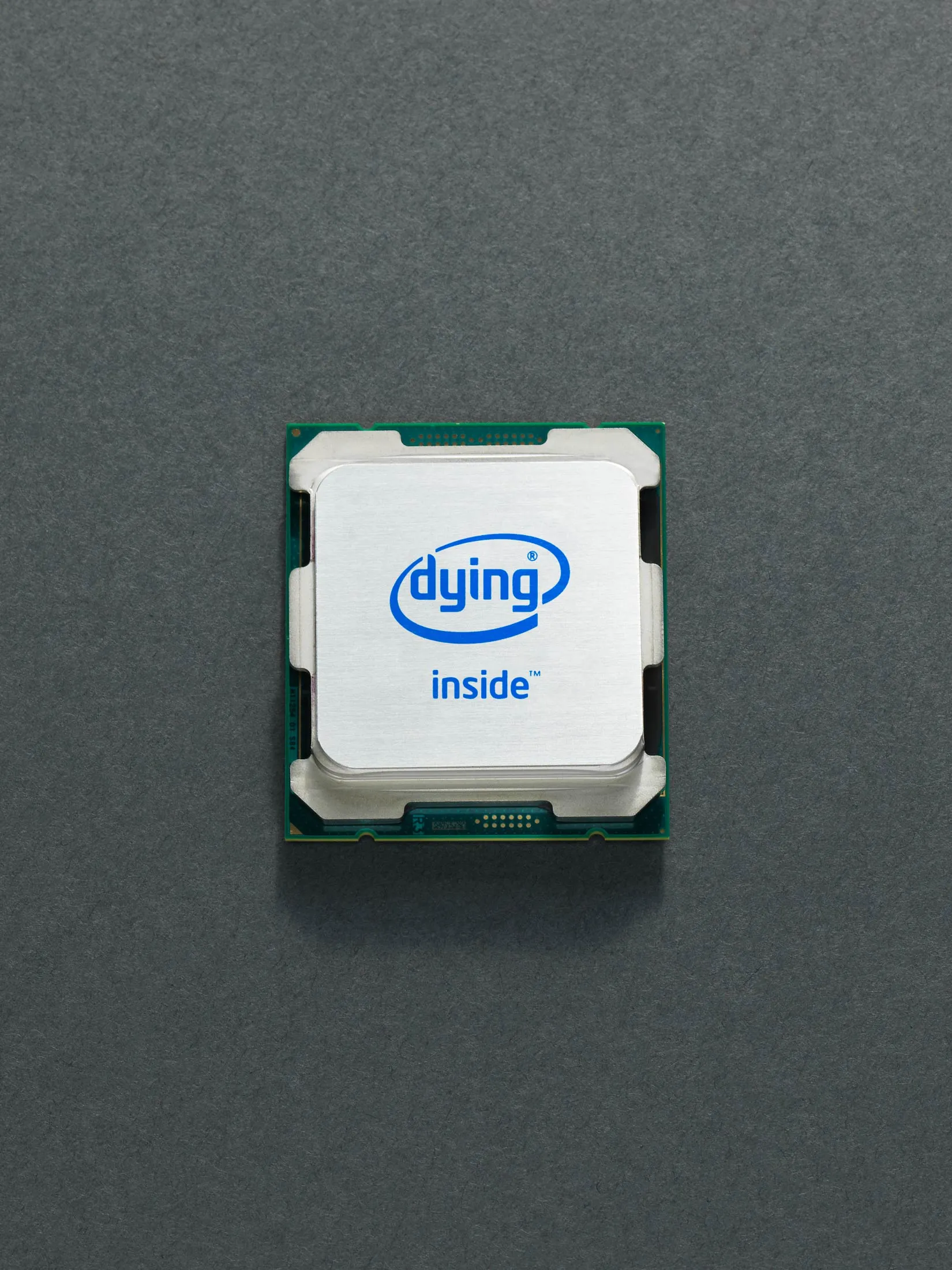
Intel Has a Big Problem. It Needs to Act Like It
Even without the aid of Hunter S. Thompson’s favorite drugs, CES, held in Las Vegas each January, has always been a little surreal. This year’s bacchanal was crammed with drones, self-driving cars, and internet-connected toilet seats—and the opening keynote speech was stranger than any of that. On Jan. 8, 5,000 ticket holders made their way through a sea of hired models and ultra-high-definition TVs to the Monte Carlo Resort and Casino on the Strip, where they squeezed into a theater to watch a two-hour psychedelic variety show. The opening act, a Blue Man Group-style quartet called Algorithm ’n Blues, pantomimed a performance of Human by the Killers, backed up by a digital bassist on a giant LCD screen, flying drones that played keys on a giant piano, and a trio of acrobats, dressed like extras from Tron, who performed a trampoline routine. And that’s not the weird part.
After the music came Brian Krzanich, chief executive of Intel Corp., doing about the best Willy Wonka impression one can do in a button-down blue dress shirt and jeans. “I’d love nothing more than to simply put my phone away and take this evening to truly celebrate innovation with you,” the 57-year-old CES regular said, bragging about his company’s advances in virtual reality and new partnerships with autonomous-vehicle technology companies. Former NFL quarterback Tony Romo appeared onstage to talk up Intel’s work in 3D video, and Krzanich showed off a full-size pilotless helicopter before capping the evening by suggesting they head outside to see a light show over the famous Bellagio fountains involving hundreds of drones—all, of course, either made by Intel or running on Intel chips.