Goodbye to Shared Plates and Communal Tables: Fine Dining Is Back
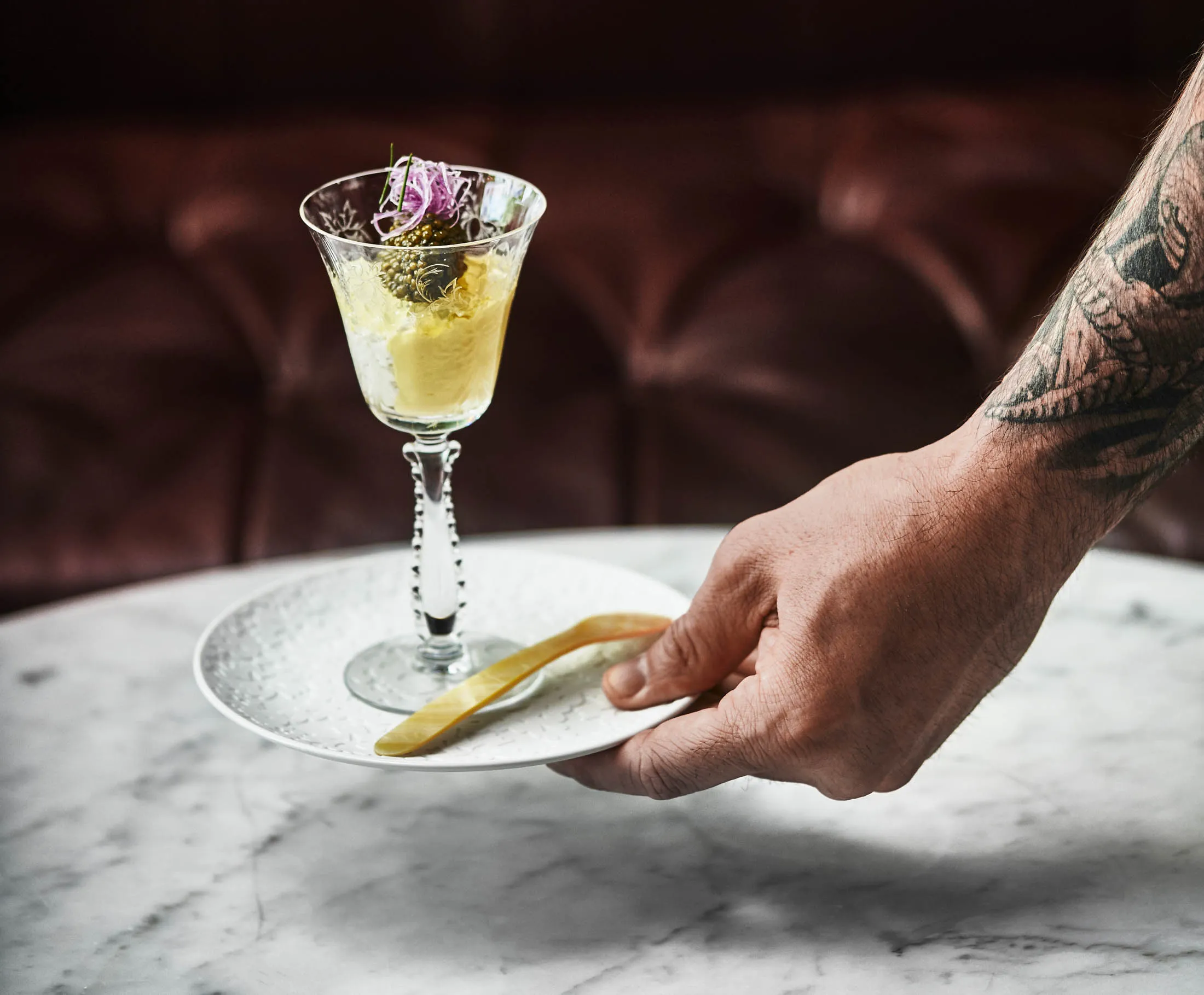
Caviar, served on egg custard at the Office, is a hallmark of the fine dining revival.
Photographer: Adrian Gaut for Bloomberg Businessweek

In December 2008, then-New York Times restaurant critic Frank Bruni dropped a culinary bombshell. He bestowed three stars on Momofuku Ssäm Bar, an East Village dining room with no tablecloths, no elegant glassware, and no coffee service. There, inside a shoebox-size space stocked with benches and paper napkins, diners used tongs to yank at a communal roasted pork butt and, with their hands, wrapped the drippy tendrils in lettuce cups. No restaurant so casual had received such a distinction, and the news spread. “Chefs from around the world would show up at Ssäm,” Momofuku chef-owner David Chang later said, citing the likes of René Redzepi from Copenhagen’s Noma and Ferran Adrià from Spain. “That review took everything to a different stratosphere.”
Bruni’s take on Ssäm came just after the 2008 stock market crash. In New York City, Wall Street plays no small role in the restaurant economy, and the effect was on display. “If there was a single, most pronounced narrative toward the end of my time as restaurant critic, it was the migration of extremely ambitious cooking into humble and casual settings,” says Bruni, whose tenure as a critic at the Times ran from 2004 to 2009. “Ssäm Bar was the harbinger.”