Brain-Computer Interfaces Are Already Here
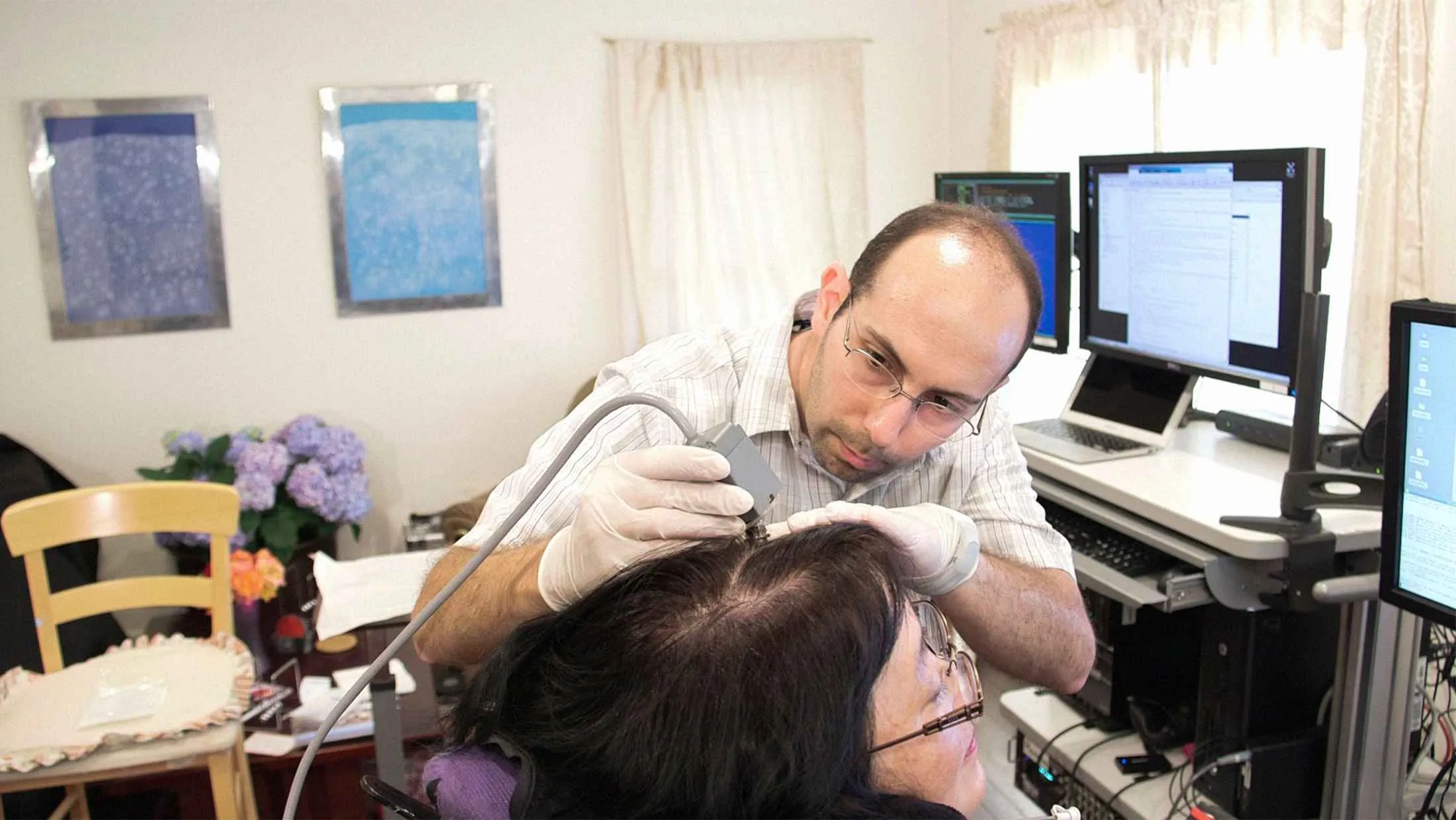
BrainGate, a consortium of researchers from universities including Stanford, Brown, and Case Western Reserve, has given a dozen patients the ability to control a cursor just by thinking about it.
Source: Mark Hanlon/Stanford University
For the first 54 years of his life, Dennis DeGray was an active guy. In 2007 he was living in Pacific Grove, Calif., not far from the ocean and working at a beachside restaurant. He surfed most mornings. Then, while taking out the trash one rainy night, he slipped, fell, and hit his chin on the pavement, snapping his neck between the second and third vertebrae. DeGray was instantly rendered, as he puts it, “completely nonfunctional from the collarbone south.” He’s since depended on caregivers to feed, clothe, and clean him and meet most any other need. He had every expectation this would be the case for the rest of his life.
“My first six months were really something,” DeGray, now 64, says ruefully from his single room in a Menlo Park nursing facility, decorated with fairy lights, a National Lampoon poster, and a 6-foot-tall plastic alien. “And then the next two years were also something. And, frankly, this morning, it’s still something.” He operates his motorized wheelchair by blowing into a straw. Most of his days consist of TV and trips to the local park, the library, and neighborhood restaurants, where familiar staff help him eat.