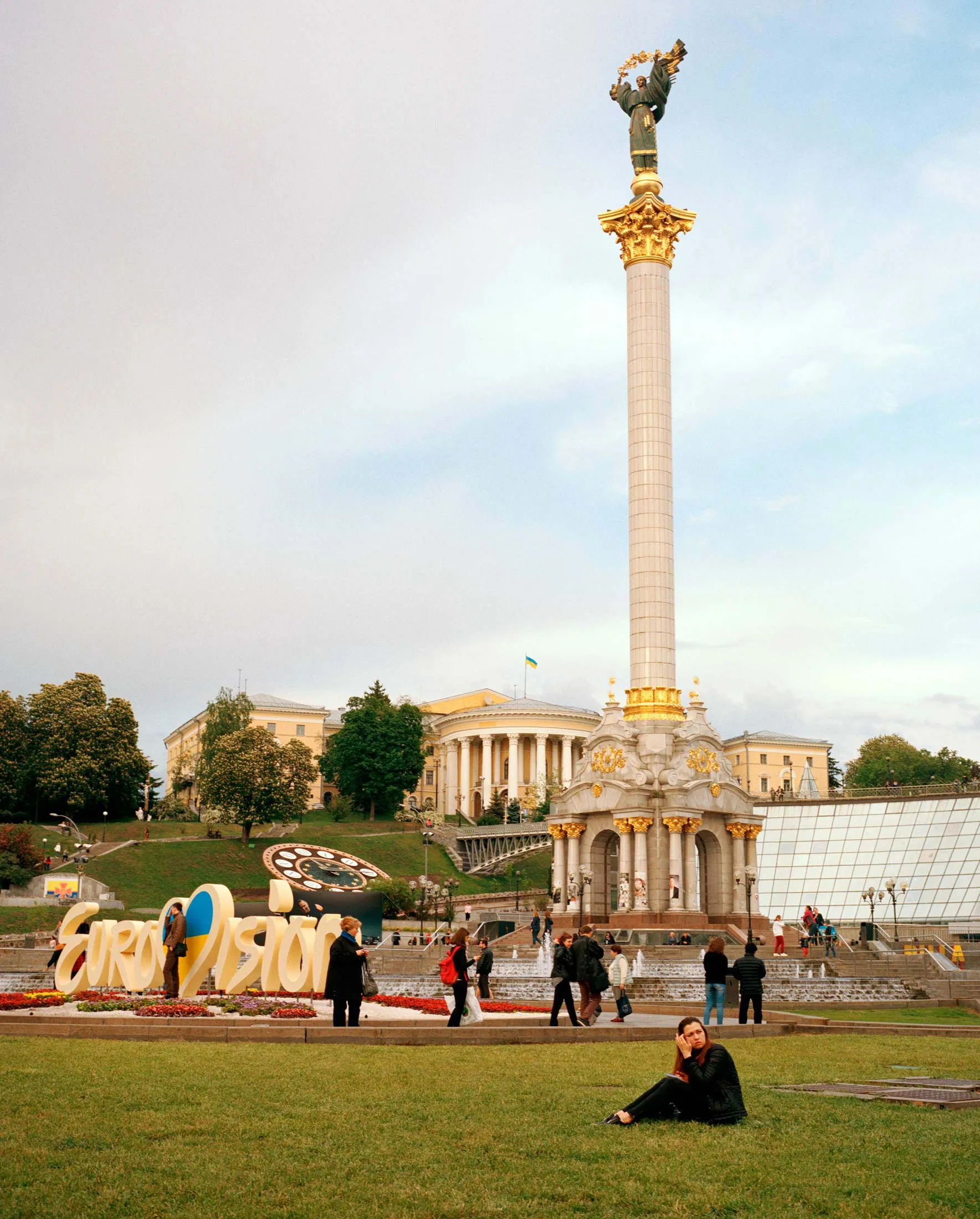
By winning Eurovision 2016, Ukraine won the right to host the 2017 contest in its capital.
Photographer: Sophie Green for Bloomberg BusinessweekEurovision Serenades a Continent in Crisis
In the year of Brexit and Russian hacking, the world’s weirdest song contest gets geopolitical.
On an icy evening in late February, several hundred Ukrainians, including at least one man in a full-body yeti costume, packed into an auditorium in western Kiev and began to work themselves into a full-on frenzy. Both of Ukraine’s major TV networks were on hand broadcasting live to millions across the country. In a land long subdued by war and corruption, this was an occasion for unbridled nationalism: a contest to choose Ukraine’s entry in the 2017 Eurovision Song Contest, a continentwide pageant of middlebrow pop music and geopolitical posturing unlike any other tournament in the world.
The first act of the night featured a break-dancing grandmother—a clear attempt at audience pandering in a culture that adores its babushkas—and the competition only got weirder from there. Next up was a teenage singer who came onstage looking like the offspring of Marilyn Manson and Pepé Le Pew: The hair on the right side of his chalky face was pale blond; on the left it was jet-black, and he wore a single iridescent contact lens, giving him the allure of a half-blind canine. As his song reached a punchy electronic climax, a gigantic projection of his face appeared, Wizard of Oz-style, above the stage.