Your Guide to Understanding the Roots of the Israel-Hamas War
The fighting is part of a struggle over ownership of the Holy Land that dates back more than a century.
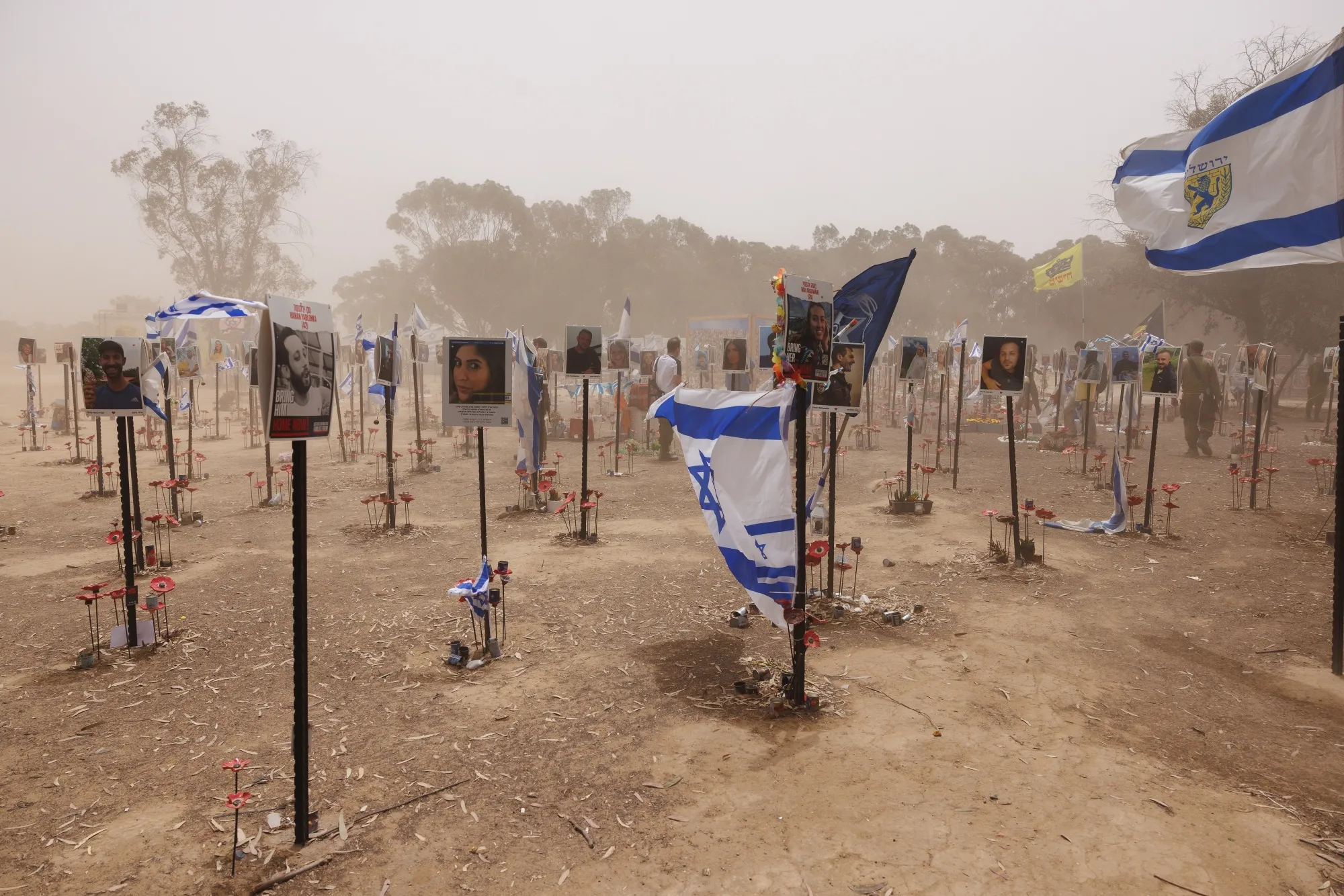
Memorials at the site of the Hamas attack on the Supernova music festival in Israel on Oct. 7, 2023.
Photographer: Kobi Wolf/BloombergThe struggle between Arabs and Jews over ownership of the Holy Land dates back more than a century and has given rise to seven major wars. The latest broke out on Oct. 7, 2023 when the Islamist Palestinian group Hamas, which is dedicated to Israel’s destruction and which the US and European Union have designated a terrorist organization, attacked southern Israel from the Gaza Strip, killing 1,200 people in towns, kibbutzim, army bases and a music festival in the desert. More than 53,000 people have died in Gaza since the start of Israel’s military response, according to the Hamas-run health ministry in Gaza. Israeli officials have said some 20,000 of the dead were fighters. Here’s your guide to understanding the conflict between the US-backed Israel and the Iran-backed Hamas.
Nationalism grew among both Arabs and Jews in the Holy Land — which encompasses what today is Israel, the West Bank and Gaza — after the World War I-era collapse of the Ottoman Empire, which had ruled the territory for centuries. In 1920, the war’s victors gave the UK a mandate to administer what was then called Palestine. Intercommunal fighting in the territory was exacerbated by resistance among Arabs to Jewish immigration, which rose in the 1930s; in the face of Nazi persecution, increasing numbers of Jews from abroad sought sanctuary in their ancient homeland, where Jews have lived for nearly 4,000 years. In an effort to stop Arab-Jewish violence, a British commission in 1937 proposed partitioning the territory to create a state for each group. A decade later, the United Nations endorsed a different division.