How Stock Market ‘Wealth Effect’ Could Slow the Economy
Market jitters over trade could damage more than your retirement fund balance. When investors feel less wealthy, they may also choose to spend less.
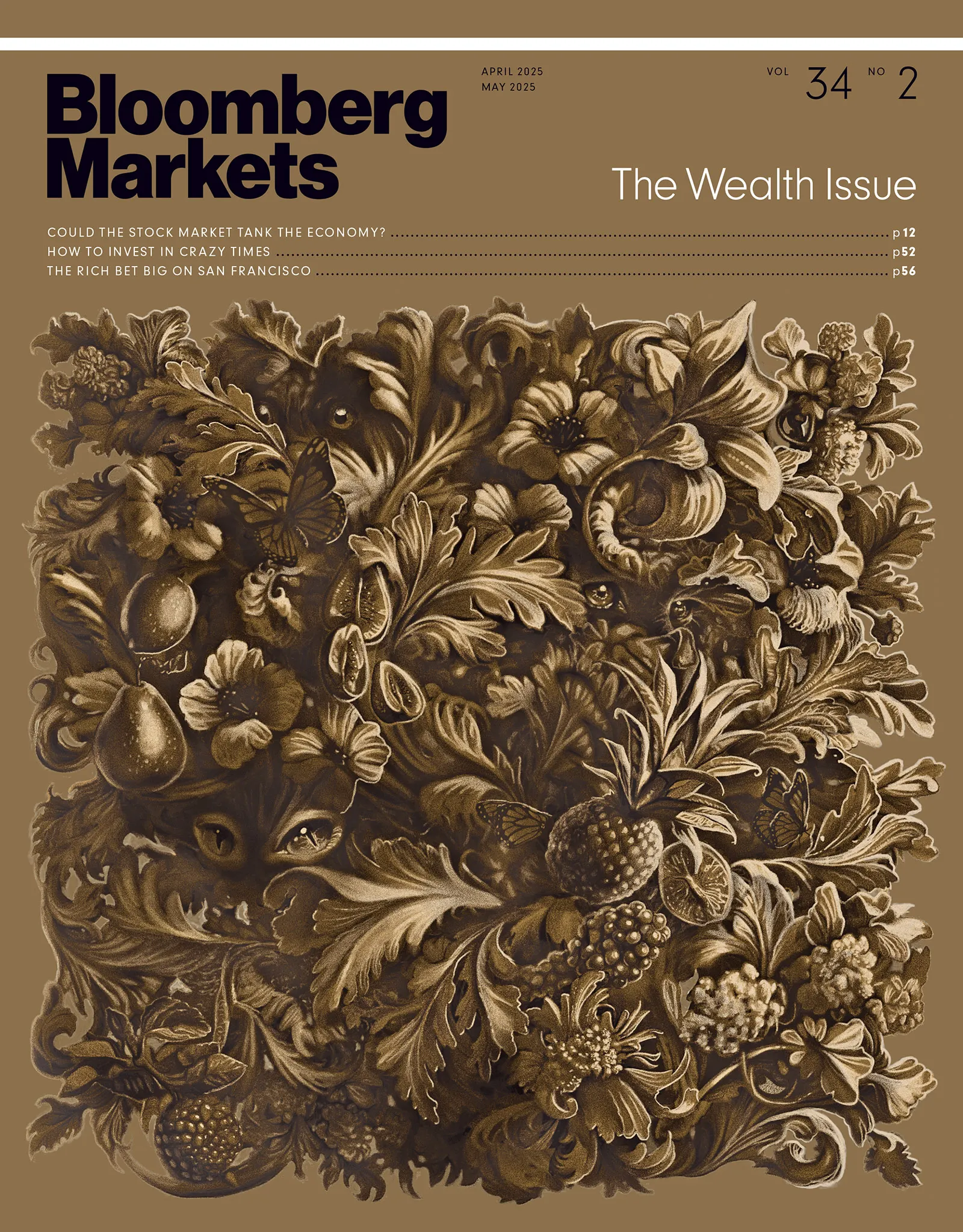
Illustration by Rune Fisker for Bloomberg Markets
Income is a paycheck, but wealth is at least partially a vibe. One day a portfolio of stocks is worth $100,000, and the next it might be worth $98,000 or $102,000, depending on the mood of the traders. When fluctuations in paper values are enough to make consumers feel richer or poorer and change their spending habits, it’s known as the wealth effect.
It’s often said that Wall Street is different from Main Street, but the wealth effect is a link between the two. That connection is on a lot of people’s minds now as fears about President Donald Trump’s sweeping but ever-changing tariff plans roil stock markets around the world. This month the S&P 500 has touched bear-market territory—a sharp comedown after two straight years of gains above 20%. Investors’ faith in the so-called Trump put, the widely held notion that this president will always change course to avoid the pain of a falling market, is being tested. Implicitly, many traders had assumed that Trump himself was a big believer in the wealth effect.