Gulf States Learn the Power and Limits of Petrodollar Persuasion
Nations awash in fossil fuel revenue are using investments not only to diversify their economies but to extend their influence abroad
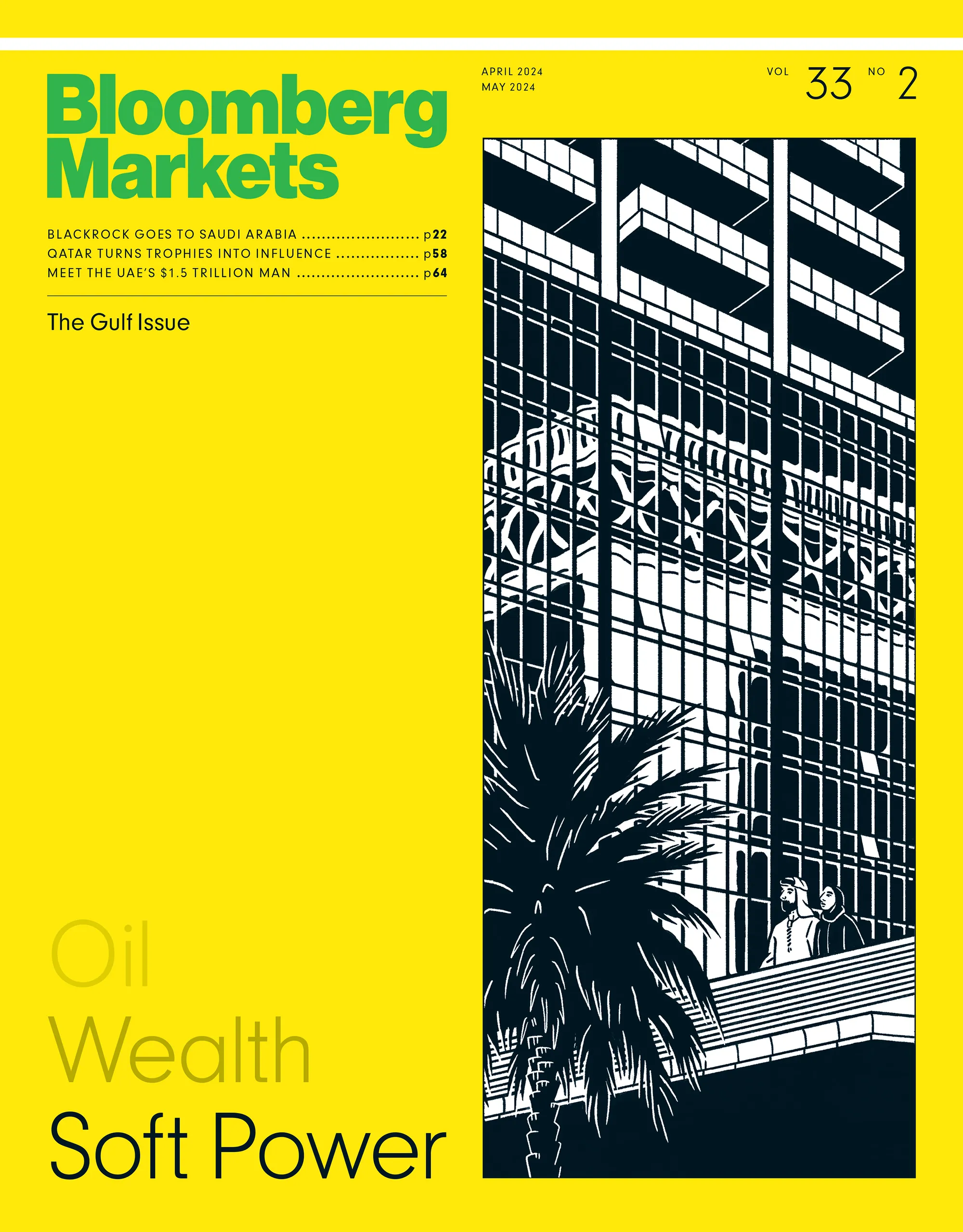
Illustration by Adam Maida for Bloomberg Markets
To understand the scale of Gulf nations’ wealth, just consider this: If the United Arab Emirates sold its stash of foreign holdings, it could make every one of its roughly 1 million citizens a millionaire. Qataris would enjoy the same windfall. Saudi Arabia, with its larger population, wouldn’t hit a million dollars per citizen, but the share allotted to each one would still be close to the average annual income in the US—a hefty sum.
Of course, that leaves out the large share of those countries’ populations who aren’t citizens—not to mention that these states have no intention of simply dividing up and distributing their hoards. That’s not what the money is for: It’s for securing the future. The Gulf is awash in oil revenue. The value of daily crude exports in 2022 and 2023 topped $1 billion, leaving enough after paying for imports to fuel massive savings. But the world is transitioning away from oil and gas, and these nations need to diversify.