Pandemic Threatens the Dollar’s Global Dominance: Joe Weisenthal
More countries may start to fund themselves in local currency to maintain stability in future crises.
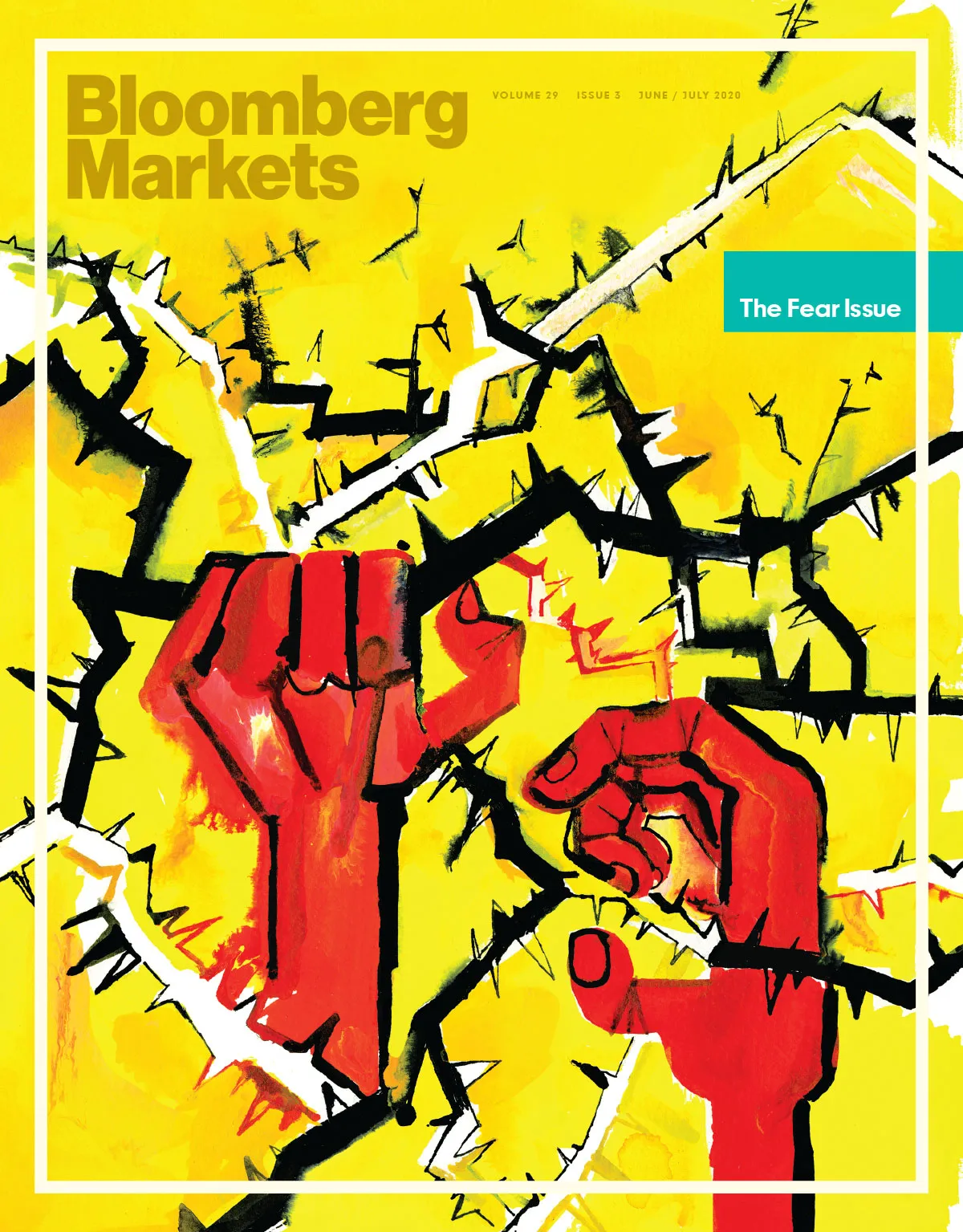
Illustration: Matt Chase for Bloomberg Markets
Back in August, then-Bank of England Governor Mark Carney gave a speech in Jackson Hole, Wyo., about the problem of the U.S. dollar. The issue, as he identified it, was not that the dollar’s fundamentals are weak, but that they’re too strong. Even as the U.S.’s share of worldwide gross domestic product steadily shrinks, the dollar’s share of global transactions has only grown. This mismatch proves dangerous when, in the process of fulfilling its domestic mandate, the Federal Reserve makes moves that have huge ripple effects around the world.
Why is the dollar so popular? For years people have been crying about how U.S. policymakers have abused its strength and unique global position. They point to the burgeoning Fed balance sheet, the massive national debt, or the huge trade deficit that the U.S. has run with the rest of the world. But the simple fact is that people use the dollar because other people use the dollar. As fund manager Eric Lonergan has argued, a currency is like a social network or a language. People learn English because other people speak English. People use Facebook because their friends and family use Facebook. And if you’re doing business around the world, there’s a good chance you’re using dollars because that’s what other people are using.